
Romulus and Remus
Twin sons of Mars, saved by a she-wolf and raised by shepherds, who quarreled over where to found Rome — a quarrel that ended with only one of them ruling it.
Romulus, Conqueror of Acron, Jean-Auguste-Dominique Ingres, 1812 (Ecole des Beaux-Arts, Paris) · Public domain · source
Two Grandsons of a Deposed King
Romulus and Remus begin as loose ends someone tried to tie off. A usurper deposes his brother as king of Alba Longa and forces the rightful heir's daughter, the Vestal Rhea Silvia, into a priesthood meant to end the bloodline; she bears twins anyway and names Mars as their father, whether or not anyone believed her 1. The king orders the infants exposed in the flooding Tiber, and the basket carrying them washes up at the foot of the Palatine hill, where a she-wolf finds and nurses them until the shepherd Faustulus takes them in — a rescue told in full, along with the debate over how literally to take it, in Lupa's own entry 1,3. The twins grow up as shepherds, discover the truth of their birth, kill the usurper, and restore their grandfather to his throne — at which point, with nothing left to inherit at Alba Longa, they set out to found a city of their own 1.
The Augury Dispute
Choosing where to build it is the twins' first real disagreement, and ancient sources treat it as a serious constitutional problem rather than a squabble. Remus favours the Aventine hill, Romulus the Palatine, and both take up positions to watch for birds, the traditional Roman method of reading the gods' will 2. Remus sees six vultures first; Romulus then sees twelve. Livy reports both counts without settling which brother actually had the stronger claim — Remus's priority in time against Romulus's larger number — and treats the dispute itself as the origin of a method Romans would use for centuries afterward to argue about the validity of an augury — taking the auspices before any major public act remained a live, unironic part of Roman civic life for as long as the Republic and the Empire lasted 1,2,8.
The Murder of Remus
What happens next is the part Roman writers were least comfortable with, and it shows in how carefully they hedge it. Livy gives two versions in the same breath: in the first, Remus is simply killed in the fighting that breaks out between the brothers' supporters; in what he calls the more common story, Remus leaps mockingly over the half-built wall of Romulus's new city to show how easily it could be taken, and Romulus kills him for it, adding the line "so perish anyone else who crosses my walls" 1. Plutarch preserves a third option, in which a lieutenant named Celer strikes the fatal blow and Romulus only afterward claims responsibility, and notes that even in his own day writers still could not agree which version was true 2. A city that told a foundational story about killing your own brother over a wall was, at minimum, not trying very hard to flatter itself.
Romulus Alone
Rome dated its own birthday to this moment: the city's founding was fixed to 21 April, the date of the old shepherds' festival of the Parilia, and Ovid describes Romans of his own day still marking the day with bonfires and purification rites for their flocks, the calendar quietly preserving the story's origin as a shepherd's settlement before it was anything grander 4. Sole king now, Romulus is credited with the practical business of turning a walled hilltop into an actual city: he opens an asylum for refugees, exiles and runaway slaves to build up a population with nowhere else to go, then solves the resulting shortage of women by inviting the neighbouring Sabines to a festival and abducting their daughters, precipitating a war that ends only when the Sabine women themselves intervene between their fathers and their new husbands 1,2. Later in his reign, Romulus kills the enemy king Acron of Caenina in single combat and dedicates the captured armor to Jupiter Feretrius, founding the rare and prestigious honor of the spolia opima, "the rich spoils" — an episode still commemorated within the Palatine account of the reign as the clearest example of Romulus acting alone as a warrior-king rather than as half of a pair 2.
The King's End
Romulus's own death is left deliberately uncertain. Reviewing his troops at the Goat's Marsh, he vanishes in a sudden storm; the Senate, widely suspected by the common people of having murdered him themselves and cut up the body, instead promotes the story that he was taken up into the sky and become a god, worshipped afterward as Quirinus 1,2. Livy and Plutarch both record the same reinforcing detail: a respected citizen named Proculus Julius swears that Romulus appeared to him on the road, confirmed his own divinity, and promised Rome future greatness — an account both historians report with visible skepticism about how conveniently it solved the Senate's problem 1,2.
How Old Is This Story, and Whose Bronze Is It?
Wiseman's study of Remus argues that the core claim, Rome founded by a son of Mars, is old, but that Remus himself was folded into the legend comparatively late, probably in the fourth or early third century BCE, as a way of giving the city's two orders, patrician and plebeian, a shared founding pair rather than a single ancestor 5. The material record agrees with the general shape of that timeline: the earliest securely dated image of the wolf and twins together is a Roman coin of about 269 BCE 6. It does not, however, agree with the popular assumption about the most famous depiction of the scene. The bronze Lupa Capitolina, long treated as an Etruscan original of the fifth century BCE, was shown by the restorer Anna Maria Carruba's 2006 technical study to have been cast using a method characteristic of medieval rather than ancient bronzework, a conclusion since supported by radiocarbon dating of its casting cores to the eleventh or twelfth century CE — meaning Rome's most iconic image of its own founders is, on the best current evidence, itself a medieval act of devotion to a much older story 7.
Continue Exploring
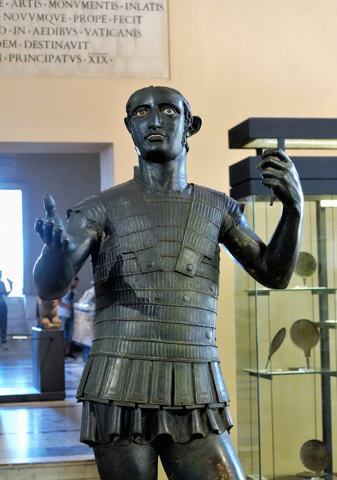
God of war and father of Rome — honoured above almost every other deity, with his own month, his own dancing priests, and the twins he fathered on a Vestal.
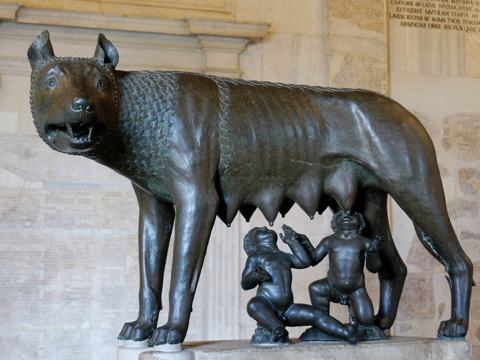
The she-wolf of Rome — the beast that suckled the abandoned twins Romulus and Remus, and the most durable emblem the city ever gave itself.
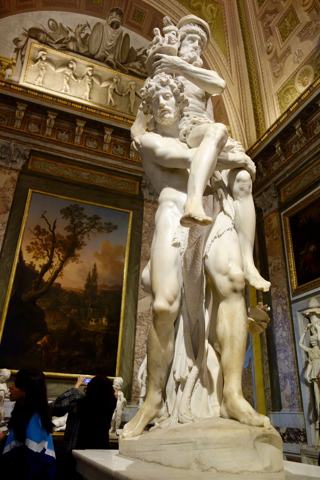
The Trojan prince who escaped burning Troy carrying his father and household gods, wandered the Mediterranean, and became Rome's mythical ancestor.
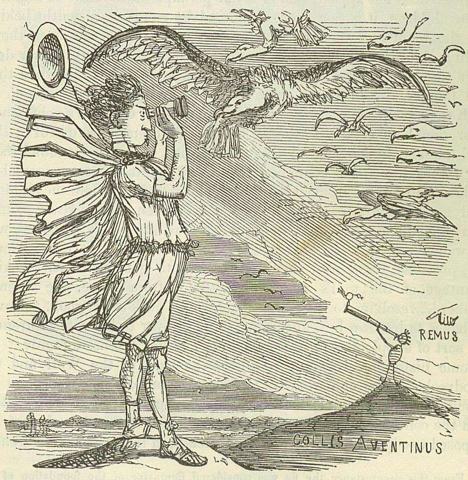
How Roman magistrates read the will of the gods from bird-flight and lightning before every public act — the state's oldest form of applied religion.
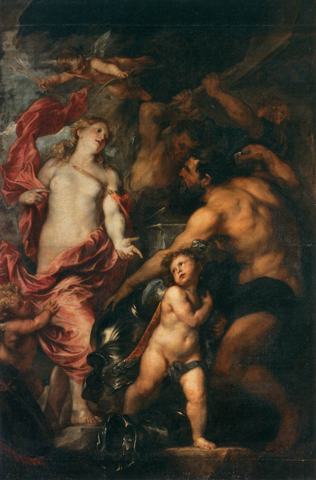
Rome's fire god, honored to keep flame from the wooden city, later remade as the mythical blacksmith who forged arms for gods and heroes.
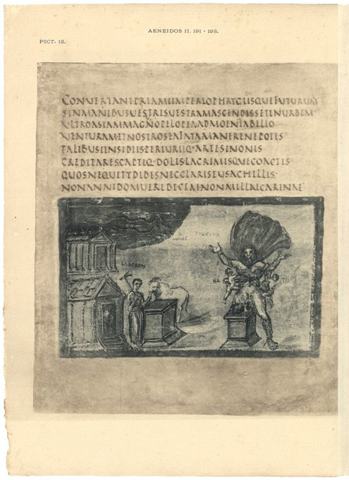
Virgil's unfinished epic of Aeneas's flight from Troy and the founding of Rome — composed for Augustus, nearly burned at its author's own request.
Also mentioned inAres
Sources & Further Reading
- 1.Livy, Ab Urbe Condita (c. 27 BCE), Book 1.
- 2.Plutarch, Life of Romulus (Parallel Lives, c. 100 CE).
- 3.Dionysius of Halicarnassus, Roman Antiquities (late 1st century BCE), Book 1.
- 4.Ovid, Fasti (8 CE), Book 4.
- 5.Wiseman, T. P. Remus — A Roman Myth. Cambridge University Press, 1995.
- 6.Wiseman, T. P. The Myths of Rome. University of Exeter Press, 2004.
- 7.Carruba, Anna Maria. La Lupa Capitolina — un bronzo medievale. De Luca Editori d'Arte, 2006.
- 8.Beard, Mary, John North & Simon Price. Religions of Rome, Volume 1: A History. Cambridge University Press, 1998.
Spot an error or have a source to suggest? Write to info@viseterna.com. We cite primary sources and modern scholarship, and we correct fast.