
Kukulkan
The Feathered Serpent of the Maya — creator's voice in the Popol Vuh, patron of Chichen Itza, and the shadow that descends its pyramid at the equinox.
Kukulkan serpent head, El Castillo, Chichen Itza, Yucatan (Postclassic Maya) · CC BY-SA 4.0 · source
The Feathered Serpent of the Maya
Kukulkan — Yucatec Maya K'uk'ulkan, "feathered serpent" — is the Maya form of the plumed-serpent deity worshipped across Mesoamerica for more than a millennium 5. In the K'iche' Maya highlands the same being appears as Q'uq'umatz, and in central Mexico as Quetzalcoatl; the three are related expressions of one long tradition rather than a single god under three labels, and their myths and functions do not overlap perfectly 5,6.
He is associated with wind, with rain and the fertility it brings, with creation itself, and — in the Postclassic period — with rulership and the legitimacy of dynasties 5,6.
Q'uq'umatz and the Creation
The Popol Vuh, the great creation narrative of the K'iche' Maya, opens on a world that is only sea and sky. In the water lies Q'uq'umatz, the Sovereign Plumed Serpent, "in the green and the blue," together with Tepeu; above is Heart of Sky, Huracan 1. The two confer, and the earth rises out of the water at their word — mountains, valleys, and the separation of the waters, all brought about by speech and agreement rather than by combat 1.
They then try repeatedly to make beings capable of praising them. Animals cannot speak. A person of mud dissolves. People carved from wood have no minds and no memory of their makers, and are destroyed in a flood and a revolt of their own household objects 1. Only the fourth attempt succeeds, when the creators grind white and yellow maize into flesh — the maize people, the ancestors of humanity in K'iche' understanding 1. The Feathered Serpent's role throughout is as the creating intelligence, not as a warrior 1,5.
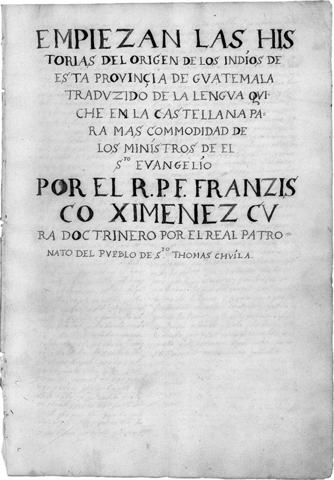
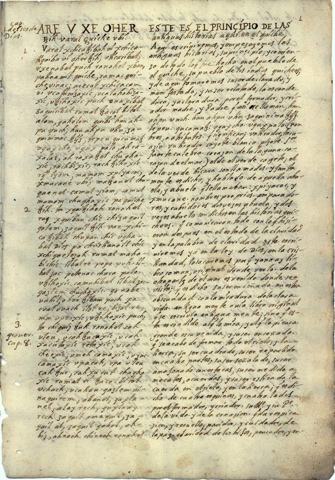
The Popol Vuh was written down in the alphabetic script shortly after the Spanish conquest and survives through an early-eighteenth-century copy made by the friar Francisco Ximénez; the text it preserves is nevertheless recognisably pre-Columbian in structure, and it remains a living cultural inheritance for K'iche' people today 1,6.
Kukulkan at Chichen Itza
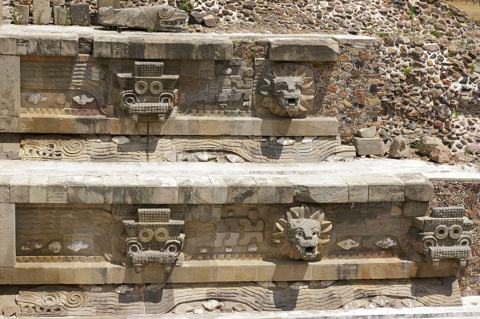
Kukulkan's great city is Chichen Itza in northern Yucatan, whose dominant building — El Castillo, the Temple of Kukulkan — is a nine-terraced radial pyramid with a stairway on each of its four sides 6. Feathered-serpent balustrades run down the northern stair, ending in open-jawed stone serpent heads at ground level, and feathered-serpent columns support the entrances of the nearby Temple of the Warriors 5,6. The building's numbers are frequently read as calendrical: four stairways of ninety-one steps plus the top platform total 365 6.
Chichen's serpent imagery, its colonnaded halls, its reclining chacmool figures, and its warrior iconography have a strong central Mexican flavour, which for much of the twentieth century was explained by a "Toltec invasion" of Yucatan. Sharer and Traxler set out the reasons that model has been abandoned by most Mayanists in favour of a picture of long-distance interaction and a shared Epiclassic international style, with Chichen as an active participant rather than a conquered province 6.
The Equinox Serpent
Chichen Itza's most famous modern spectacle occurs in the late afternoons around the spring and autumn equinoxes, when the stepped terraces of the pyramid's northwest corner throw a chain of triangles of light and shadow onto the balustrade of the northern stairway. The effect reads as an undulating serpent body joined to the carved stone head at the base — the god descending the pyramid 6.
The phenomenon is real and draws tens of thousands of visitors each year. Whether it was deliberately engineered by the builders is a separate and unresolved question: the display is visible for some weeks either side of the equinox rather than on a single date, and no pre-Columbian text describes it 6. It is best treated as a striking property of the architecture whose intentionality is debated, not as an established piece of ancient ritual 6.
A God, or a Man?
Colonial sources complicate Kukulkan the way they complicate Quetzalcoatl. Diego de Landa, the Franciscan whose Relación is both an invaluable record and the work of a man who burned Maya books, reports a tradition that Kukulkan was a leader who arrived in Yucatan from the west, ruled at Chichen Itza, later founded Mayapan, and was afterwards honoured as a god 2. Landa also describes a festival in his honour held in the month Xul at Mani, with processions, five days of feasting, and offerings 2.
The Books of Chilam Balam, written by Maya scribes in the colonial period, likewise fold Kukulkan into dynastic and prophetic history, using the cyclical k'atun framework in which events recur with the calendar 3. Postclassic Mayapan built its own smaller Castillo in imitation of Chichen's, which suggests the god's association with legitimate rule was politically useful long after Chichen's decline 6.
What He Is Not
Two cautions are worth stating. First, the Feathered Serpent should not be collapsed into the Classic Maya "vision serpent" or the war-serpent Waxaklahun Ubah Kan, which are distinct entities in Classic iconography with their own contexts 5. Second, Kukulkan is not simply Quetzalcoatl with a Maya name; the plumed serpent had deep roots in Maya art well before the Postclassic contacts with central Mexico, and the direction of borrowing has been argued in both directions 5,6.
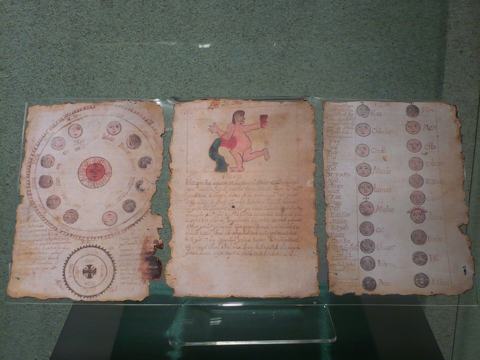
The Dresden Codex and the other surviving Maya screenfolds preserve almanacs and astronomical tables — including the celebrated Venus table — that show how tightly Maya religion bound its deities to observed cycles of sky and season, the framework in which a serpent of wind and rain made sense 4,6.
Continue Exploring
The K'iche' Maya storm god who speaks the world into being in the Popol Vuh — and the contested claim that he gave the hurricane its name.
The K'iche' Maya "Book of Council" — creation, the Hero Twins, and a dynasty's history, saved by one Dominican friar's copy of a lost original.
Colonial Yucatec Maya town books mixing prophecy, history, medicine and Christian material — named for a jaguar-priest said to have foreseen the Spanish.
The Feathered Serpent — god of wind, learning, and creation, who stole humanity's bones from the land of the dead and gave people maize.
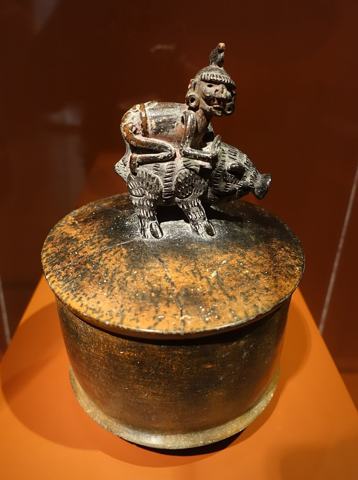
The aged creator — supreme sky god of the Maya, patron of writing, healing and divination, and the old man scholars know as God D.
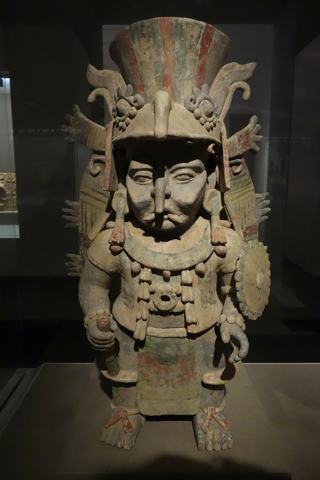
The rain god who splits the clouds with a lightning axe — one god and four, the most frequently depicted deity in the surviving Maya books.
Also mentioned inChichen ItzaThe Sacred Cenote of Chichen ItzaThe Vision Serpent
Sources & Further Reading
- 1.Popol Vuh — the K'iche' Maya creation epic (alphabetic text c. 1550s; Ximenez manuscript c. 1701).
- 2.Diego de Landa, Relacion de las cosas de Yucatan (c. 1566).
- 3.The Books of Chilam Balam (colonial-era Yucatec Maya).
- 4.The Dresden Codex (Postclassic Maya screenfold).
- 5.Miller, Mary & Karl Taube. The Gods and Symbols of Ancient Mexico and the Maya. Thames & Hudson, 1993.
- 6.Sharer, Robert J. with Loa P. Traxler. The Ancient Maya, 6th edition. Stanford University Press, 2006.
Spot an error or have a source to suggest? Write to info@viseterna.com. We cite primary sources and modern scholarship, and we correct fast.