
Chichen Itza
The great Postclassic Maya city of Yucatan — home to Kukulkan's pyramid and the Sacred Cenote, and a decades-long argument over how "Toltec" its art really is.
El Caracol (the Observatory), Chichen Itza, Yucatan, Terminal Classic to Postclassic Maya (photograph by Mario Roberto Duran Ortiz) · CC BY-SA 4.0 · source
At the Mouth of the Well
Chichen Itza — Yucatec Maya for "at the mouth of the well of the Itza" — takes its name from the two great natural sinkholes around which the city grew, on a limestone shelf that has almost no surface rivers 6. It became the dominant power of the northern Maya lowlands in the Terminal Classic and Postclassic periods, roughly the ninth through thirteenth centuries CE, rising as many of the great cities of the southern Peten, among them Tikal, were already emptying 6.
At its height the city covered several square kilometres of temples, colonnaded halls, and residential compounds, organized loosely around two focal points: a southern zone of older, more purely Maya architecture, and a northern zone — including El Castillo, the Great Ballcourt, and the Temple of the Warriors — built in the mixed style that has driven a century of argument about who exactly built it 4,6. One of its two great cenotes supplied the city's drinking water; the other, to the north, was reserved for offerings rather than for washing or drawing water at all 1,2.
El Castillo, and a Serpent That May Not Have Been Planned
The city's dominant building, the nine-terraced pyramid of Kukulkan known as El Castillo, carries feathered-serpent balustrades down its northern stairway and is the site of Chichen's best-known modern spectacle: the afternoon light of the equinoxes throwing a chain of triangular shadows down that balustrade, read as a serpent descending to join the carved stone head at its base 5,6.
The phenomenon is real, but its ancient intentionality is not established, and recent archaeoastronomical work argues against it directly. Ivan Sprajc and Pedro Sanchez Nava, surveying orientations across more than a hundred Mesoamerican sites, found that the display is visible for weeks either side of the equinox rather than on a single calculable date, that no pre-Columbian text or image describes it, and that the "descent of Kukulkan" as a named, deliberately engineered event is traceable only to twentieth-century popular writing, not to Maya sources 3. The building the shadow falls on is unquestionably a masterwork of Postclassic engineering; whether that particular effect was its purpose is a claim the evidence does not currently support 3.
The Great Ballcourt and the Warriors' Precinct
Chichen's Great Ballcourt is the largest known in Mesoamerica, its parallel walls carved with rows of ballplayers and, at the base of each side, a relief of a decapitated player with serpents of blood rising from his neck — imagery that ties the game explicitly to sacrifice and to the underworld journey told of the Hero Twins elsewhere in Maya tradition 5,6. The Temple of the Jaguars overlooks the court from its eastern wall, and the acoustics of the enclosed space are, to this day, strikingly good.
Nearby, the Temple of the Warriors rises behind a forest of carved columns, its stairway guarded by a reclining stone figure of the type nineteenth-century excavators labelled a "chacmool" — offering-bearers with no secure connection to Chaac the rain god despite the resemblance of the name 5. Feathered-serpent columns frame the temple's entrance, repeating El Castillo's imagery at the scale of a doorway 5,6.
Toltecs, or Something Else Entirely
For much of the twentieth century, Chichen's warrior reliefs, feathered-serpent columns, reclining figures, and colonnaded halls were explained by a supposed conquest: a Toltec army from highland central Mexico, arriving under a leader remembered as Kukulkan or Quetzalcoatl, imposing its art on a Maya city. The theory drew on colonial Yucatec chronicles, the Books of Chilam Balam, which do describe an Itza arrival and dynastic change at Chichen, read through a lens of migration and foreign conquest 6.
Most Mayanists now reject the simple invasion model. The volume of essays gathered as Twin Tollans argues instead for a shared "international style" across the Epiclassic and early Postclassic Gulf Coast and highland worlds, carried by long-distance trade networks, multiethnic elite intermarriage, and a genuinely two-way exchange of imagery between Chichen and the central Mexican city of Tula — rather than a one-directional imposition from either side 4. Chichen Itza, on this reading, was an active hub of that wider world, not its conquered province 4,6.
Water, Sacrifice, and What Came After
The city's northern water source, the Sacred Cenote, drew offerings of jade, gold, copal, and human remains across centuries, a practice Diego de Landa connects explicitly to drought 1,2. Chichen's political dominance faded by the thirteenth century, well before the Spanish arrival, but Landa still found it a place of pilgrimage and memory among the Yucatec Maya of the sixteenth century, and the site had never been fully abandoned 1.
Nineteenth-century explorers, epigraphers, and one enthusiastic amateur with a dredge turned Chichen into the best-studied Maya city of its kind; Alfred Tozzer's mid-century synthesis remains a starting point for the archaeology even where his "Toltec" framing has since been revised 2. UNESCO inscribed Chichen Itza as a World Heritage Site in 1988, and it now draws millions of visitors a year — most of them, still, arriving to watch a shadow move down a staircase built roughly a thousand years before anyone thought to time it 3,6.
Continue Exploring
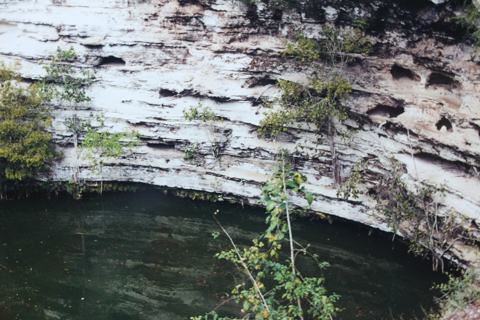
The natural sinkhole at Chichen Itza where the Maya threw offerings of jade, gold, and people, dredged by an American consul in the early 1900s.
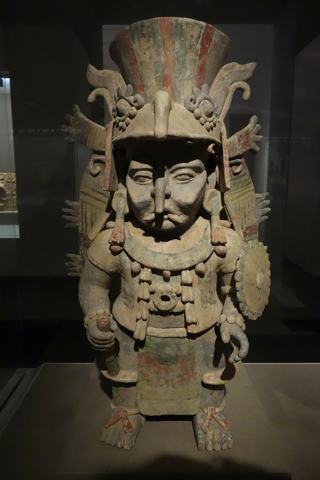
The rain god who splits the clouds with a lightning axe — one god and four, the most frequently depicted deity in the surviving Maya books.
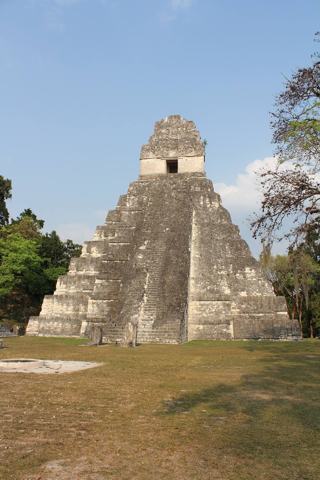
The great Classic Maya city of the Peten rainforest — a dynasty two thousand years deep, a war with Calakmul, and a king's tomb built as a mountain.
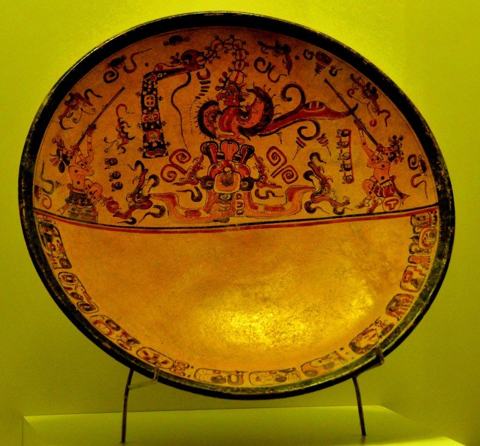
Hunahpu and Xbalanque — the ballplaying twins of the Popol Vuh who outwitted the lords of Xibalba, avenged their father, and rose as sun and moon.
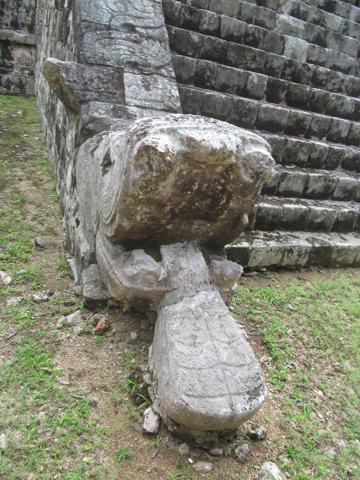
The Feathered Serpent of the Maya — creator's voice in the Popol Vuh, patron of Chichen Itza, and the shadow that descends its pyramid at the equinox.
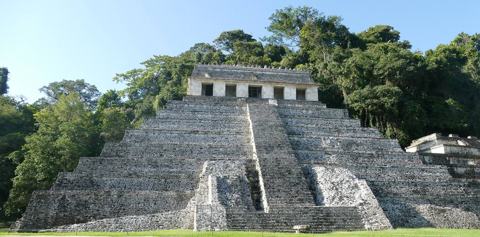
Palenque's funerary pyramid, raised over the tomb of King Pakal and carved with one of the longest surviving Classic Maya hieroglyphic texts.
Sources & Further Reading
- 1.Diego de Landa, Relacion de las cosas de Yucatan (c. 1566).
- 2.Tozzer, Alfred M. Chichen Itza and Its Cenote of Sacrifice: A Comparative Study of Contemporaneous Maya and Toltec. Peabody Museum Memoirs, Harvard University, 1957.
- 3.Sprajc, Ivan & Pedro Francisco Sanchez Nava. 'El Sol en Chichen Itza y Dzibilchaltun: la supuesta importancia de los equinoccios en Mesoamerica.' Arqueologia Mexicana XXV, no. 149 (2018): 26-31.
- 4.Kowalski, Jeff Karl & Cynthia Kristan-Graham (eds.). Twin Tollans: Chichen Itza, Tula, and the Epiclassic to Early Postclassic Mesoamerican World. Dumbarton Oaks, 2007.
- 5.Miller, Mary & Karl Taube. The Gods and Symbols of Ancient Mexico and the Maya. Thames & Hudson, 1993.
- 6.Sharer, Robert J. with Loa P. Traxler. The Ancient Maya, 6th edition. Stanford University Press, 2006.
Spot an error or have a source to suggest? Write to info@viseterna.com. We cite primary sources and modern scholarship, and we correct fast.