
Aeolus
Keeper of the winds on the floating island of Aiolia. He gave Odysseus a leather bag holding every gale but one — and the crew opened it.
Aeolus Giving the Winds to Ulysses, Isaac Moillon, 17th c. (Musee des Beaux-Arts, Rennes) · Public domain · source
Three Men Named Aeolus
Greek myth has at least three figures of this name, and ancient mythographers were already tangling them by the Hellenistic period 5,7:
- Aeolus son of Hellen, the eponymous ancestor of the Aeolian Greeks, a purely genealogical figure with a large and much-disputed family.
- Aeolus son of Poseidon, a Sicilian ruler in some traditions.
- Aeolus Hippotades, "son of Hippotes", the keeper of the winds in the Odyssey — the figure everyone actually means.
Homer's Aeolus is not a god in the strict sense. He is a mortal, "dear to the immortal gods", who has been given stewardship of the winds by Zeus, with power to rouse or still whichever he chooses. Later poetry promoted him steadily upward until Virgil could treat him as a proper divine officer with a throne, a sceptre and a mountain prison 1,3,7.
The Floating Island
Aiolia is one of the strangest places in the poem: an island that drifts on the sea, ringed by an unbroken bronze wall and a sheer cliff of rock. Inside lives Aeolus with his wife, six sons and six daughters, whom he has married to one another, and the whole family feasts every day of the year in a hall that smells of roasting meat, "and the courtyard echoes about them" 1,6.
Commentators have long noted that the household is a deliberately closed system — self-married, self-sufficient, walled in bronze, unmoored from any coastline. It is presented without judgement, as a marvel rather than a scandal, and it functions in the poem as one more model of a household set against Ithaca's broken one 6.
The Bag of Winds
Aeolus entertains Odysseus for a month and asks to hear about Troy, then sends him off with the most useful gift in the Odyssey: the hide of a nine-year-old ox, flayed into a bag, containing every wandering wind, tied shut with a silver wire and stowed in the ship's hold. Only the West Wind is left loose, to blow the fleet home 1.
For nine days and nights they sail with Odysseus at the steering oar, refusing to hand it to anyone. On the tenth day Ithaca comes in sight — near enough to see men tending their watchfires — and he falls asleep from exhaustion. The crew, who have decided the bag must be full of gold and silver that their captain is keeping for himself, untie the silver wire. Every wind bursts out at once, and the storm blows the ships straight back the way they came 1,6.
Odysseus wakes and considers going over the side. He covers his head and lies in the ship instead, and they are carried back to Aiolia.
The Second Refusal
The return to the bronze-walled island is one of the coldest scenes in Homer. Odysseus goes back to the hall as a suppliant, admits that his own crew and his own sleep destroyed the gift, and asks for help a second time. Aeolus and his sons throw him out: it is not lawful to help a man so plainly hated by the blessed gods, and he is told to get off the island as the most contemptible thing alive 1,6.
The episode is the poem's cleanest statement about failure. Nothing supernatural defeats the crew here — there is no monster, no goddess, no curse in operation at that moment. They lose their homecoming to suspicion of their own captain and to the ordinary human need to sleep, and the loss is irreversible because divine favour, once wasted, is not offered twice 6,7. What follows immediately is the Laestrygonian harbour, where eleven of the twelve ships are destroyed outright.
Aeolus in Later Poetry
Virgil recasts him entirely. In Aeneid 1 the winds are living, raging prisoners shut in a vast cavern under a mountain, and Aeolus sits above them with a sceptre, holding down their fury, because Jupiter feared what they would do to earth and sky if left free. Juno bribes him with the offer of the nymph Deiopea to release a storm on the Trojan fleet, and he strikes the mountainside with his spear — a scene that fixed the image of the wind-god as jailer for European poetry and painting 3,7.
Ovid keeps the Homeric bag but also links Aeolus to the story of Alcyone, his daughter, whose grief for her drowned husband Ceyx turns them both into kingfishers; the calm days Aeolus grants at midwinter for their nesting are the "halcyon days" of the proverb 4,5. The Aeolian Islands north of Sicily — Lipari, Stromboli and their neighbours — carried his name in antiquity and still do, and Aeolian harps, played by the wind alone, are named for him 7.
Reading the Episode
The wind-bag has an obvious appeal as folklore: it belongs to a widespread family of tales in which winds are kept in sacks, knots or bottles and released by the careless. What Homer does with it is to make it a test of trust inside a crew rather than a test of the hero against a monster, which is why the episode sits where it does — early enough that the audience still believes Odysseus might get home quickly 5,6.
In Popular Culture
"Bag of winds" is a standing motif in fantasy and games, where wind-in-a-container is a convenient magic item, and the phrase "halcyon days" remains in ordinary English use. The 2026 film wave around Christopher Nolan's The Odyssey has brought the episode back into wider circulation as the moment the homecoming was thrown away in sight of shore.
Continue Exploring
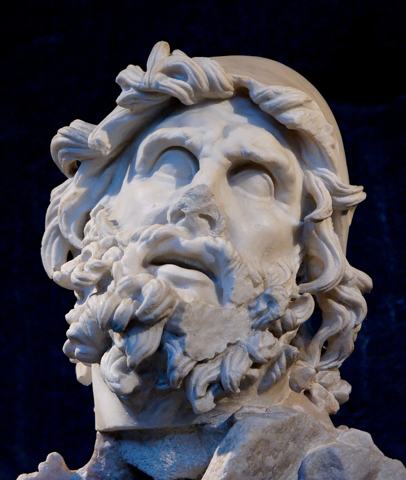
King of Ithaca and the man of many turns. Homer's cleverest hero, who took ten years to sail home from Troy and had to fight for his own house.
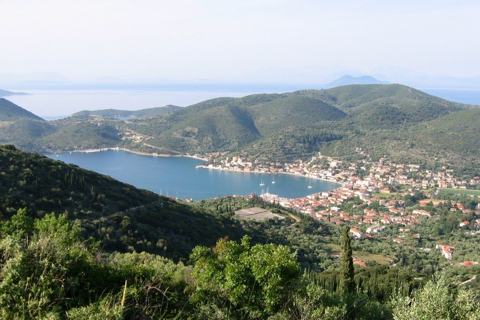
The rocky island kingdom of Odysseus and the destination of the Odyssey — a small, goat-grazed place worth ten years of sailing to get back to.
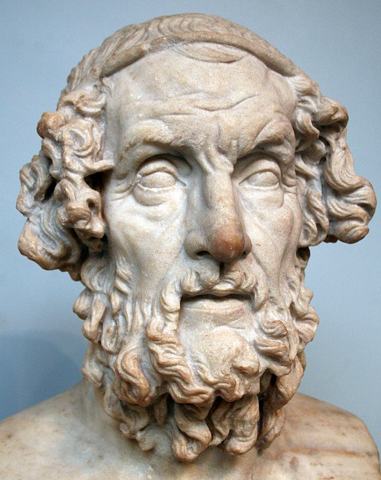
Homer's epic of Odysseus's ten-year voyage home from Troy, the founding adventure story of Western literature and the subject of a 2026 film.
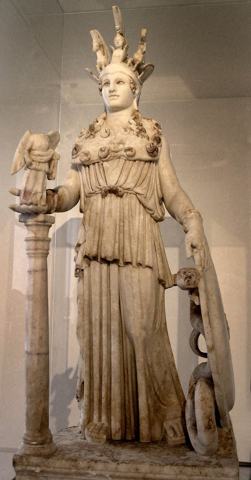
Goddess of wisdom, strategy and craft, born fully armed from the head of Zeus. Patron of Athens, of heroes, and of Odysseus above all.
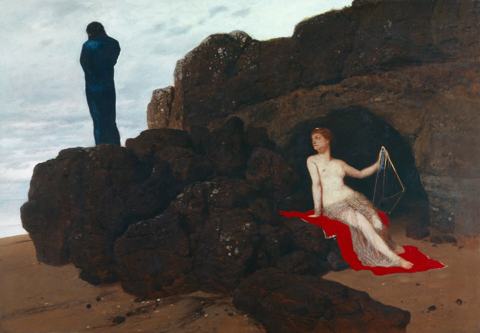
Immortal nymph of the hidden island of Ogygia. She kept Odysseus for seven years and offered him deathlessness; he chose a mortal wife and a rocky island.
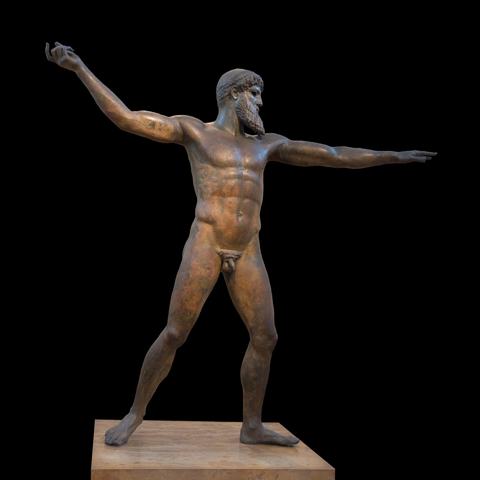
God of the sea, earthquakes and horses. Brother of Zeus, wielder of the trident, and the divine enemy who keeps Odysseus from reaching home.
Sources & Further Reading
- 1.Homer, Odyssey (c. 8th-7th century BCE), Book 10.
- 2.Apollodorus, Bibliotheca and Epitome (1st-2nd century CE).
- 3.Virgil, Aeneid, Book 1 (c. 19 BCE).
- 4.Ovid, Metamorphoses, Books 11 and 14 (c. 8 CE).
- 5.Gantz, Timothy. Early Greek Myth: A Guide to Literary and Artistic Sources. Johns Hopkins University Press, 1993.
- 6.Heubeck, A., S. West, J. B. Hainsworth, A. Hoekstra, J. Russo and M. Fernandez-Galiano. A Commentary on Homer's Odyssey, 3 vols. Oxford: Clarendon Press, 1988-1992.
- 7.Hornblower, S., A. Spawforth and E. Eidinow, eds. The Oxford Classical Dictionary, 4th ed. Oxford University Press, 2012.
Spot an error or have a source to suggest? Write to info@viseterna.com. We cite primary sources and modern scholarship, and we correct fast.