
The Oracle of Delphi
The mountainside sanctuary of Apollo where the priestess Pythia delivered oracles for over a thousand years, and the modern debate over what made her speak.
King Aegeus consulting the oracle, Attic red-figure kylix attributed to the Kodros Painter, c. 440-430 BC (Antikensammlung, Staatliche Museen zu Berlin) · CC BY-SA 3.0 · source
A Sanctuary on the Mountainside
Delphi sits on the southern slope of Mount Parnassus in central Greece, a terraced sanctuary of temples, treasuries, and a theater built into the rock above a steep gorge, dedicated to Apollo as the seat of his oracle 1,3. The ancient Greeks called it the omphalos, the "navel" of the world, and the sanctuary held that rank for the better part of a thousand years, from roughly the eighth century BCE until the late fourth century CE, consulted by private citizens over marriages and business ventures and by entire city-states over war, colonization, and law 3,4. Its physical remains, excavated by French archaeologists beginning in 1892 after the Greek government relocated the modern village of Kastri that had grown up over the ruins, are extensive enough that the sanctuary's layout, the Sacred Way, the Temple of Apollo, the treasuries built by rival cities to display their gifts, can still be walked today 3.
The Pythia and the Ritual of Inquiry
The oracle spoke through the Pythia, a priestess, usually an older woman of the local area chosen for a life of ritual purity, who sat on a tripod within the innermost chamber of Apollo's temple to answer questions put by pilgrims through an intermediary priest 1,3. Herodotus and other ancient authors describe a procedure hedged with restriction: consultations were limited to certain days of the year, preceded by sacrifices and purification, and the Pythia's often cryptic or ambiguous responses were versified and interpreted by temple staff before being delivered to the questioner, a system that left considerable room for priestly judgment in what a "yes" or "no" from the god actually meant 1,4. Ancient sources, including Plutarch, who served as a priest at Delphi himself in the poem's later, declining centuries, describe the Pythia entering a state of inspired trance, enthousiasmos, "possession by the god," rather than performing calculated theater, though how literally to take that description is itself part of the modern debate 2,6.
The Myth Behind the Sanctuary
Greek tradition explained the site's sanctity with a foundation myth: Apollo, newly born, traveled to Delphi and killed Python, a monstrous serpent guarding the place, sometimes said to be an offspring or agent of Gaia, and took the sanctuary for his own, instituting the Pythian Games in commemoration and giving the priestess her title 1,3. Older strata of tradition held that the site had belonged to Gaia or to Themis before Apollo, a claim ancient writers themselves debated, and some accounts describe the Pythia's tripod as originally consecrated to Poseidon or shared between deities before Apollo's cult became dominant, evidence that Delphi's religious authority was renegotiated rather than fixed from the start 3,4. Whatever the layered prehistory, by the historical period Delphi was unambiguously Apollo's house, and its oracular authority was treated as close to unimpeachable, cited by lawgivers, generals, and tyrants alike as justification for major decisions 1,4.
What the Ground Actually Does
Ancient authors, Plutarch among them, describe a pneuma, a vapor or exhalation rising from a fissure in the temple's inner chamber, as the physical trigger for the Pythia's trance, a claim nineteenth- and early twentieth-century archaeologists dismissed after finding no obvious chasm at the excavated site 2,3. That dismissal was reopened in 2001, when geologist Jelle de Boer, archaeologist John Hale, and chemist Jeffrey Chanton published geological evidence that the temple sits directly above the intersection of two fault lines, the Delphic and Kerna faults, capable of releasing gases, including light hydrocarbons such as ethylene, from bituminous limestone beneath the site, and reported trace ethylene and methane in a nearby spring 5. A follow-up study with toxicologist Henry Spiller argued that ethylene inhalation at low concentration could plausibly produce a trance-like, dissociated state consistent with ancient descriptions of the Pythia 6. The claim remains contested rather than settled: critics, including classicist Daryn Lehoux, have questioned both the chemistry, arguing the reported gas concentrations are too low and inconsistently detected to explain sustained inspired speech, and the fit between ancient testimony and a specific intoxicant, noting that Plutarch's own accounts are more metaphorical and variable than a simple gas-trance model requires 7. Fontenrose, writing before the 2001 findings, had already argued from the surviving oracular responses themselves that most were composed by temple priests in ordinary, deliberate language rather than transcribed from ecstatic utterance, a position that cuts against any single physical explanation for the Pythia's authority 3.
Decline and Afterlife
Delphi's influence waned gradually under Roman rule, its treasuries stripped by looters including the emperor Nero, and the oracle was formally silenced under Christian Emperor Theodosius I's ban on pagan cults in the late fourth century CE 3,4. The site was buried under the village of Kastri for over a millennium until systematic excavation began, and it is now a UNESCO World Heritage Site and one of the most visited ancient sanctuaries in Greece, its ambiguity, both about what the Pythia said and about what made her say it, still doing the same work it did in antiquity: inviting interpretation rather than settling it 3,5,7.
Continue Exploring
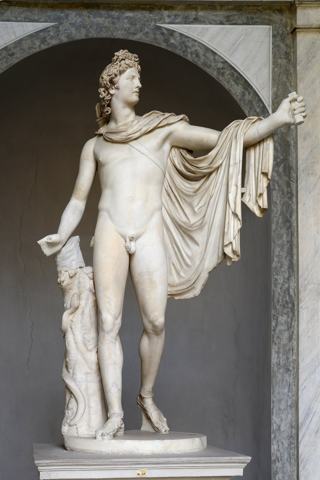
Twin of Artemis, lord of Delphi. God of prophecy, music, healing and plague — the far-shooter whose arrows bring both the cure and the sickness.
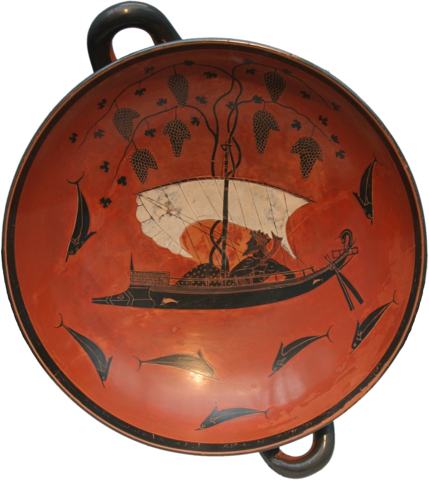
Twice-born god of wine, madness and the mask. He dissolves the boundary between god and beast, and destroys the cities that refuse him.
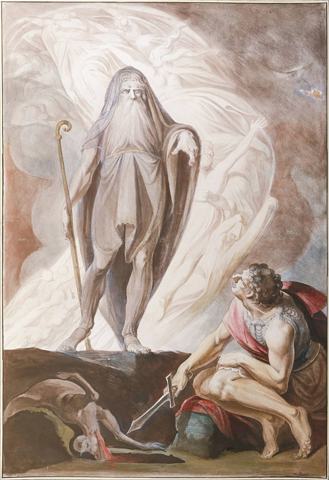
The blind prophet of Thebes who lived seven generations, spent seven years as a woman, and kept his mind intact among the dead.
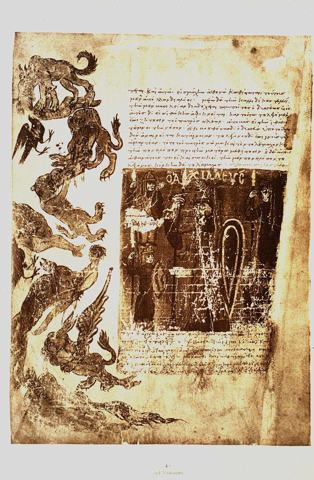
Homer's epic of the final weeks of the Trojan War, opening with Achilles's rage and closing with the ransom of Hector's body.
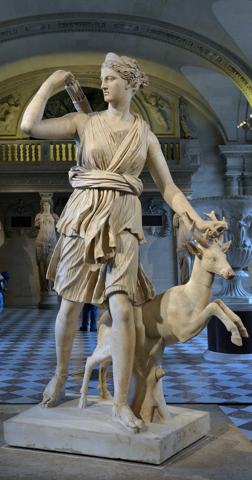
Virgin huntress, mistress of animals, twin of Apollo. Protector of the young and the wild — and a goddess whose arrows kill without warning.
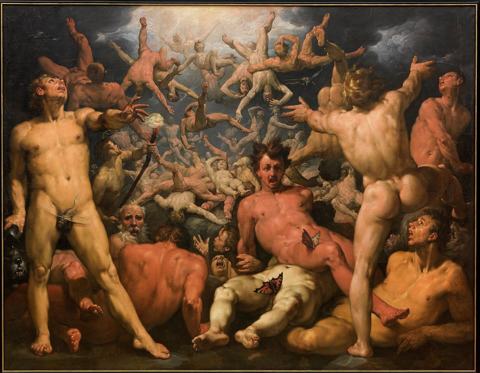
The twelve children of Sky and Earth who ruled before Zeus. Cronus, Rhea, Oceanus, Prometheus' line — and the ten-year war that buried them in Tartarus.
Sources & Further Reading
- 1.Herodotus. The Histories. Translated by Robin Waterfield. Oxford University Press, 1998.
- 2.Plutarch. Moralia, Volume V. Translated by Frank Cole Babbitt. Loeb Classical Library, Harvard University Press, 1936.
- 3.Fontenrose, Joseph. The Delphic Oracle: Its Responses and Operations, with a Catalogue of Responses. University of California Press, 1978.
- 4.Parke, H.W., and D.E.W. Wormell. The Delphic Oracle. Basil Blackwell, 1956.
- 5.de Boer, Jelle Z., John R. Hale, and Jeffrey Chanton. "New Evidence for the Geological Origins of the Ancient Delphic Oracle (Greece)." Geology 29.8 (2001): 707-710.
- 6.Spiller, Henry A., John R. Hale, and Jelle Z. de Boer. "The Delphic Oracle: A Multidisciplinary Defense of the Gaseous Vent Theory." Journal of Toxicology: Clinical Toxicology 40.2 (2002): 189-196.
- 7.Lehoux, Daryn. "Drugs and the Delphic Oracle." Classical World 101.1 (2007): 41-56.
Spot an error or have a source to suggest? Write to info@viseterna.com. We cite primary sources and modern scholarship, and we correct fast.