
Manannan mac Lir
The Irish sea god — ferryman between worlds, master of illusion and the mist of invisibility, and the presiding figure of the Otherworld voyages.
'Manannan put a powerful enchantment on the shield', Beatrice Elvery, from Violet Russell, Heroes of the Dawn, 1914 · Public domain · source
Son of the Sea
Manannan mac Lir is the Irish god of the sea. The patronymic is the plainest statement of function in the whole tradition: ler is simply "sea," so his name means "Manannan, son of the sea," and the medieval glossators treat mac Lir as a description rather than a family tree 2,7,8. He is generally counted among the Tuatha De Danann, though the older texts often place him slightly apart from them — a figure who arrives, gives, warns and leaves rather than one who holds a seat at their councils 5,7.
Sanas Cormaic, the ninth- to tenth-century glossary, offers a rationalising account: Manannan was a famous merchant and navigator of the Isle of Man, the best pilot in western Europe, who could read the weather from the sky, and the Irish and the Britons called him a sea god for it 2. The entry is euhemerism — a Christian scholar explaining a god as a misremembered man — but it also preserves the association with Man that runs through the whole tradition. His Manx counterpart, Manannan beg mac y Leirr, remained a figure of local custom on the island long after the Irish sagas stopped being copied 2,7,8.
A separate Welsh figure, Manawydan fab Llyr, appears in the Second and Third Branches of the Mabinogi. The names correspond, but the characters do not: Manawydan is a patient craftsman and husband, not a sea god, and scholars generally treat the two as related developments of an inherited name rather than the same deity transplanted 7,8.
Horses, Mist, and the Crane Bag
His possessions are among the most vividly specified in Irish literature. He rides or drives the horse Enbarr (also Aonbharr), which crosses water as easily as land; he owns the self-propelling boat Sguaba Tuinne, "Wave-sweeper," which goes where its passenger wishes without sail or oar; and his sword Fragarach, "the Answerer," is said to cut any armour 3,7. His cloak, swept between two people, makes it impossible for them ever to meet again 3,7.
He is also credited with the feth fiada, the magic mist or veil of invisibility, and in the later tradition it is Manannan who grants it to the Tuatha De Danann when they retreat into the mounds — along with the Feth Fiada itself, the Feast of Goibniu that keeps them from ageing, and the pigs that can be killed and eaten and are alive again next morning 5,7. In that arrangement he functions as the quartermaster of the Otherworld, the one who fits out a defeated divine race for its new existence underground 5,7,8.
The crane bag, corrbolg, belongs to him too. Made from the skin of a woman transformed into a crane, it holds his treasures; the sea fills it at high tide and empties it at low, which is a neat mythological joke about a container whose contents depend on the tide 7,8. It later passes into the Fenian tradition and the keeping of Finn McCool 7.
The Voyages
Manannan's largest literary role is in the echtrai and immrama, the adventure and voyage tales. In Immram Brain, Bran sets out for the Land of Women after an Otherworld woman sings to him of it, and mid-ocean he meets Manannan driving a chariot across the waves. The god's poem is the most quoted passage attached to him: what Bran sees as a sea of waves, Manannan sees as a flowering plain; what Bran calls salmon, Manannan calls calves and lambs. The two perceptions are simultaneous and equally true, and the passage is routinely cited as the clearest medieval Irish statement that the Otherworld is not elsewhere but alongside 1,7,8.
Echtra Cormaic sends the god ashore. Manannan comes to Tara in disguise carrying a silver branch with golden apples whose music puts the wounded and the grieving to sleep, and trades it to King Cormac for three wishes; he then takes Cormac's family and draws him into the Land of Promise, where the king is shown a well with five streams and a cup that breaks at three lies and mends at three truths. The whole sequence turns out to be a test, and the visitor names himself at the end 3,7.
The same poem in Immram Brain prophesies Mongan, and Compert Mongain makes it flesh: Manannan comes to the wife of the Ulster king Fiachnae mac Baetain in her husband's shape, having bargained to win Fiachnae a battle overseas, and the historical seventh-century king Mongan mac Fiachnai is given a divine father in retrospect 1,4,7. Manannan is thus one of the very few Irish gods attached to a datable historical person, which tells us something about how flexible the tradition remained 4,8.
Fosterage, Justice, and the Sea Itself
Across the corpus he is the great fosterer. He rears Lugh in some versions of that god's upbringing and equips him for the second battle of Mag Tuired; he takes in the children of the Tuatha De after their defeat; and in the Fenian material he appears as an adviser and giver of gear 5,7. The role suits a god of passage: he moves people between conditions as readily as between shores.
His name is also written on the water. The sea is called Manannan's cloak in Manx idiom, breaking waves his horses, and the Isle of Man's traditional connection to him was strong enough that antiquarian tradition attaches the three-legged triskelion to his protective magic — a piece of folk etymology rather than evidence, but a durable one 2,7,8. The Broighter boat, a first-century BC gold model ship from County Derry, was found in what is usually interpreted as a votive deposit at the edge of a sea inlet, and while nothing in it names any god, it is the closest surviving artefact to the tradition's image of a divine vessel 8.
Compared with The Dagda's appetite and The Morrigan's violence, Manannan is characterised by knowledge withheld and then given: he tests, he disguises, he sets a price, and the price is usually the discovery that the world is larger than the visitor thought 1,3,7.
Continue Exploring
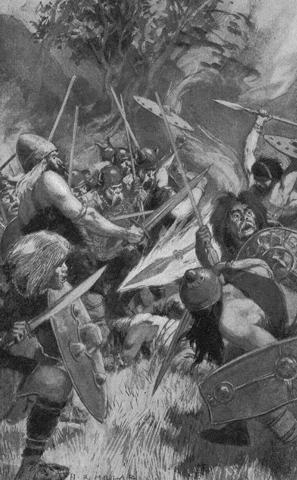
Ireland's race of gods — arriving with four treasures from four lost cities, winning Ireland twice, then losing it once and withdrawing into the mounds.
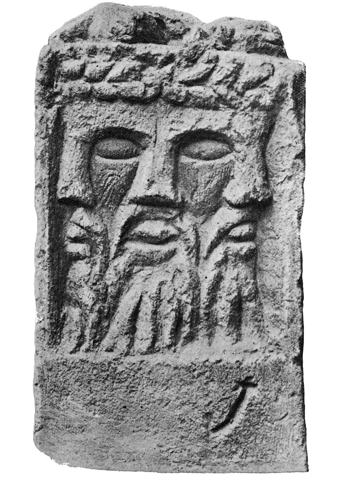
Master of every skill — the young god admitted to Tara because he alone could do all the crafts at once, and who killed his own grandfather Balor.
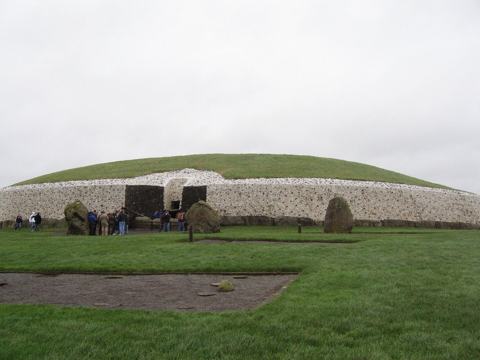
The good god — not morally good but good at everything: the club-bearing, cauldron-owning father figure of the Tuatha De Danann, and their crudest comedian.
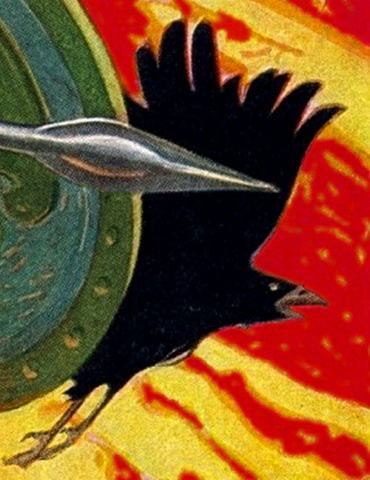
The great queen of war and fate — a shape-shifting Irish goddess who takes crow form above the battlefield and decides its outcome before it is fought.
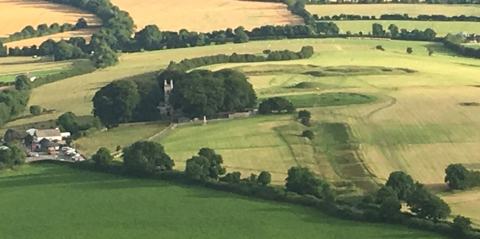
A low Meath hilltop layered with 5,000 years of earthworks, remembered as the seat of Ireland's High Kings — a title the archaeology alone cannot confirm.
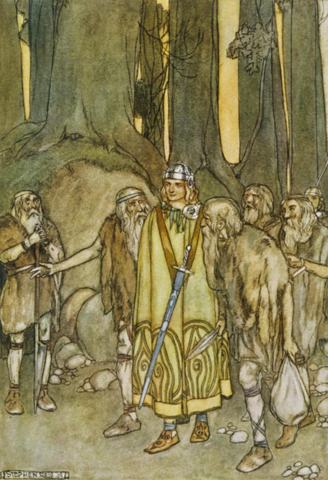
Warrior-poet, leader of the Fianna, and the hero who burned his thumb on the Salmon of Knowledge — Ireland's most widely told legend.
Also mentioned inSelkie (Seal Folk)
Sources & Further Reading
- 1.Immram Brain maic Febail (The Voyage of Bran), ed. and trans. Kuno Meyer with Alfred Nutt, The Voyage of Bran. David Nutt, 1895-1897.
- 2.Sanas Cormaic (Cormac's Glossary), attributed to Cormac mac Cuilennain, 9th-10th century; ed. Kuno Meyer, Anecdota from Irish Manuscripts IV, 1912.
- 3.Echtra Cormaic i Tir Tairngiri (The Adventure of Cormac in the Land of Promise), Middle Irish; ed. Whitley Stokes, Irische Texte III, 1891.
- 4.Compert Mongain (The Birth of Mongan) and the Mongan tales, Cycles of the Kings, Old Irish.
- 5.Cath Maige Tuired: The Second Battle of Mag Tuired, ed. and trans. Elizabeth A. Gray. Irish Texts Society vol. 52, 1982 (CELT edition).
- 6.Oidheadh Chloinne Lir (The Fate of the Children of Lir), Early Modern Irish.
- 7.MacKillop, James. Dictionary of Celtic Mythology. Oxford University Press, 1998.
- 8.Koch, John T. (ed.). Celtic Culture: A Historical Encyclopedia. ABC-CLIO, 2006.
Spot an error or have a source to suggest? Write to info@viseterna.com. We cite primary sources and modern scholarship, and we correct fast.