
The Weighing of the Heart
Egypt's judgment of the dead: the heart set on a scale against the feather of Maat, with oblivion waiting for whichever side tips wrong.
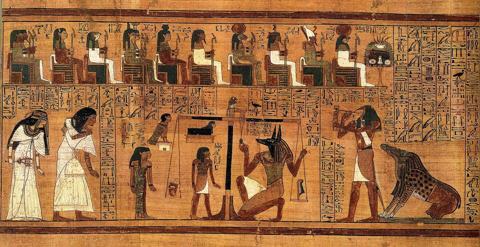
Judgment scene, Papyrus of Hunefer, 19th Dynasty, c. 1275 BC (British Museum EA9901) · Public domain · source
The Scene in the Hall of Two Truths
In the standard New Kingdom account, Anubis leads the newly dead into the Hall of the Two Truths, where they face forty-two assessor deities and recite the "negative confession" — a long, formulaic denial of specific wrongs, addressed to each judge by name: "I have not stolen," "I have not told lies," "I have not caused anyone's suffering" 1,2. The declaration finished, the deceased's heart is set on one pan of a balance, weighed against the feather, or seated figure, of Maat — truth, justice and cosmic order in a single word Egyptian theology never fully separated into three 1,4.
Why the Heart
For Egyptians the heart, not the brain, was the organ of thought, memory, and moral character — the part of a person that could be called to account, because it was where intention and conscience were assumed to live 4,5. That belief shaped mummification itself: nearly every internal organ was removed during embalming, but the heart was deliberately left in place, because a body prepared for judgment needed the very thing that judgment would examine 4,5.
The Court in Session
Anubis adjusts the scale and confirms the reading; Thoth, ibis-headed, stands ready with reed and palette to record the verdict; the hybrid Ammit — part crocodile, part lion, part hippopotamus — waits beside the balance in case the heart is found too heavy with wrongdoing 1,2. Osiris presides at the far end of the hall, enthroned, to receive the vindicated; those who pass are led forward and pronounced "true of voice" 1,2,6.
Insurance Against Your Own Heart
Egyptians did not treat this as a formality. Spell 30B of the Book of the Dead is addressed directly to the owner's own heart — "do not stand up as a witness against me, do not create opposition against me" — and was routinely carved on a heart-shaped scarab amulet laid on the mummy's chest, specifically to keep the heart from volunteering testimony at the scale 1,5. An entire class of funerary jewellery existed to manage the risk that a person's own body might convict them.
Two Papyri, One Pattern
The judgment scene was copied from workshop pattern books, which is why the Papyrus of Ani and the Papyrus of Hunefer, made for two different scribes a generation or so apart, show essentially the same composition with different faces and names inserted 2,3. Hunefer's version adds a step Ani's omits: after the weighing, the falcon-headed Horus takes Hunefer by the hand and presents him personally to the enthroned Osiris 3,6. Virtually every surviving papyrus shows its owner passing, which is not evidence that no one ever failed — it reflects the fact that the papyrus itself was funerary equipment, made for a specific buyer and meant to help produce the good outcome it depicted 4,6.
What Failure Actually Meant
Egyptian religion had nothing resembling the Christian hell, no realm of ongoing torment for the condemned 5,6. A heart that failed the weighing was eaten on the spot, and what Ammit delivered was annihilation: the loss of the heart meant the loss of identity and memory, a state Egyptians called "the second death" and regarded as far worse than any conceivable punishment that let a person go on existing 5,6. The scene is accordingly the narrow point through which every account of the Duat has to pass — the single test on which an entire afterlife bureaucracy of spells, amulets and offerings was built to make sure a person's heart came out light 4,5.
Continue Exploring
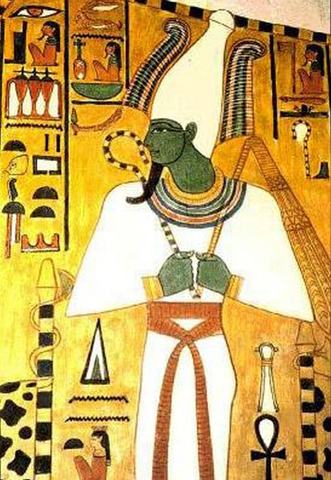
Lord of the afterlife — the murdered king remade as the first mummy, whose resurrection promised every Egyptian a life beyond the grave.
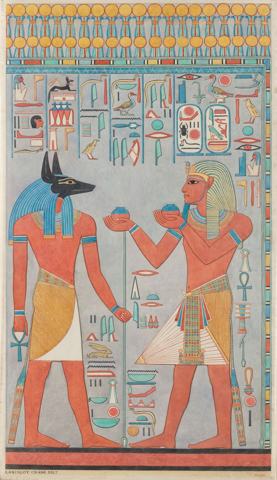
Guardian of the dead — the black jackal god who embalmed Osiris, watched over the necropolis, and weighed the heart against the feather of truth.
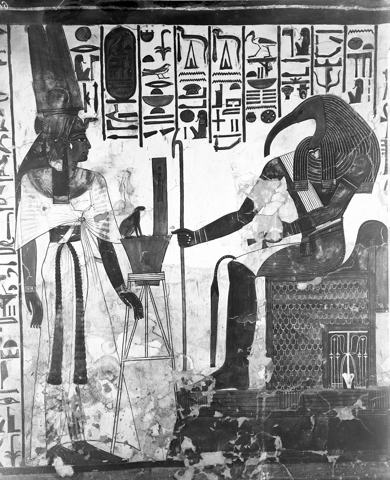
Ibis-headed lord of writing, reckoning and the moon — Thoth keeps the record at the judgment of the dead and settles the quarrels of the gods.
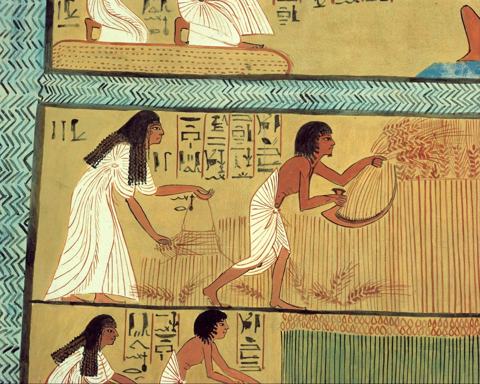
The Egyptian underworld — the night country crossed by the sun in twelve hours and by every dead Egyptian hoping to come out reborn at dawn.
Devourer of the dead — the crocodile-lion-hippopotamus hybrid who crouched beside the scales and swallowed the hearts that failed the weighing.
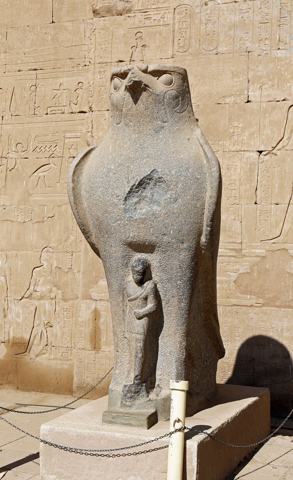
The sky falcon — god of kingship whose torn-out eye became the symbol of healing, and who won Egypt's throne from Set after eighty years of litigation.
Also mentioned inThe Egyptian Book of the Dead
Sources & Further Reading
- 1.The Egyptian Book of the Dead (Book of Going Forth by Day), Spell 125, New Kingdom.
- 2.The Book of the Dead of Ani (Papyrus of Ani), British Museum EA10470, c. 1250 BCE.
- 3.The Book of the Dead of Hunefer, British Museum EA9901, c. 1275 BCE.
- 4.Taylor, John H. Death and the Afterlife in Ancient Egypt. British Museum Press, 2001.
- 5.Assmann, Jan. Death and Salvation in Ancient Egypt. Trans. David Lorton. Cornell University Press, 2005.
- 6.Pinch, Geraldine. Egyptian Mythology: A Guide to the Gods, Goddesses, and Traditions of Ancient Egypt. Oxford University Press, 2002.
Spot an error or have a source to suggest? Write to info@viseterna.com. We cite primary sources and modern scholarship, and we correct fast.