
Varanasi (Kashi)
The Ganges-side city where dying is said to grant liberation outright — one of Shiva's twelve jyotirlingas and a living pilgrimage center for three millennia.
Varanasi, India, Ganges River, ghats, temples and embankments (photograph, 2007) · CC BY 4.0 · source
The City That Never Sleeps and Never Fully Dies
Varanasi sits on the western, concave bank of the Ganges in a stretch shaped like a crescent, and it is known by at least three names in daily use: Varanasi, from the Varuna and Assi streams once said to bound the old city; Banaras, the everyday colloquial form; and Kashi, "the shining one," the name most tied to its religious identity 3,5. It is routinely described as one of the world's oldest continuously inhabited cities, and excavation nearby has pushed evidence of settlement back a few thousand years — Eck treats the claim with some caution, since "continuously inhabited" is a harder thing to prove archaeologically than it is to print on a tourist brochure, but there is no real dispute that the site has drawn pilgrims for a very long time 3,5.
Shiva's City
Kashi's central religious claim is that it belongs to Shiva outright — not merely a temple town but the god's own ground, one of the twelve jyotirlinga sites where he is present as a self-manifest column of light, housed today in the Kashi Vishwanath temple 3,6. The Skanda Purana's Kashi Khanda, a vast section devoted entirely to the city, describes it as never actually located on ordinary earth: Kashi is said to rest suspended above the world on the points of Shiva's own trishula, which is why tradition holds that it survives even the periodic dissolution that destroys everything else at the end of a cosmic age 1,3.
The most consequential promise made about the city is about death rather than life. Dying within Kashi's sacred boundary, the tradition holds, grants moksha directly — release from the cycle of rebirth, bypassing the usual reckoning of accumulated karma, and by extension bypassing Yama, the god whose ordinary business is judging exactly that reckoning 1,6. Pilgrims still travel to the city specifically to die there or to be brought for cremation after death, and Manikarnika and Harishchandra Ghats, the city's two cremation grounds, are said to keep fires burning without interruption 4.
Death as the City's Business
Parry's ethnography of Banaras's cremation specialists is the fullest modern study of what that promise looks like in practice: a caste of funeral priests and pyre-tenders (the Doms and the Mahabrahmans) whose hereditary work is death itself, treated neither as taboo nor as tragedy but as the ordinary, continuous business the city exists to perform 4. Parry is careful to separate the theology from the economics — moksha is offered as an unconditional gift of the place, but the funeral trade that grew up to serve pilgrims seeking it is a livelihood like any other, and the two facts sit uneasily together in his account 4.
Ghats, Poets, and a Contested Temple
The riverfront itself is built almost entirely of ghats — some eighty stone stairways descending to the water, used for cremation, bathing, laundry, and the daily Ganga aarti fire ceremony performed at Dashashwamedh Ghat 3,5. Kashi's religious weight drew poets as often as ascetics: Tulsidas composed much of the Ramcharitmanas, the most widely read vernacular retelling of the Ramayana, while living in the city in the late sixteenth century, and the fifteenth-century poet-saints Kabir and Ravidas, both from artisan castes the temple establishment looked down on, built their own devotional challenges to Kashi's ritual orthodoxy from inside the city itself 2,3.
The temple at the city's religious center has itself been fought over repeatedly. The Mughal emperor Aurangzeb destroyed an earlier Vishweshwar temple in 1669 and built the Gyanvapi Mosque on the site; the current Kashi Vishwanath temple standing beside the mosque was built in 1780 by the Maratha queen Ahilyabai Holkar of Indore, and the adjacency of temple and mosque remains a live legal and political question in India today 3,6.
A Living City, Not a Ruin
Unlike most sites in this Codex, Kashi is not a place where devotion has to be reconstructed from stone and inference. Its temples function, its ghats fill every dawn, and Banaras Hindu University, founded in 1916 by the reformer Madan Mohan Malaviya, made the city a center of modern Indian scholarship alongside its older identity as a center of Sanskrit learning 5. Eck's decades of work on the city treat this continuity as the actual argument for its sanctity: not a single miracle in the deep past, but an unbroken, mundane, daily insistence — by cremation workers, boatmen, priests, students, and pilgrims alike — that the city is still doing what the Kashi Khanda says it has always done 3,5.
Continue Exploring
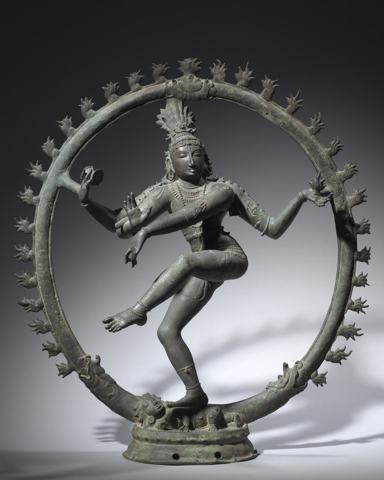
The destroyer and transformer — ascetic on the cremation ground, lord of the cosmic dance, and for millions of Shaivas the supreme reality itself.
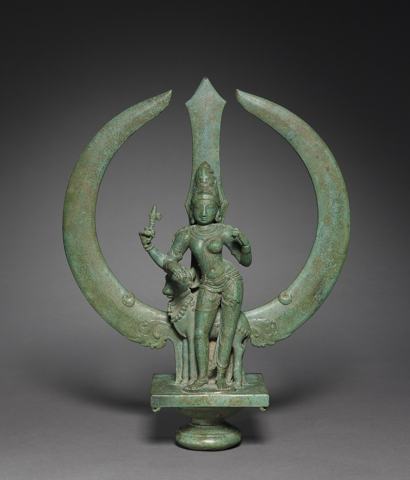
Shiva's three-pronged weapon — planted on temple roofs, carried by wandering ascetics, and read as a compressed statement of his whole theology.
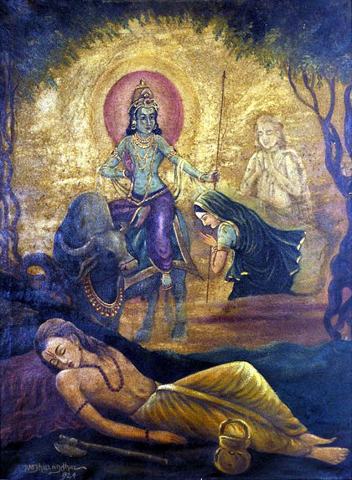
The Rigveda's first mortal to find the path of death, later Lord of the Dead — met by the boy Nachiketas in the Katha Upanishad and once outwitted by Savitri.
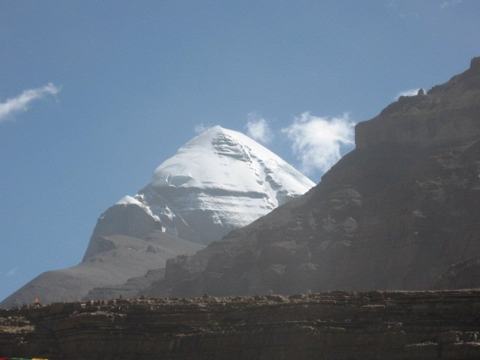
A remote, unclimbed Himalayan peak in western Tibet sacred to Hindus, Buddhists, Jains, and Bon — Shiva's meditation seat and the source of four great rivers.
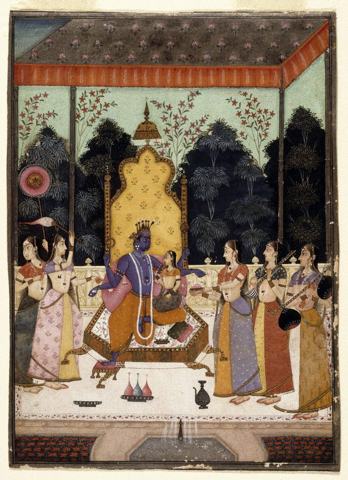
The preserver of cosmic order — the god who descends age after age, as Rama, as Krishna, and in other forms, to set dharma right when it fails.
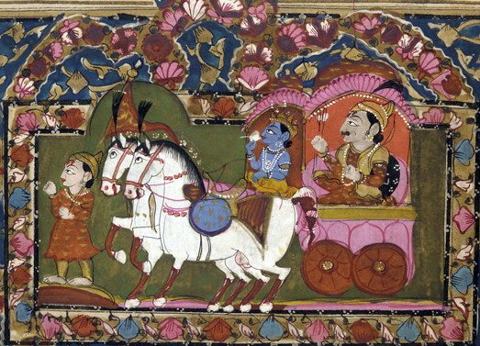
Cowherd, lover, statesman and charioteer — the avatar of Vishnu who speaks the Bhagavad Gita and anchors India's largest devotional tradition.
Sources & Further Reading
- 1.Skanda Purana - Kashi Khanda.
- 2.Tulsidas. Ramcharitmanas (c. 1574-1576).
- 3.Eck, Diana L. Banaras: City of Light. Alfred A. Knopf, 1982.
- 4.Parry, Jonathan P. Death in Banaras. Cambridge University Press, 1994.
- 5.Eck, Diana L. India: A Sacred Geography. Harmony Books, 2012.
- 6.Flood, Gavin. An Introduction to Hinduism. Cambridge University Press, 1996.
Spot an error or have a source to suggest? Write to info@viseterna.com. We cite primary sources and modern scholarship, and we correct fast.