
Vanaheim
Home of the Vanir — named exactly once in the surviving sources, as the place Njord came from. Everything else about it is inference from its famous emigrants.
The Aesir-Vanir war (Odin hurling his spear over the opposing host), Lorenz Frolich, 1895. The war after which the Vanir hostages left Vanaheim; the realm itself is not depicted · Public domain · source
One Line in One Poem
Vanaheim is named directly exactly once in the entire surviving corpus. In Vafthrudnismal, Odin — travelling in disguise as Gagnrad — asks the giant Vafthrudnir where Njord came from, since he was plainly not raised among the Aesir, and gets a precise answer: Njord was "fostered in Vanaheim" by wise powers, was given to the gods as a hostage, and at the end of the world will go back to the wise Vanir 1. That single stanza is the entirety of Vanaheim's direct textual attestation as a named place 1,5.
Everything else commonly said about Vanaheim — a country, a court, a landscape — is built by inference from the gods who are known to belong to it, not read from any description of the place itself. This entry is honest about that limit rather than filling the gap with invention 1,5,6.
Richly Attested Gods, an Unattested Country
The Vanir themselves are anything but obscure. Njord, Freyr and Freyja are among the best-documented figures in Norse myth, with their own cults, place-names, and story cycles covering the sea, the harvest, love, gold, war and seidr magic 3,5. But almost all of their attested action happens after they arrive among the Aesir — Freyr courting Gerd from Odin's high seat, Freyja weeping gold for her lost husband, Njord married unhappily to the giantess Skadi — and none of it is set in Vanaheim 3,5.
Lokasenna gives a glimpse of how the Vanir were regarded from outside: Loki taunts Njord in front of the assembled gods, accusing the Vanir of practices the Aesir found shameful, including brother-sister marriage 2. Snorri's euhemerised Ynglinga saga confirms the custom as something remembered about "the Vanir" as a people, noting that it was lawful among them and that Freyr and Freyja were born of such a match 4. Even this evidence is about Vanir custom in the abstract, not about a place where that custom was practised.
The War That Explains the Silence
One reason the narrative rarely visits Vanaheim may be structural. The Aesir and the Vanir fought a first war, ended by a negotiated exchange of hostages: Njord and, in Snorri's telling, his son Freyr and the wise being Kvasir went to live among the Aesir, while Hoenir and Mimir went the other way 3,4. From that point on, the surviving poems and Snorri's retellings are Aesir-centred literature — composed in a milieu that told stories about Asgard and treated the Vanir gods as honoured immigrants there, not as reporters sending word home 3,4,5.
Seen this way, Vanaheim's silence is less a gap in what once existed and more a consequence of whose stories got told. The camera, so to speak, followed Njord, Freyr and Freyja to Asgard and never went back to where they came from 3,5.
Two Cults, One Memory?
The comparative mythologist Georges Dumezil offered an influential, still-debated reading of the whole Aesir-Vanir split: that it preserves, in narrative form, the memory of two originally separate religious complexes among Indo-European peoples — one built around sovereignty, law and war, the other around fertility, wealth and peace — which fused into a single pantheon and explained the fusion as a war followed by a truce 7. On this account, Vanaheim's thinness is not an accident of transmission but a sign that the "realm" was never much more than a category label for one function within a single system of belief, rather than a place with its own geography 5,7.
The theory is influential rather than settled, and Simek notes that the strict two-tribe model has been challenged on several fronts, including how cleanly Norse sources actually separate Aesir and Vanir cult practice on the ground 5. Njord's name is also the direct linguistic descendant of Nerthus, a goddess Tacitus describes among first-century Germanic tribes riding in a covered wagon on a sacred island — evidence, whatever it implies about Vanaheim, that a Vanir-type fertility cult existed centuries before the Eddas were written down 5.
An Honest Gap
Stated plainly: no surviving source describes Vanaheim's landscape, names a hall within it, or sets a single scene there. It has no Jotunheim-style visitor's tale, no Muspelheim-style role at Ragnarok, and no equivalent of even Alfheim's solitary tooth-gift line pinning down how it was acquired. What it has is one clause identifying it as Njord's birthplace, and a large, well-documented family of gods whose homeland it is simply assumed to be 1,3,5.
That is thinner ground than most fantasy retellings admit 1,5. The honest version of Vanaheim is not a hidden kingdom waiting to be explored — it is the blank the sources leave where a Vanir homeland would have to go, held open only by the gods who are said to have left it.
Continue Exploring
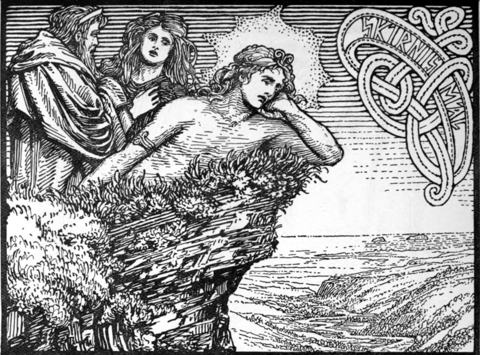
The realm of the light-elves, given to Freyr as a baby present — one of the least described places in the Norse cosmos.
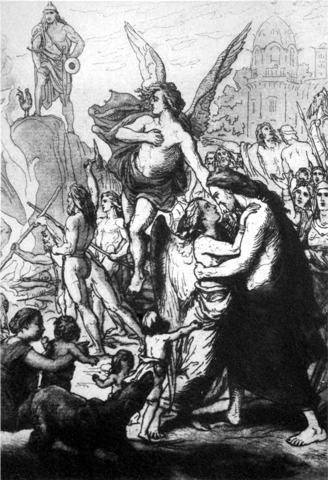
The stronghold of the AEsir. A walled citadel of halls at the top of the world tree, reached by the rainbow bridge and built on a bargain the gods broke.
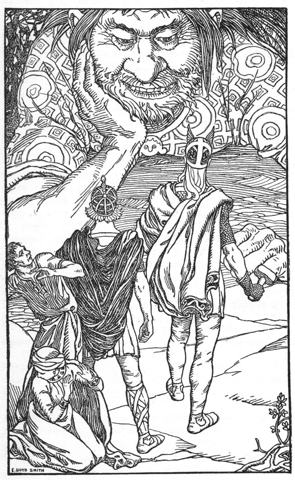
Land of the giants. The wild country east of the fence, older than the gods, holding the wisdom and the brides the AEsir keep going out to take.
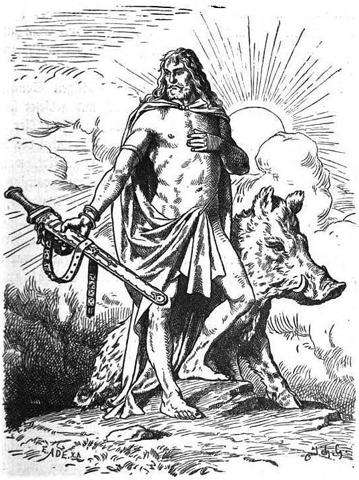
Vanir god of harvest, peace and kingship. Owner of the golden boar Gullinbursti, he traded away his sword for love and pays for it at Ragnarok.
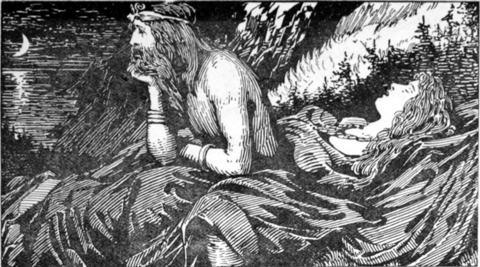
Vanir god of harbours, wind and wealth. Sent to the Aesir as a hostage; father of Freyr and Freyja; husband of a mountain giantess, briefly.
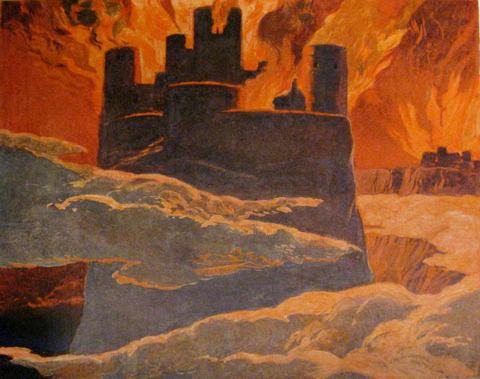
The primordial fire-region of the south, older than the earth — home of Surtr and the sons of Muspell, present at the world's making and its burning.
Sources & Further Reading
- 1.Poetic Edda — Vafthrudnismal (Codex Regius, 13th century).
- 2.Poetic Edda — Lokasenna (Codex Regius, 13th century).
- 3.Snorri Sturluson, Prose Edda — Gylfaginning (c. 1220).
- 4.Snorri Sturluson, Ynglinga saga, in Heimskringla (c. 1230).
- 5.Lindow, John. Norse Mythology — A Guide to the Gods, Heroes, Rituals, and Beliefs. Oxford University Press, 2001.
- 6.Simek, Rudolf. Dictionary of Northern Mythology. Trans. Angela Hall. D.S. Brewer, 1993.
- 7.Dumezil, Georges. Gods of the Ancient Northmen. Ed. Einar Haugen. University of California Press, 1973.
Spot an error or have a source to suggest? Write to info@viseterna.com. We cite primary sources and modern scholarship, and we correct fast.