
Rakshasa
Hindu myth's shape-shifting night-demons, from Vedic sacrifice-wreckers to the villains of Lanka — a class capable of both monstrous cruelty and real nobility.
The Three-Headed Rakshasa Trishiras, Company School gouache painting, Trichinopoly style, c. 1830 · Public domain · source
Protectors Turned Predators
Rakshasa (राक्षस) is the general Sanskrit term for a broad class of demonic beings, shape-shifters, cannibals, and disruptors of ritual and order, who appear from the earliest Vedic hymns through the classical epics and never really leave Hindu storytelling afterward. Dowson's nineteenth-century reference dictionary records the traditional etymological debate over the word itself: one derivation ties it to a root meaning "to guard" or "to protect," reading rakshasas as beings originally set to guard something (treasure, a place, a forest) before folk understanding recast them as predators rather than protectors; a rival derivation simply ties the word to harm and destruction from the start 5. Modern scholarship treats the "protector" etymology as folk etymology rather than settled linguistics, but the ambiguity is telling: rakshasas are consistently beings whose danger is bound up with territory and boundary, disruptive to humans mainly when their space is crossed 5.
Demons of the Vedic Night
In the Rigveda the rakshasas are already a named threat, invoked mainly in hymns asking for protection rather than described for their own sake. They are night-prowlers who attack the sacrifice itself, spoiling offerings, frightening cattle, and threatening the officiants, and several hymns are essentially prayers for Indra or Agni to burn or strike them down before they can do harm 1. This Vedic rakshasa is barely individuated — a category of danger rather than a cast of named characters — and it is only in the epics that rakshasas acquire kingdoms, genealogies, and personalities 1.
Villains of Lanka
The Ramayana supplies the tradition's most famous rakshasas by a wide margin: Ravana, the ten-headed king of Lanka and Valmiki's central antagonist; his gigantic, permanently sleeping brother Kumbhakarna; and his sister Shurpanakha, whose mutilation by Lakshmana after she propositions Rama sets the whole war in motion 2. Valmiki's rakshasas are not uniform monsters — Ravana himself is a Vedic scholar and a devotee of Shiva as well as a tyrant, and his brother Vibhishana defects to Rama's side on principle, becoming one of the epic's genuinely righteous characters despite his rakshasa birth, which the text treats as a matter of species rather than destiny 2. That distinction matters: the Ramayana is explicit that being a rakshasa is not by itself a moral verdict, even as most of the rakshasas the story actually follows behave monstrously.
Demons of the Mahabharata
The Mahabharata keeps rakshasas as a recurring hazard of forest life for its heroes rather than a single organised kingdom. In its best-known rakshasa episode, the Pandava prince Bhima, wandering in exile, is confronted by the cannibal rakshasa Hidimba, kills him, and then marries his sister Hidimbi, who had fallen for Bhima and warned him of her brother's approach rather than betraying him 3. Their son, Ghatotkacha, is raised among the rakshasas and later fights and dies for the Pandavas at Kurukshetra, a hybrid hero whose rakshasa blood is treated by the epic as a source of formidable and useful power rather than taint 3. Hiltebeitel's study of the epic's narrative logic reads episodes like this one as part of a broader Mahabharata pattern in which marginal, non-Aryan or demon-associated figures are repeatedly absorbed into the Pandava camp and made instrumental to its ultimate victory 6.
A Form of Marriage
Rakshasas left a mark on Hindu law as well as myth. The classical legal text tradition recognises eight forms of marriage, and the rakshasa vivaha, "rakshasa marriage," is the term used for marriage by forcible abduction of the bride, listed and ranked among the recognised (if lower-status) forms in the Manusmriti's catalogue of marriage types 4. Doniger and Smith's translation renders the classification plainly: the text does not invent the category to describe supernatural beings but borrows the demon's name for a real, if disapproved-of, human practice, which says a good deal about what rakshasas were understood to represent culturally — violent seizure across a boundary that ought to have been respected 4.
Rakshasas After the Epics
Later Sanskrit and vernacular literature keeps producing rakshasas well past the two great epics — Bakasura and Trishiras among the Mahabharata's own supporting cast of demons, and a long tail of Puranic and folk rakshasas collected in reference works like Dowson's dictionary, which catalogues dozens of named figures beyond the handful that remain widely known today 5. The category has proven durable in popular culture as well, supplying a stock antagonist type for Indian film, television, and fantasy fiction that draws on the same basic profile fixed by the epics: powerful, shape-shifting, usually nocturnal, and dangerous chiefly to those who provoke or trespass against them 2,3.
Continue Exploring
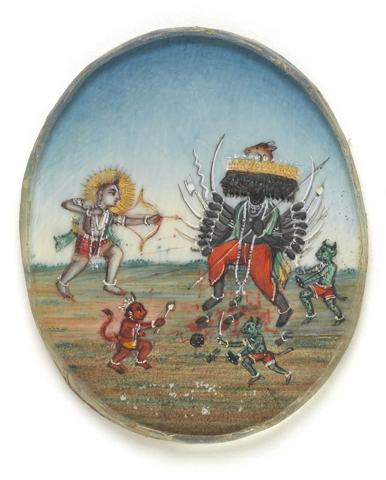
Lanka's rakshasa king, ten-headed abductor of Sita in the Ramayana and a devoted worshipper of Shiva — a villain regional traditions read very differently.
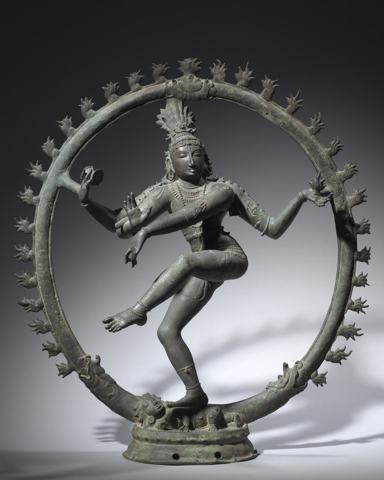
The destroyer and transformer — ascetic on the cremation ground, lord of the cosmic dance, and for millions of Shaivas the supreme reality itself.
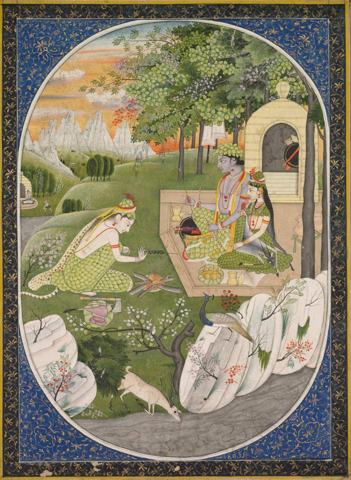
Prince of Ayodhya and seventh avatar of Vishnu — exiled hero of the Ramayana, slayer of Ravana, and the ideal of dharma.
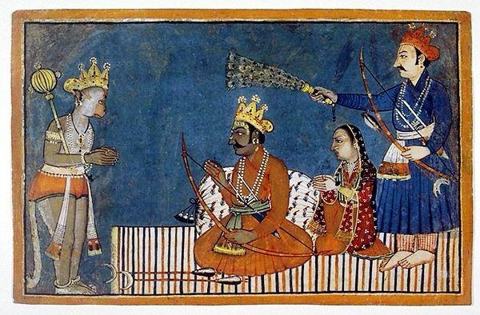
Son of the wind, greatest of the vanaras, and Rama's perfect servant — the leaper of oceans who became one of India's most worshipped gods.
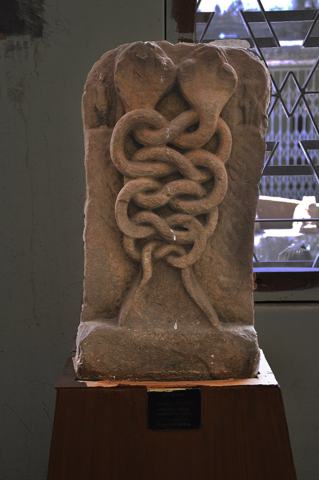
Semi-divine serpent beings of the waters and the underworld — hooded and jewel-crowned guardians of treasure, of rain, and of hidden knowledge.
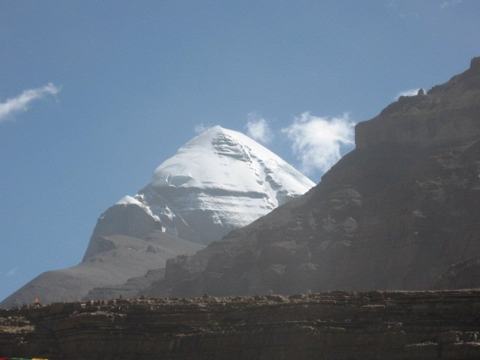
A remote, unclimbed Himalayan peak in western Tibet sacred to Hindus, Buddhists, Jains, and Bon — Shiva's meditation seat and the source of four great rivers.
Sources & Further Reading
- 1.The Rigveda (c. 1500-1200 BCE); translated by Stephanie W. Jamison and Joel P. Brereton. Oxford University Press, 2014.
- 2.Valmiki. Ramayana, translated by Robert P. Goldman et al. as The Ramayana of Valmiki — An Epic of Ancient India. Princeton University Press, 1984-2017.
- 3.The Mahabharata, Adi Parva (the Hidimba episode).
- 4.Doniger, Wendy, and Brian K. Smith, trans. The Laws of Manu. Penguin Classics, 1991.
- 5.Dowson, John. A Classical Dictionary of Hindu Mythology and Religion, Geography, History, and Literature. Trubner & Co., 1879.
- 6.Hiltebeitel, Alf. Rethinking the Mahabharata — A Reader's Guide to the Education of the Dharma King. University of Chicago Press, 2001.
Spot an error or have a source to suggest? Write to info@viseterna.com. We cite primary sources and modern scholarship, and we correct fast.