
Diwali (Deepavali)
The festival of lights lit around the new moon of Kartika — explained across regions and faiths by at least four different founding stories.
Diwali, the Feast of Lamps, chromolithograph by William Simpson, 1867 · Public domain · source
A Row of Lights
Diwali, from the Sanskrit Deepavali, "a row of lamps," is the best-attended festival of the Hindu year, centred on the darkest night of the lunar month of Kartika (October or November) and, in most regions, spread across an approach of two or three days and a tail of one or two more 5. Its signature act is universal even where its meaning is not: rows of small clay oil lamps, diyas, set along walls, window ledges and doorsteps to push back the year's longest dark. Fireworks, new clothes, sweets exchanged between households, and the ritual cleaning and whitewashing of the home are attached to it almost everywhere it is kept 5,6.
What Diwali does not have is a single founding myth. Ask why the lamps are lit in Ayodhya, Varanasi, a Gujarati trading family's account books, a Jain temple or a Sikh gurdwara, and four or five different, unconnected stories come back, each sufficient on its own and none of them canceling the others 5.
Rama's Return to Ayodhya
The explanation most North Indians give first is narrative rather than ritual: that the citizens of Ayodhya lit the city with rows of lamps to welcome home their prince after fourteen years of exile and his victory over Ravana, and that Diwali re-enacts that welcome every year 1. The claim sits outside Valmiki's own text — his Ramayana nowhere describes an annual lamp festival — and scholars treat it as a popular gloss layered onto an older seasonal observance rather than the festival's origin, though it is by far the most commonly told story today and the one that gives Diwali its emotional shape in the Hindi-speaking north 1,5. Sita's part in the return, and the couple's coronation soon after, are folded into the same telling.
Lakshmi and the Merchant's New Year
A separate and older thread runs through commerce rather than epic. On the principal night, Lakshmi, goddess of prosperity, is invited into a freshly cleaned and lit house with doors left open, and merchant communities across India ritually open new account books for the coming financial year, a practice Fuller traces to the festival's older character as an agricultural and commercial New Year rather than a war-victory commemoration 5. Pintchman's ethnography of the month of Kartik in Varanasi records the same night from inside a household of women rather than a temple or a ledger: vigils, fasts, songs, and small domestic rites that treat the goddess's arrival as a visit to be prepared for, not a story to be recited 6.
Krishna and the Slaying of Narakasura
In much of South and East India the story told is different again. The Bhagavata Purana has Krishna, with his wife Satyabhama, kill the demon king Narakasura and free the thousands of women he had imprisoned, and the day before the main Diwali night, Naraka Chaturdashi, is kept in his honour with an oil bath before dawn said to wash away the demon's stain 2. The story runs independently of both the Rama and Lakshmi threads, told in regions where it is the reason given for the festival, not a footnote to another one 2,5.
Not Only a Hindu Festival
Diwali is not exclusively Hindu, and honest treatment of the festival has to say so plainly rather than absorb the other traditions into it. In Jainism the same date marks the anniversary of Mahavira's nirvana, his final liberation from the cycle of rebirth at Pavapuri, an event the Kalpa Sutra places on this night and which Jain communities mark with their own lamps and fasting, in a religious frame that has nothing to do with Rama, Lakshmi or Krishna 3,4. Cort's ethnography of contemporary Jain practice treats the Jain Diwali as a fully independent observance that happens to share a calendar date with the Hindu festival rather than a Jain borrowing from it 4.
Sikhs keep the same days as Bandi Chhor Divas, "the day of release of prisoners," commemorating the sixth Guru, Hargobind, being freed from imprisonment at Gwalior Fort by the Mughal emperor Jahangir and returning to Amritsar, where the Golden Temple was illuminated to mark his arrival — a story with its own historical grounding in Sikh tradition, distinct from both the Puranic and epic material and treated in Sikh sources as a matter of political history rather than myth 7.
Diwali Today
The layered result is a five-day observance — Dhanteras, Naraka Chaturdashi, the main Lakshmi Puja night, the North Indian new year of Govardhan Puja or Annakut, and Bhai Dooj honouring sisters and brothers — in which regional custom, sectarian identity and household practice all draw on different pieces of the same calendar window without needing to agree on what, ultimately, is being celebrated 5,6. It is now a public holiday across South Asia and a recognised civic observance well beyond it, marked in diaspora communities from London to Singapore with the same basic grammar of light against the year's dark turn, whichever story a given household happens to tell about why 5.
Continue Exploring
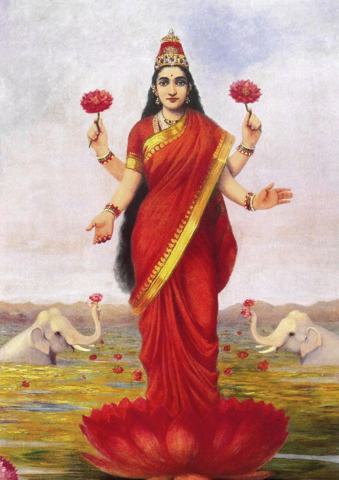
Goddess of wealth, beauty and good fortune, born from the churning of the ocean and inseparable consort of Vishnu.
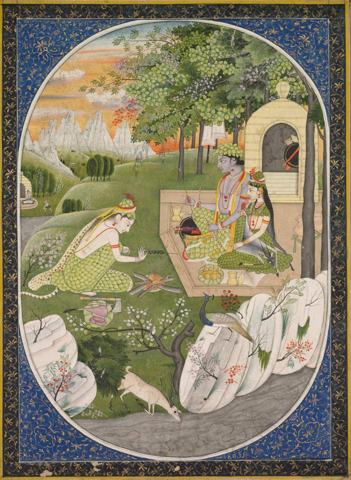
Prince of Ayodhya and seventh avatar of Vishnu — exiled hero of the Ramayana, slayer of Ravana, and the ideal of dharma.
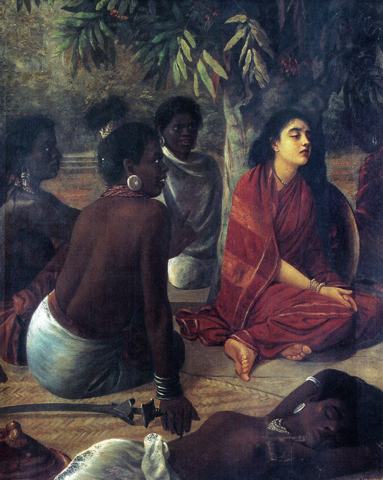
Wife of Rama and heroine of the Ramayana — found in a furrow, abducted by Ravana, tested by fire, and read differently across the tradition's many tellings.
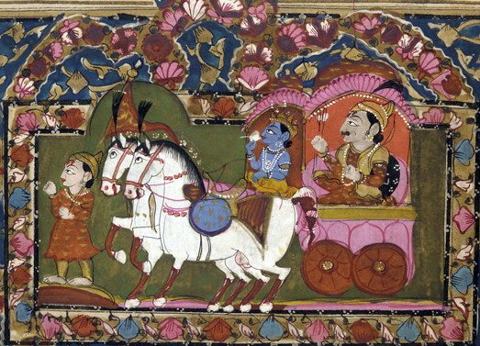
Cowherd, lover, statesman and charioteer — the avatar of Vishnu who speaks the Bhagavad Gita and anchors India's largest devotional tradition.
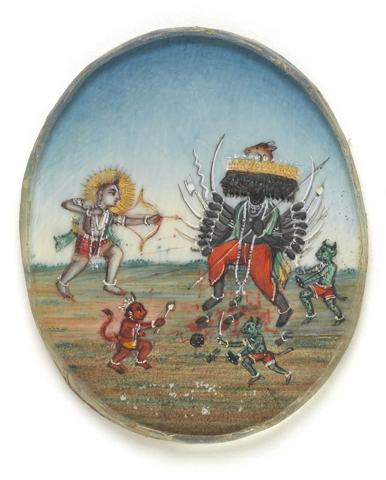
Lanka's rakshasa king, ten-headed abductor of Sita in the Ramayana and a devoted worshipper of Shiva — a villain regional traditions read very differently.
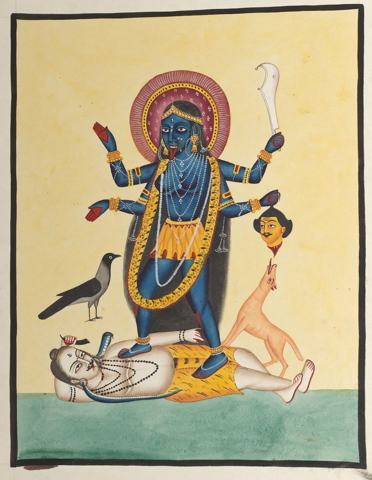
The black goddess of time and dissolution — annihilator of demons and of the ego, and to millions of Bengali devotees simply the Mother.
Sources & Further Reading
- 1.Valmiki. Ramayana, translated by Robert P. Goldman et al. as The Ramayana of Valmiki — An Epic of Ancient India. Princeton University Press, 1984-2017.
- 2.Bhagavata Purana, Book X (the slaying of Narakasura).
- 3.Kalpa Sutra, attributed to Bhadrabahu (Jain canon).
- 4.Cort, John E. Jains in the World: Religious Values and Ideology in India. Oxford University Press, 2001.
- 5.Fuller, C.J. The Camphor Flame: Popular Hinduism and Society in India. Revised ed. Princeton University Press, 2004.
- 6.Pintchman, Tracy. Guests at God's Wedding: Celebrating Kartik among the Women of Benares. State University of New York Press, 2005.
- 7.Singh, Pashaura, and Louis E. Fenech, eds. The Oxford Handbook of Sikh Studies. Oxford University Press, 2014.
Spot an error or have a source to suggest? Write to info@viseterna.com. We cite primary sources and modern scholarship, and we correct fast.