
Cu Chulainn
The Hound of Ulster — a boy-hero who holds an entire army at a ford, warps into a monster when he fights, and dies standing up, tied to a stone.
Cuchulain in Battle, Joseph Christian Leyendecker, 1911 (illustration for T. W. Rolleston, Myths and Legends of the Celtic Race) · Public domain · source
The Boy Who Named Himself
Cu Chulainn is the central warrior of the Ulster Cycle, the body of medieval Irish saga gathered around King Conchobar mac Nessa and his court at Emain Macha. He is born Setanta, and the birth-tale Compert Con Culainn survives in more than one version — in the fullest, his mother Deichtine conceives him after an encounter with the god Lugh, which gives the hero a divine father and a human household at the same time 3,8.
The name he is remembered by is one he chooses. Arriving late at a feast in the house of the smith Culann, the boy is attacked by the smith's guard-hound and kills it — in the best-known telling, by driving a ball down its throat with his hurley. Culann is ruined without his dog, and the child offers to guard the smith's holdings himself until a replacement is reared. From that moment he is Cu Chulainn, "Culann's Hound," and the druid Cathbad confirms the name will last 1,6,8.
Cathbad also delivers the bargain that shapes everything after it. Hearing that whoever takes up arms on a particular day will be short-lived but everlastingly famous, the boy demands weapons the same afternoon. Irish tradition returns to this trade repeatedly, and the hero's early death is never presented as a surprise 1,6.
Training, Weapons, and Gessa
Cu Chulainn's martial schooling comes from outside Ireland. The tale-tradition sends him to the warrior-woman Scathach, in Scotland or in a place deliberately left vague, where he learns the feats that the sagas list by name and receives the gae bulga — a barbed spear cast with the foot along the surface of water, which opens inside the body and cannot be survived 1,4,8.
Two further conditions define him. The first is the riastrad, usually Englished as "warp-spasm" or "battle-frenzy": in the Recension I Tain his body twists inside its skin, one eye retracts and the other bulges, his hair stands as spikes with blood or fire at the tips, and the "hero-light" rises from his head. Scholars have compared it to the Norse berserker fury and to Indo-European warrior-frenzy generally, though the Tain's version is far more grotesquely physical than most parallels, and its literary purpose is arguable — the transformation makes him unrecognisable to his own side, which is part of the horror 1,2,7.
The second is his gessa, the personal prohibitions that Irish heroes carry. His are famously contradictory: he may not refuse hospitality offered by a woman, and he may not eat dog-flesh. At the end of his life, three hags roasting a hound on rowan spits set both taboos against each other, and honouring one requires breaking the other 4,8.
The Tain
Tain Bo Cuailnge, the "Cattle Raid of Cooley," is the longest and most famous Irish saga, and it exists in several recensions built from older material — Recension I is a composite drawn from at least two ninth-century versions, and the Book of Leinster text is a smoother twelfth-century reworking 1,2,7. Queen Medb of Connacht invades Ulster to take the great bull Donn Cuailnge, and the Ulstermen cannot resist: they lie helpless under the ces noinden, the debility laid on them by the goddess Macha 1,6.
Cu Chulainn, exempt from the curse, fights the invasion alone. He holds the fords by invoking the convention of single combat, killing Medb's champions one at a time while the army waits, and when patience fails he attacks the camp outright 1,6. The Morrigan approaches him during the campaign; he rejects her, and she opposes him in the shapes of an eel, a she-wolf and a heifer, is wounded each time, and is healed when he unknowingly blesses her as an old woman milking 1,2.
The saga's emotional centre is the duel at the ford with Ferdiad, his foster-brother and fellow-pupil of Scathach, whom Medb goads into the fight. They fight for days, exchange healing herbs and food across the water each night, and Cu Chulainn finally kills him with the gae bulga — then lifts the body across to the Ulster side and laments over it 1,2,6. The lament is one of the passages editors most often single out as evidence that the Tain is doing something other than celebrating war 6,7.
The Death of the Hound
Aided Oenfhir Aife supplies the darkest episode in the cycle. Cu Chulainn had fathered a son, Connla, on the warrior Aife during his training abroad; the boy comes to Ireland under prohibitions that forbid him to name himself or to refuse combat, and his father kills him at the shore before recognition is possible. The tale is short, and its silence is the effect 4,8.
His own death follows a pattern of accumulated obligation rather than a fair fight. Enemies — chiefly the children of Cailitin, whom he had killed — use illusion and satire to draw him out against omens, force him through his gessa, and separate him from his weapons and from his horse the Grey of Macha. Mortally speared, he ties himself upright to a standing stone so that he will die on his feet, and the enemy hold back until a scald-crow settles on his shoulder 4,8. Oliver Sheppard's bronze of that scene, cast in 1911 and installed in Dublin's General Post Office, has since made the image a national one, which is a reception history in its own right and not part of the medieval material 8.
How to Read Him
Cu Chulainn is not a god, and the texts are consistent about it: he is a mortal with a divine father who dies young, and the sagas measure him by what his gifts cost the people around him. Scholarship on the Tain has moved steadily away from treating it as a window onto a pre-Christian "heroic age" and towards reading it as literature composed by monastic scribes working with inherited material, so claims that any given episode preserves Iron Age practice should be treated cautiously 7,8.
Where his cousins in the Otherworld traditions travel to the sid and come back changed, Cu Chulainn's supernatural encounters mostly come to him — in Serglige Con Culainn an Otherworld woman, Fand, lays him low with a year-long wasting sickness and then withdraws from him, and the story ends with a druid's draught of forgetting rather than a victory 5,8.
Continue Exploring
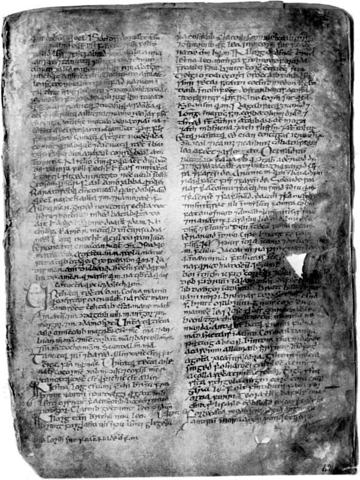
Ireland's longest medieval saga: Queen Medb invades Ulster for a bull, and Cu Chulainn holds the fords alone against her army.
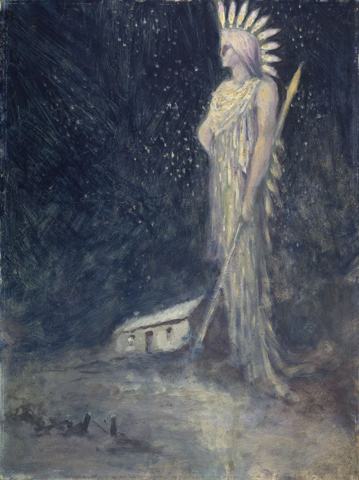
Not an afterlife but a parallel country — the sid mounds, the islands west of the sea, and the aos si who kept Ireland after they lost it.
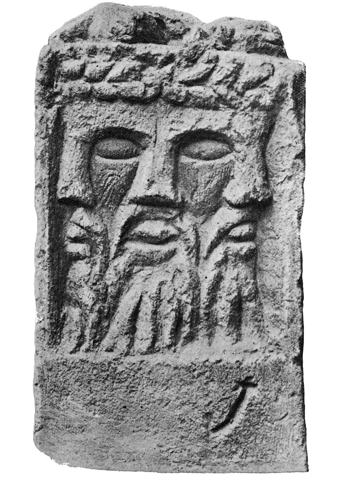
Master of every skill — the young god admitted to Tara because he alone could do all the crafts at once, and who killed his own grandfather Balor.
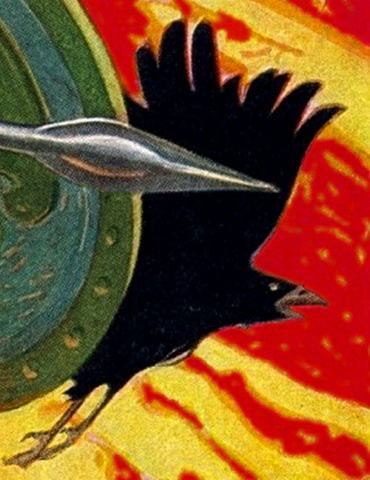
The great queen of war and fate — a shape-shifting Irish goddess who takes crow form above the battlefield and decides its outcome before it is fought.
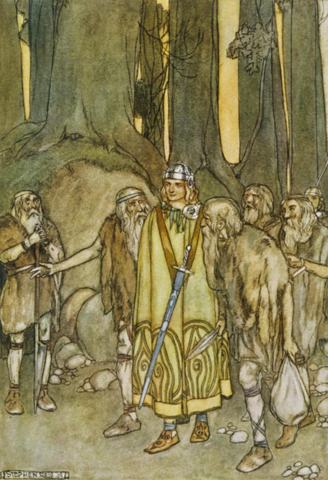
Warrior-poet, leader of the Fianna, and the hero who burned his thumb on the Salmon of Knowledge — Ireland's most widely told legend.
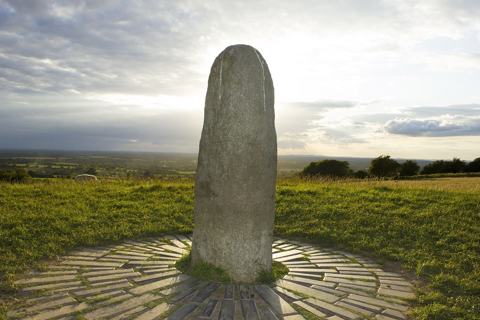
A standing stone on the Hill of Tara said to roar beneath Ireland's rightful king; the rival Scottish claim on it is a much later legend, not medieval fact.
Also mentioned inThe Druids
Sources & Further Reading
- 1.Tain Bo Cuailnge, Recension I, ed. and trans. Cecile O'Rahilly. Dublin Institute for Advanced Studies, 1976 (CELT edition).
- 2.Tain Bo Cuailnge from the Book of Leinster, ed. and trans. Cecile O'Rahilly. Dublin Institute for Advanced Studies, 1967.
- 3.Compert Con Culainn ocus scela aile (The Birth of Cu Chulainn), ed. A. G. van Hamel. Medieval and Modern Irish Series vol. 3, 1933.
- 4.Aided Oenfhir Aife (The Death of Aife's Only Son) and Aided Con Culainn (The Death of Cu Chulainn), Ulster Cycle, Old and Middle Irish.
- 5.Serglige Con Culainn (The Wasting Sickness of Cu Chulainn), ed. Myles Dillon. Irish Texts Society, 1953.
- 6.Kinsella, Thomas (trans.). The Tain. Dolmen Press / Oxford University Press, 1969.
- 7.Mallory, J. P. (ed.). Aspects of the Tain. December Publications, 1992.
- 8.MacKillop, James. Dictionary of Celtic Mythology. Oxford University Press, 1998.
Spot an error or have a source to suggest? Write to info@viseterna.com. We cite primary sources and modern scholarship, and we correct fast.