
The Druids
The learned class of Iron Age Gaul and Britain, known mostly through hostile Roman writers and later Irish legend — and reinvented from scratch in the 1700s.
The Druids: Bringing in the Mistletoe, George Henry and Edward Atkinson Hornel, 1890 (Kelvingrove Art Gallery and Museum, Glasgow) · Public domain · source
What the Romans Saw
Almost everything known about the druids of Gaul and Britain comes from people who were not druids, writing in a language the druids themselves did not use for their own teaching. Julius Caesar, in Book VI of his Gallic War, gives the fullest surviving account: druids judge disputes, oversee sacrifice, and stand outside ordinary taxation and military service; their training can take up to twenty years and is conducted entirely by memorisation, because, Caesar says, they consider it wrong to commit their sacred teaching to writing even though they use a Greek alphabet for other purposes 1. He adds, as an aside rather than a proven fact, that the doctrine is believed to have originated in Britain and to have spread from there to Gaul 1.
Caesar also reports that druids taught the transmigration of souls, which he thought made Gaulish warriors unusually fearless in battle 1. Modern historians treat Caesar's account with real caution: he was a conquering general writing to a Roman audience, with every incentive to present Gaulish religion as both organised enough to be dangerous and barbarous enough to justify subduing it, and Aldhouse-Green stresses that his druids may be as much a rhetorical construction as an ethnographic report 5.
Mistletoe, Oak, and the Golden Sickle
The single most famous image of druidic ritual comes not from Caesar but from Pliny the Elder, writing over a century later. In Book XVI of his Natural History, Pliny describes druids gathering mistletoe found growing on oak trees, cut with a golden sickle by a white-robed priest and caught in a white cloak so that it never touches the ground, followed by the sacrifice of two white bulls 2. Pliny even offers a folk etymology for "druid" from the Greek word for oak, drus, though modern linguists derive the Celtic term instead from a root meaning something closer to "oak-knowledge" or "deep knowledge" 2,4. Pliny is writing at second or third hand about a practice he almost certainly never saw, and Hutton warns that the passage has done more to shape the popular image of druids — white robes, golden sickle, oak grove — than any archaeological find ever has 4.
Terror at Anglesey
Tacitus, in Book XIV of his Annals, gives the druids their most dramatic and most violent appearance. In AD 60 or 61, the Roman governor Suetonius Paulinus attacked the island of Mona, modern Anglesey, a druidic stronghold; Tacitus describes black-robed women running among the ranks like Furies, and druids on the shore raising their hands to the sky and pouring out curses, so that the Roman soldiers briefly froze in fear before advancing and burning the sacred groves 3. The episode marks, so far as the Roman record goes, the destruction of organised druidism in Britain as a public institution, though it says nothing about what happened to the tradition's local, unrecorded successors 3,4.
The Druids of Irish Legend
A separate and much later tradition survives in vernacular Irish and Welsh literature, written centuries after Rome had left Britain by Christian scribes recording pre-Christian material. In this material the word drui usually names an individual magician-seer attached to a king's court — Cathbad in the Ulster Cycle, who names the infant hero Cu Chulainn, is the best-known example — rather than a member of an organised priesthood of the Gaulish kind 6. Scholars generally treat the Irish drui as evidence for how medieval Ireland imagined a druidic past, coloured by its own storytelling conventions, rather than as a direct continuation of the Iron Age institution Caesar described 6,7.
What We Don't Actually Know
No writing by a druid survives, because, if Caesar is right, none was ever produced 1. Archaeology cannot identify a "druid" from a grave or a votive deposit with any confidence, since nothing distinguishes a priestly burial from any other high-status one 4,5. Everything usable comes either from outsiders with their own agendas, writing in Greek or Latin, or from Christian scribes centuries removed from the practice they were describing 4,5. Aldhouse-Green's summary is blunt: the historical druids are recoverable only as a shape glimpsed through several distorting lenses at once, and any confident modern description of "what druids believed" is filling in gaps the sources simply do not close 5.
Invented Druids
That emptiness is exactly what made the druids so reusable. In the eighteenth century the antiquarian William Stukeley popularised the idea that Stonehenge and Avebury were druidic temples, even though both monuments were built well over a thousand years before any Celtic-speaking people is attested in Britain — a chronological error as basic as the one later corrected at Newgrange 4. In 1781 a group of Londoners founded the Ancient Order of Druids, a fraternal society run on Masonic lines with no claim to unbroken descent from antiquity, and in 1792 the Welsh poet Iolo Morganwg staged the first modern Gorsedd of bards on Primrose Hill, presenting invented rituals and forged medieval-looking texts as recovered ancient Welsh tradition 4. Modern Druidry, descended from these eighteenth-century inventions and reorganised again in the twentieth century, is today a living spiritual movement in its own right — but it is honest, in Hutton's account, to call it a new tradition inspired by the old name, not a survival of Beltane's or Samhain's actual officiants 4.
Continue Exploring
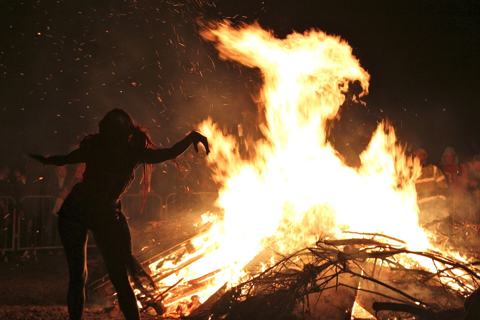
The Gaelic May Day quarter-day, first recorded in a 10th-century glossary as two fires driven between by cattle — not proof of a god named Bel.
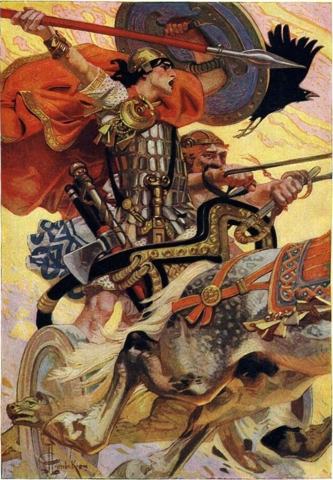
The Hound of Ulster — a boy-hero who holds an entire army at a ford, warps into a monster when he fights, and dies standing up, tied to a stone.
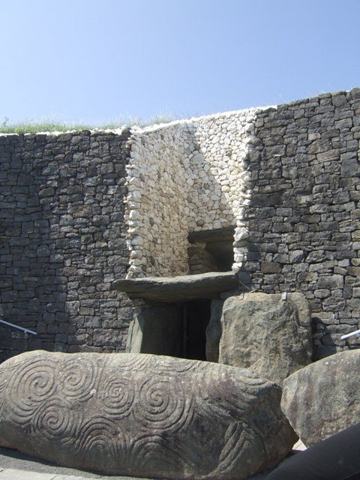
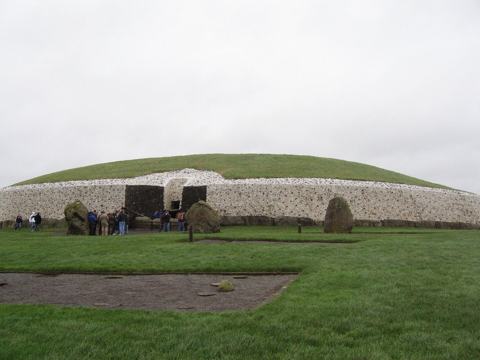
A 5,000-year-old passage tomb on the Boyne, built for the winter solstice centuries before the Celts arrived — later remembered as the Dagda's own hall.
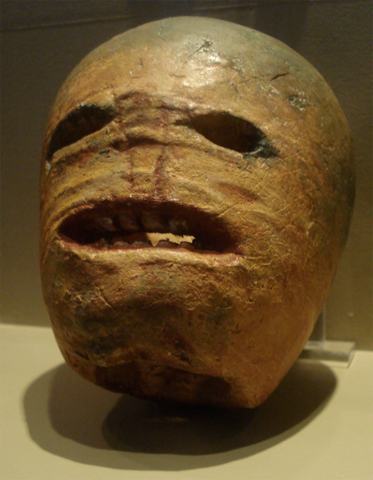
The Gaelic quarter day that opened winter and the Otherworld alike in medieval Irish literature — not, despite a popular myth, the name of a god of the dead.
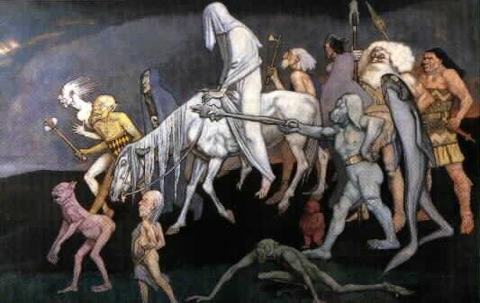
Ireland's monstrous sea-people — raiders, tribute-takers and kin to the gods they fight, led by Balor of the destroying eye.
The good god — not morally good but good at everything: the club-bearing, cauldron-owning father figure of the Tuatha De Danann, and their crudest comedian.
Sources & Further Reading
- 1.Caesar, Julius. De Bello Gallico (The Gallic War), Book VI, trans. H. J. Edwards. Loeb Classical Library.
- 2.Pliny the Elder. Natural History, Book XVI, trans. H. Rackham. Loeb Classical Library.
- 3.Tacitus. Annals, Book XIV, trans. John Jackson. Loeb Classical Library.
- 4.Hutton, Ronald. Blood and Mistletoe: The History of the Druids in Britain. Yale University Press, 2009.
- 5.Aldhouse-Green, Miranda. Caesar's Druids: Story of an Ancient Priesthood. Yale University Press, 2010.
- 6.MacKillop, James. Dictionary of Celtic Mythology. Oxford University Press, 1998.
- 7.Koch, John T. (ed.). Celtic Culture: A Historical Encyclopedia. ABC-CLIO, 2006.
Spot an error or have a source to suggest? Write to info@viseterna.com. We cite primary sources and modern scholarship, and we correct fast.