
Yule (Jol)
The Norse and wider Germanic midwinter festival of feasting, sacrifice and oath-swearing — later fixed to Christmas by royal decree, not by simple continuity.
Asgardsreien (The Wild Hunt of Odin), Peter Nicolai Arbo, 1868 (Drammens Museum, on long-term loan to Nordnorsk Kunstmuseum, Tromso) · Public domain · source
Earliest Attestations
Yule is one of the oldest named festivals in the Germanic world. A Gothic calendar fragment preserved in the Codex Ambrosianus — copied around the early 6th century CE, though it records Gothic practice going back to Wulfila's own 4th-century community — already dates events by reference to "the month before Yule-month", and the English monk Bede, writing around 725, lists two Anglo-Saxon months called Giuli flanking the winter solstice, noting that the name marks the turn of the sun 3. In Old Norse sources the feast proper begins on hokunott, "hook-night", and runs for three days 5,6.
What the word originally meant is unresolved — proposals range from "wheel" (the turning year) to a term for a drinking feast — and no surviving source explains it, which has not stopped centuries of confident guessing 5,6.
What the Old Feast Involved
Yule was Norse religion's biggest single date, built around a blot: livestock killed, blood sprinkled, meat boiled and shared in the hall 1,7. Old Norse legendary tradition set solemn oath-swearing at Yule over the bragarfull, the ceremonial cup, with a hand laid on the bristles of a sacrificial boar — the sonargoltr — while an heir announced what he would achieve before taking his father's high seat, a scene told of the Yngling king Ingjald and preserved in variant form across saga and eddic sources 5,6. Games, wrestling, and staged performances filled out the season, alongside the ordinary business of a feast meant to see a farm safely through the year's darkest stretch 5,6.
The season also had a frightening side. Norwegian and Icelandic tradition placed Yule as the time when the dead walked, when trolls and other beings crossed freely into the human world, and when Odin was said to ride at the head of a ghostly host through the winter sky — the Oskorei, the "terror-ride", a tradition that folklorists connect to the wider European Wild Hunt legend 5,6.
Hakon the Good Fixes the Date
The single clearest turning point in Yule's history is political rather than religious. Heimskringla records that Hakon the Good, a Christian king ruling a still-pagan Norway, passed a law moving Yule to coincide with the date Christians kept for Christmas, rather than attempting to abolish the older feast outright 1. The same law required every farmer to brew ale for the occasion and hold it, on pain of a fine, in exchange for peace and a good harvest — the language of blot survives even as the addressee changes 1,2,8. It is a textbook case of what later missionary strategy, following Pope Gregory's advice to Augustine of Canterbury, would formalise across the Christian world: redirect an existing festival rather than fight it 4.
Modern Christmas Claims, Hedged
Popular writing routinely credits Yule with supplying Christmas's Yule log, its evergreen decorations, and even Father Christmas himself, and the historical record supports this only partially. Ronald Hutton's survey of the English ritual year finds the "Yule log" first recorded only in 1725 and the word "Yuletide" no earlier than the 15th century, both long after England's conversion, and he is explicit that direct pre-Christian continuity for most of these customs cannot be demonstrated from the surviving evidence rather than merely assumed from a shared season 4. Andreas Nordberg's detailed study of the Old Norse calendar likewise separates what the medieval sources actually attest about Yule's timing and ritual content from later folkloric elaboration projected backward onto it 8.
None of that means the connection is invented. Scandinavian languages still call Christmas jul, unlike the rest of Christian Europe, and the underlying midwinter date, the drinking, and the sense of a liminal, dangerous season persisted through the religious change even as specific practices were added, dropped, or reattached to new meanings 5,6,8. The honest position, and the one the scholarship supports, is continuity of season and name alongside real discontinuity of ritual detail 4,8.
Yule Today
Modern Heathen and Asatru communities keep a reconstructed Yule with blot, oath-swearing and toasts modelled directly on the saga accounts, explicitly framed as revival rather than unbroken practice 7,8. Mainstream Christmas, meanwhile, carries the old name across Scandinavia and a scattering of customs whose pre-Christian pedigree ranges from solid to speculative — a midwinter feast that changed owners twice, in name only the first time and rather more the second 4,6.
Continue Exploring
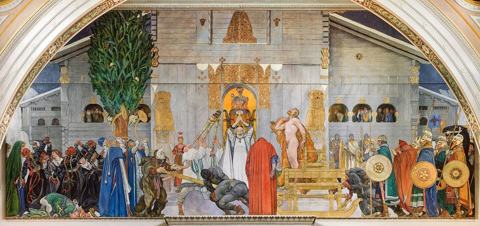
The Old Norse sacrifice: an animal killed, its blood sprinkled on altar and idols, its meat boiled and shared in a hall feast to buy the gods' favour.
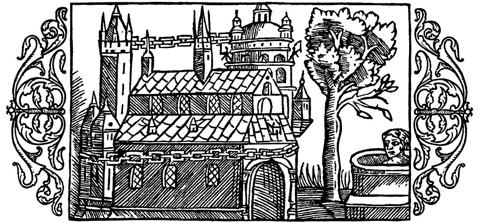
A golden temple with statues of Thor, Odin and Freyr, described by Adam of Bremen c. 1075 — a real cult site, but archaeology and legend disagree on its form.
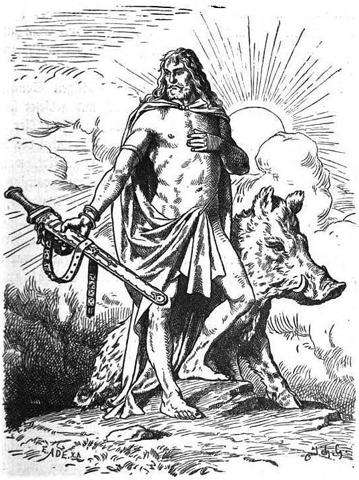
Vanir god of harvest, peace and kingship. Owner of the golden boar Gullinbursti, he traded away his sword for love and pays for it at Ragnarok.
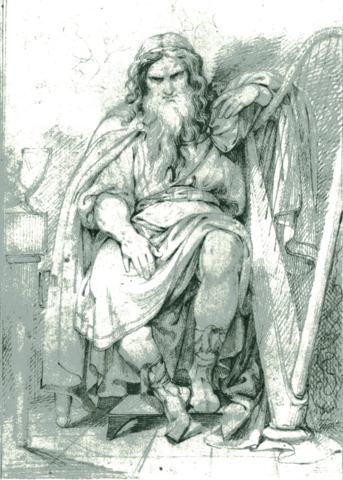
Norse god of poetry and eloquence, husband of Idunn, who greets fallen kings at Valhalla's door and may have begun as a real ninth-century skald.
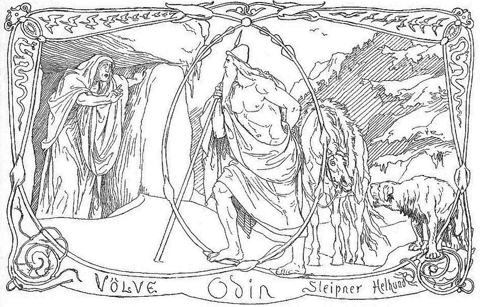
Norse trance magic of prophecy and fate-shaping, taught by Freyja to the gods and practised by wandering seeresses — powerful, gendered, and socially dangerous.
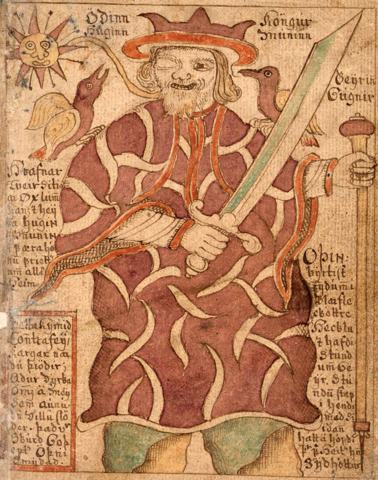
The Allfather. God of war, poetry and the dead who traded an eye for wisdom and hanged himself on the world tree to win the runes.
Sources & Further Reading
- 1.Heimskringla — Hakonar saga goda (Snorri Sturluson, c. 1230).
- 2.The Older Gulathing Law and Frostathing Law (medieval Norwegian law codes).
- 3.Bede. The Reckoning of Time (De Temporum Ratione). Trans. Faith Wallis. Liverpool University Press, 1999.
- 4.Hutton, Ronald. The Stations of the Sun: A History of the Ritual Year in Britain. Oxford University Press, 1996.
- 5.Orchard, Andy. Dictionary of Norse Myth and Legend. Cassell, 1997.
- 6.Simek, Rudolf. Dictionary of Northern Mythology. Trans. Angela Hall. D.S. Brewer, 1993.
- 7.Sundqvist, Olof. An Arena for Higher Powers: Ceremonial Buildings and Religious Strategies for Rulership in Late Iron Age Scandinavia. Brill, 2015.
- 8.Nordberg, Andreas. Jul, disting och fornsvensk tideräkning. Kungl. Gustav Adolfs Akademien, 2006.
Spot an error or have a source to suggest? Write to info@viseterna.com. We cite primary sources and modern scholarship, and we correct fast.