
Volsunga Saga
The 13th-century Icelandic saga that turns scattered eddic poems about Sigurd, Brynhild and cursed gold into one continuous, doom-laden family history.
Portal carving, Hylestad stave church, Norway, 12th-13th century (Museum of Cultural History, Oslo) · CC BY-SA 2.0 · source
What the Saga Is
Volsunga Saga is an anonymous Icelandic prose saga, probably composed in the second half of the 13th century, that tells the entire legendary history of the Volsung family: their descent from Odin, the killing of the dragon Fafnir by Sigurd, the winning and betrayal of the valkyrie Brynhild, and the destruction of the Burgundian Niflungs that follows 1,4,7. It belongs to the fornaldarsogur, the "sagas of ancient times" set before Iceland was settled, a genre more comfortable with dragons and prophetic dreams than the family sagas that stick close to Icelandic farms and lawsuits 7,8.
The Manuscript
The saga survives complete in a single medieval manuscript, Ny kongelig samling 1824 b 4to, held today by the Royal Danish Library and dated to around 1400 — more than a century after the text is thought to have been composed 1,8. A handful of later paper copies exist, but they all trace back to this one vellum book, which means the entire prose tradition of Sigurd's life in Old Norse rests on a single surviving witness 4,8.
The Great Lacuna: Why the Saga Exists
The saga's importance is partly an accident of manuscript loss. The Poetic Edda's chief source, Codex Regius, is missing a full gathering of leaves right after Sigrdrifumal — the gap scholars call the Great Lacuna — and the lost pages are thought to have held the poem, or poems, telling how Sigurd wooed Brynhild in Gunnar's shape and how the Gjukungs came to kill him for it. Reginsmal and Fafnismal, which cover his youth and the killing of Fafnir, survive substantially intact earlier in the same manuscript, well before the gap 2,7. Whoever compiled Volsunga Saga had access to a version of the lost poems before the pages disappeared, and paraphrased them closely enough in prose that scholars use the saga to reconstruct, chapter by chapter, roughly what that missing eddic material must have contained about Brynhild's betrayal and Sigurd's death 2,4,6. Without it, that stretch of Sigurd's story would be almost unknown.
What It Contains
The saga runs as one long genealogy rather than a single plot. It opens with Sigi, a son of Odin, and follows his line through Volsung and the twins Sigmund and Signy, whose deliberate incest produces the avenger Sinfjotli, before turning to Sigmund's posthumous son Sigurd 1,4. The middle third is the material most often excerpted elsewhere on this site: Sigurd's fostering by the dwarf Regin, the killing of Fafnir, and the winning of the cursed hoard that once belonged to the dwarf Andvari 1,6. The saga does not stop with the dragon. Sigurd wakes Brynhild, is drugged into forgetting her, marries Gudrun of the Gjukungs instead, and is murdered once the deception is discovered; the second half follows Gudrun through a forced remarriage to Atli — the Norse Attila — who destroys her brothers for the same hoard, and ends with her final, grimmer marriage to Jonakr and the death of her daughter Svanhild 1,4,6.
Translations
Volsunga Saga reached English readers surprisingly early for an Icelandic saga: William Morris and Eirikr Magnusson published the first full translation in 1870, well before most of the family sagas had appeared in English at all, which says something about how much appetite the Victorian revival of "Northern antiquities" had specifically for this story 7,8. R.G. Finch's edition paired the Old Norse text with a facing English translation in 1965, and Jesse Byock's 1990 version, still the most widely read, frames the saga explicitly as the missing account of Sigurd's dragon-slaying rather than as an obscure genealogical curiosity 4,5.
Scholarly Debates
Two questions dominate the scholarship. The first is dating: nothing in the manuscript names an author, and estimates of composition range across the 13th century depending on how the saga's prose style is weighed against other fornaldarsogur 7,8. The second is its relationship to the German Nibelungenlied, composed around 1200 and telling a related but differently shaped version of the same events, with different names, a different ending, and no dragon-slaying dragon in quite the same role. Andersson's close study argues the two traditions do not descend from one another directly but both draw, at some remove, on older Migration-period story material that each culture reworked on its own terms — which is also why the Norse and German Sigurd never quite line up 3,6.
Continue Exploring
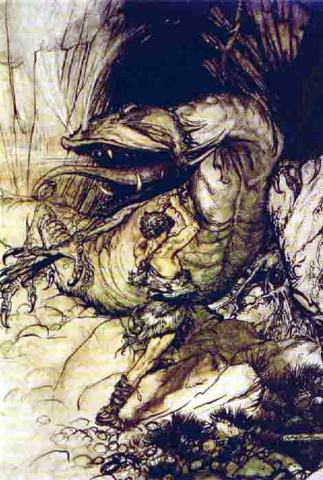
The dwarf-born son who murdered his father for cursed gold, turned into a dragon to guard it alone, and was killed from a pit by Sigurd.
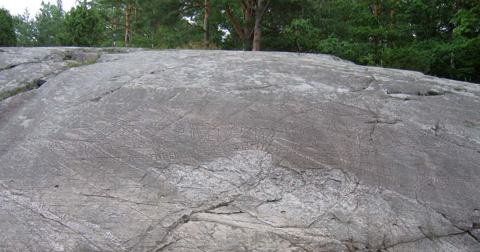
The Volsung hero who slew the dragon Fafnir, tasted its heart-blood, and rode straight into the tragedy of Brynhild and the Niflungs.
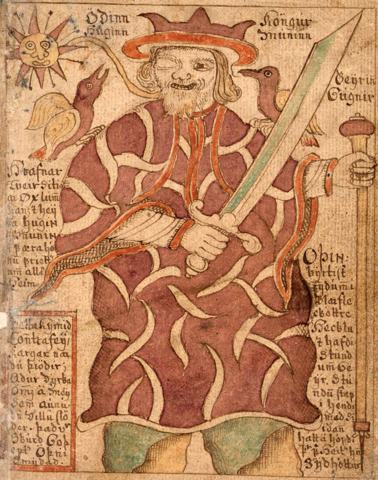
The Allfather. God of war, poetry and the dead who traded an eye for wisdom and hanged himself on the world tree to win the runes.
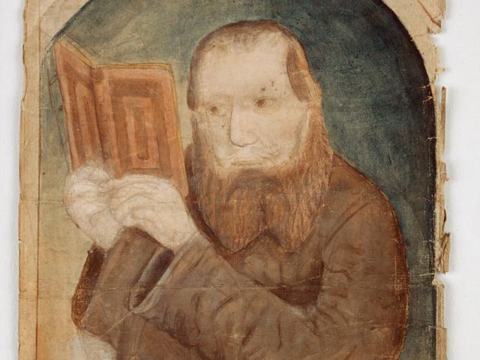
Anonymous Old Norse poems on gods and heroes, preserved in one 13th-century manuscript — the primary source for most of what survives of Norse myth.
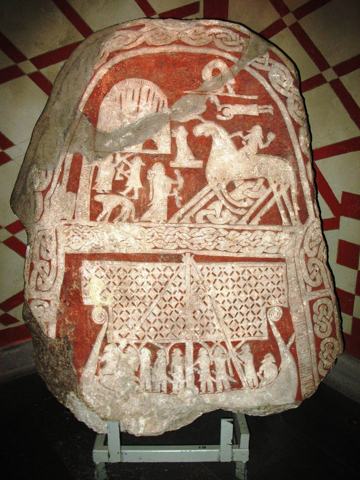
The grey eight-legged horse Loki bore as a mare. Best of all steeds, Odin's mount between the worlds, and the only horse to jump the gate of Hel.
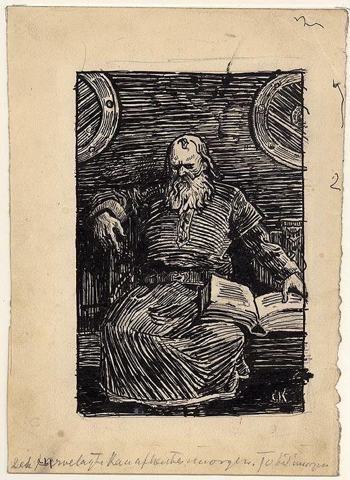
Snorri Sturluson's 13th-century handbook of Norse myth and poetics, in four parts — the fullest surviving guide to the gods, written to keep old poetry legible.
Sources & Further Reading
- 1.Volsunga Saga (13th century).
- 2.Poetic Edda — the heroic lays (Codex Regius, 13th century).
- 3.Nibelungenlied (Middle High German, c. 1200).
- 4.Byock, Jesse L., trans. The Saga of the Volsungs: The Norse Epic of Sigurd the Dragon Slayer. University of California Press, 1990.
- 5.Finch, R.G., ed. and trans. Volsunga Saga: The Saga of the Volsungs. Thomas Nelson, 1965.
- 6.Andersson, Theodore M. The Legend of Brynhild. Islandica 43. Cornell University Press, 1980.
- 7.Lindow, John. Norse Mythology — A Guide to the Gods, Heroes, Rituals, and Beliefs. Oxford University Press, 2001.
- 8.Simek, Rudolf. Dictionary of Northern Mythology. Trans. Angela Hall. D.S. Brewer, 1993.
Spot an error or have a source to suggest? Write to info@viseterna.com. We cite primary sources and modern scholarship, and we correct fast.