
The Maya Long Count Calendar
The Maya's linear day-count from a mythical zero date — the calendar a 2012 doomsday craze misread, though Classic scribes never treated it as an ending.
Stela C, Quirigua, Guatemala, dedicated 775 CE · CC BY 2.0 · source
Counting Forward From Zero
Most calendars people know are cyclical — the same month names, the same days of the week, returning endlessly. The Long Count is different: it is a linear day-count, tallying the number of days elapsed since a single fixed starting point, in the way a modern date like "day 47,892 of the Unix epoch" counts forward rather than cycling 4,6. It ran alongside, not instead of, the Maya's other calendars — the 260-day ritual count and the 365-day solar count — and Classic-period monuments typically give a date in several of these systems at once 4,5,6.
The system is built on a modified base-20 count. A k'in is one day; twenty k'in make a winal; but eighteen, not twenty, winal make a tun of 360 days, a deliberate irregularity that keeps the tun close to a solar year; twenty tun make a k'atun of 7,200 days; and twenty k'atun make a baktun of 144,000 days, roughly 394 years 4,6. A Long Count date is written as five such units in descending order — baktun.k'atun.tun.winal.k'in — carved on stelae, altars, lintels, and painted in the codices to fix an event to a single, unrepeated day 4,6.
A Date Before Anyone Was Counting
The Long Count's starting point is written 13.0.0.0.0, 4 Ajaw 8 Kumk'u — a day thousands of years before any Long Count inscription was actually carved 1,4. Using the correlation constant standard among Maya researchers today, that date falls on 11 August 3114 BCE in the proleptic Gregorian calendar 4,6. No living scribe witnessed it; Classic Maya rulers were retrospectively dating their own reigns against a mythological point of origin, not recording something they had seen, in much the way a modern document dated "in the year of our Lord" reaches back to an event the writer never witnessed either 4,6.
That zero date is inscribed at length on Stela C at Quirigua, a monument raised in 775 CE by the ruler K'ak' Tiliw Chan Yopaat, whose lengthy text is the fullest surviving statement of Maya creation-era chronology carved in stone 1,6. The Long Count itself, however, predates the Maya use of it: the earliest known Long Count inscriptions come from non-Maya sites in the Isthmian region to the west, and the system seems to have been adopted and elaborated by Maya scribes rather than invented by them from nothing 4,6.
Matching Maya Days to Ours
Converting a Long Count date into a Gregorian one requires a correlation constant, because no unbroken written link survives connecting ancient day-counts to modern ones. The Goodman-Martinez-Thompson (GMT) correlation, synthesized by J. Eric S. Thompson in 1935 from earlier proposals by Joseph Goodman and Juan Martinez Hernandez, is the version accepted by the large majority of Maya scholars today 4,6. It is not merely a convenient guess: independent radiocarbon dating of a carved wooden lintel from Tikal's Temple I, an object whose Long Count date is known from its own inscription, returned an age consistent with the GMT correlation's prediction, giving the correlation an empirical check beyond calendar mathematics alone 4,5,6.
What a Baktun Ending Actually Meant
Baktun and k'atun endings were occasions for ceremony throughout the Classic period — rulers commissioned monuments, held rites, and reset the count of shorter periods at these turns — but nothing in the Classic corpus treats such an ending as a termination of the world 2,6. Rulers routinely projected their own dates forward across enormous spans, the clearest example being a text from the Temple of Inscriptions at Palenque, commemorating King K'inich Janaab' Pakal, that calculates forward from his 615 CE accession to the eightieth 52-year calendar-round anniversary of that event — a date of 21 October 4772 CE, well over four thousand years in the future 2,6. Scribes projecting a working date thousands of years past their own present were not writing for an audience they expected an apocalypse to erase.
The 2012 Phenomenon
The completion of the thirteenth baktun, 13.0.0.0.0, fell on 21 December 2012 by the GMT correlation, and a popular Western movement — fed by esoteric writers, cable documentaries, and a 2009 disaster film — took this as a predicted end of the world 3. Restall and Solari's historical study traces the claim's real origins to European and American apocalyptic thought rather than to Maya sources, and finds no pre-Columbian text that frames any Long Count ending as a catastrophe 3. Much of the emblem-heavy "ancient Maya prophecy" imagery associated with 2012 traces to modern invention rather than antiquity, a pattern the entry on Hunab Ku documents in detail for one specific symbol that circulated as supposedly ancient Maya iconography 3.
The count did not stop. 13.0.0.0.0 simply rolled over into 13.0.0.0.1 the next day, the same way a car's odometer turns from 99,999 to 100,000 without the car ending — a distinction Classic Maya astronomers, who tracked the far more genuinely cyclical motions charted in the Dresden Codex, understood perfectly well 4,6.
Continue Exploring
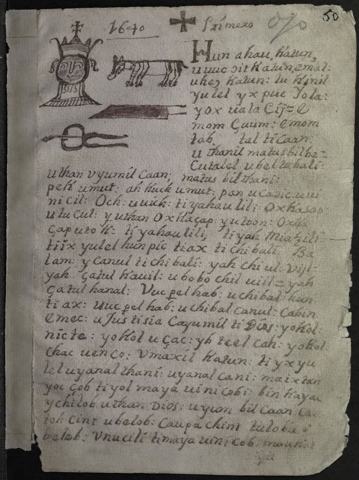
"The one god" of Yucatec Maya colonial texts — a name most scholars now read as a missionary translation for the Christian God, not an ancient Maya deity.
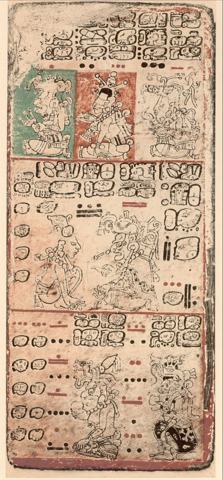
The oldest surviving book of the Americas — a Maya screenfold of astronomical tables, deciphered by a Dresden librarian, that survived a 1945 firestorm.
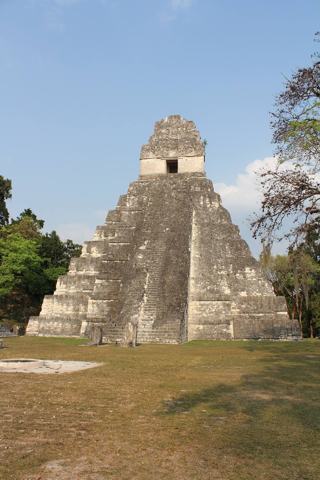
The great Classic Maya city of the Peten rainforest — a dynasty two thousand years deep, a war with Calakmul, and a king's tomb built as a mountain.
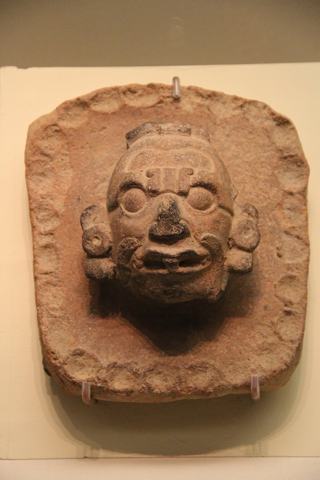
K'inich Ajaw, the Maya sun god — crossed-eyed lord of day and kingship, who sinks each night into Xibalba and crosses it as a jaguar.
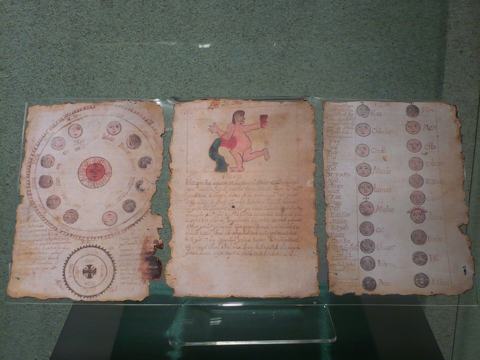
Colonial Yucatec Maya town books mixing prophecy, history, medicine and Christian material — named for a jaguar-priest said to have foreseen the Spanish.
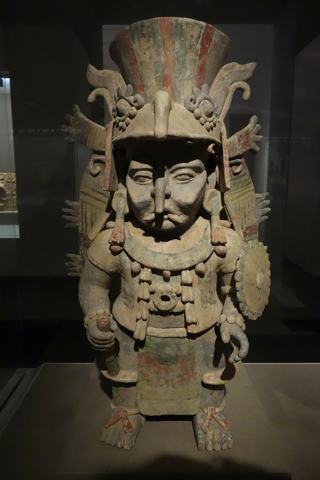
The rain god who splits the clouds with a lightning axe — one god and four, the most frequently depicted deity in the surviving Maya books.
Sources & Further Reading
- 1.Quirigua Stela C, Quirigua, Guatemala, dedicated 775 CE — bears the Long Count creation-date text 13.0.0.0.0 4 Ajaw 8 Kumk'u.
- 2.Schele, Linda, and David Freidel. A Forest of Kings: The Untold Story of the Ancient Maya. William Morrow, 1990.
- 3.Restall, Matthew, and Amara Solari. 2012 and the End of the World: The Western Roots of the Maya Apocalypse. Rowman & Littlefield, 2011.
- 4.Aveni, Anthony F. Skywatchers of Ancient Mexico. University of Texas Press, 1980.
- 5.Coe, Michael D., and Stephen Houston. The Maya, 9th edition. Thames & Hudson, 2015.
- 6.Sharer, Robert J. with Loa P. Traxler. The Ancient Maya, 6th edition. Stanford University Press, 2006.
Spot an error or have a source to suggest? Write to info@viseterna.com. We cite primary sources and modern scholarship, and we correct fast.