
Elves (Alfar)
The alfar of Old Norse belief: sacrificed to at the alfablot, ranked beside the gods in poetry, and never quite pinned down by Snorri's own tidy scheme.
Franks Casket, front panel detail, early 8th century (British Museum); photo by Michel wal, 2008 · CC BY-SA 1.0 · source
A Word Beside the Gods
Old Norse poetry has a habit of pairing two words: Aesir ok alfar, "gods and elves," used often enough in alliterative verse that it reads as a fixed formula rather than a casual phrase 1,7. That placement is the single clearest fact about the alfar — whatever else they were, poets ranked them beside the gods, not among monsters or the dead, and several scholars take the phrase as evidence that elf and Vanir may once have named overlapping, even interchangeable, groups of beings 7,8.
Snorri Sturluson gives the clearest description and also the least trustworthy one. In Gylfaginning he sorts elves into ljosalfar, light-elves living in the sky "fairer than the sun," and dark-elves living underground, "blacker than pitch," whom he all but equates with dwarves 2. Alaric Hall's study of the wider Germanic elf tradition argues this tidy binary is less inherited pagan doctrine than Snorri's own synthesis, shaped by Christian cosmology he knew from texts like the Elucidarius, which sorted angels into similarly graded ranks of brightness — a scholar's classification system dressed as folk belief 5.
Alfheim and the Vanir's Corner of the World
Grimnismal says the gods gave Freyr the realm of Alfheim in the earliest days as a tannfe, a tooth-gift — the present traditionally made to a child at its first tooth 1. Among the Nine Realms, it is the one most explicitly tied to a Vanir god rather than to the Aesir, and Terry Gunnell's survey of the evidence treats the Freyr-alfar association as further support for a real overlap between elf-cult and fertility-cult, even though nothing in the surviving sources spells out exactly what an elf was thought to look like or do day to day 6,8.
The Alfablot
The best direct evidence for elf-worship is not myth but a court poet's travel complaint. Sigvatr Thordarson's Austrfararvisur, composed around the 1020s, describes being turned away, farm after farm, while travelling through Sweden — and at one stop is told flatly that an alfablot, a sacrifice to the elves, is underway and no outsider, especially a Christian, may come near 3,7. Kormaks saga confirms the practice from a different angle: a wound is said to heal faster if a bull is killed on a mound known to be home to elves and its blood smeared there, a domestic ritual with no gods, temples, or priests in sight 4,7. Between them, these two brief, incidental mentions are nearly the whole of the historical record for an actual elf cult — everything else is later reconstruction working outward from two sentences 6,7.
Volundr, the Elf at the Forge
Only one figure in the Poetic Edda is explicitly styled an elf: Volundr, hero of Volundarkvida, called visi alfa, "prince of elves," even though the poem's plot has nothing supernatural about it at all 1,5. Captured and hamstrung by King Nidud, who wants his smithcraft without the risk of losing him, Volundr takes a revenge the poem does not soften — killing Nidud's young sons and getting his daughter Bodvild drunk before raping her — before forging a pair of wings from captured birds and flying to freedom, taunting the king from the air as he goes 1. Whalebone carvings on the Anglo-Saxon Franks Casket, a generation or two older than any surviving Norse manuscript of the poem, already show the same smithy scene, confirming the story circulated across the wider Germanic world well before Iceland wrote it down 1,5.
Mounds, Elf-Shot, and the Restless Dead
Elves share the earth-and-mound association usually given to dwarves, and Hall traces a long folk-medical tradition, attested from Anglo-Saxon England through later Scandinavian sources, of illness blamed on "elf-shot" — invisible arrows an elf was thought to loose at livestock or sleepers 5. Some scholars connect this to the broader Germanic habit of treating the recently dead, especially the honoured dead in their mounds, as a kind of elf, which would make the alfablot less a nature-sacrifice than an ancestor-cult practice under another name — though Simek stresses that the evidence is too thin to convert that suggestion into a settled fact 5,7.
Huldufolk: A Living Tradition
Elf belief did not end with the sagas. Iceland today keeps a well-documented popular tradition of huldufolk, "hidden people," who live inside rocks and hills and are still, occasionally, cited by name when a road-building project is diverted around a particular boulder 6,8. Folklorists are careful to treat this as a genuinely living, evolving belief in its own right rather than an unbroken continuation of the medieval alfar — the huldufolk stories are mostly modern in their specific form — but the underlying instinct, that unseen neighbours share the rock and the land with the people who farm it, is difficult to read as anything other than the same old habit of mind, still at work 6.
Continue Exploring
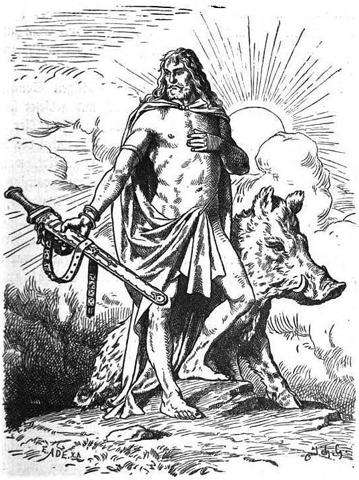
Vanir god of harvest, peace and kingship. Owner of the golden boar Gullinbursti, he traded away his sword for love and pays for it at Ragnarok.
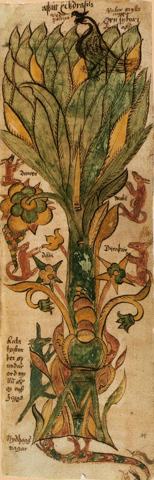
The Worlds of Yggdrasil. Norse sources count nine worlds on the world tree — but no medieval text ever lists them, and the familiar roster is modern.
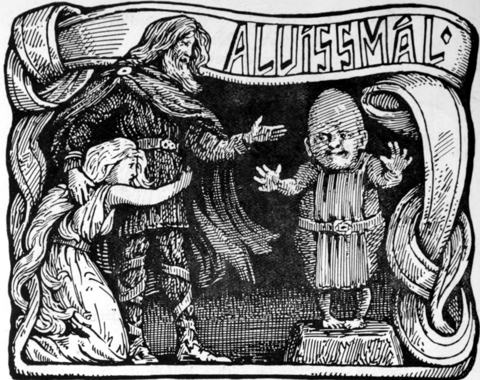
The Norse dvergar: earth-born craftsmen who forged Mjolnir and Draupnir, turn to stone in sunlight, and resist every tidy definition scholars give them.
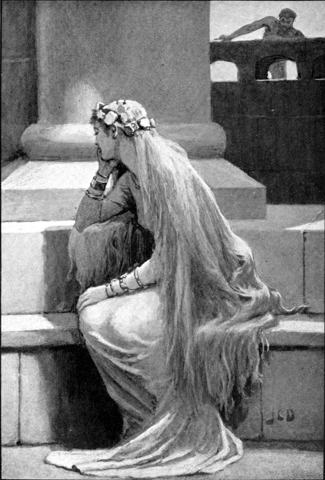
Thor's golden-haired wife, whose shorn hair forced Loki to commission the dwarf-made treasures of the gods, Mjolnir among them.
Anonymous Old Norse poems on gods and heroes, preserved in one 13th-century manuscript — the primary source for most of what survives of Norse myth.
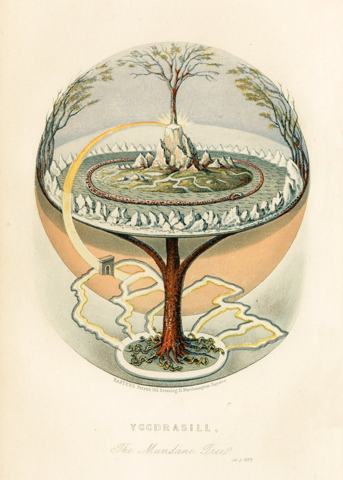
The World Tree. The great ash whose roots reach three wells and nine worlds, tended by the norns, eaten from every side, and still standing when the sky burns.
Sources & Further Reading
- 1.Poetic Edda — Grimnismal, Alvissmal and Volundarkvida (Codex Regius, 13th century).
- 2.Snorri Sturluson, Prose Edda — Gylfaginning (c. 1220).
- 3.Sigvatr Thordarson, Austrfararvisur (c. 1020s).
- 4.Kormaks saga (13th century).
- 5.Hall, Alaric. Elves in Anglo-Saxon England: Matters of Belief, Health, Gender and Identity. Anglo-Saxon Studies 8. Boydell Press, 2007.
- 6.Gunnell, Terry. "How Elvish Were the Alfar?" In Constructing Nations, Reconstructing Myth: Essays in Honour of T.A. Shippey. Brepols, 2007.
- 7.Simek, Rudolf. Dictionary of Northern Mythology. Trans. Angela Hall. D.S. Brewer, 1993.
- 8.Lindow, John. Norse Mythology — A Guide to the Gods, Heroes, Rituals, and Beliefs. Oxford University Press, 2001.
Spot an error or have a source to suggest? Write to info@viseterna.com. We cite primary sources and modern scholarship, and we correct fast.