
Nezha
The child god who killed a dragon prince, returned his flesh to his parents, and was rebuilt out of lotus — China's most rebellious divine infant.
Nazha Taizi (Prince Nezha), woodblock illustration, Sanjiao yuanliu soushen daquan (Ming dynasty) · CC0 · source
Who Nezha Is
Nezha (哪吒) is a divine child: a boy of six or seven, armed to the teeth, permanently furious, and one of the most widely worshipped protective deities in the Chinese world. He is known as the Third Prince (三太子) and as Marshal of the Central Altar (中壇元帥), a rank that puts him at the head of the demon-quelling armies of the Daoist pantheon 3,5. His standard attributes are the Wind-Fire Wheels he rides, the Universe Ring, the Red Armillary Sash, and a Fire-Tipped Spear 1.
He is best known from two late Ming novels — the Fengshen yanyi (Investiture of the Gods), which tells his birth-and-death story at length, and Journey to the West, where he appears as a celestial officer 1,2. But the cult is older than the novels, and Ming hagiographies such as the Sanjiao yuanliu soushen daquan already give him a fixed iconography and a temple following 3,4.
Birth, Dragon-Killing, and the Return of the Flesh
In the Fengshen yanyi his mother, Lady Yin, carries him for three years and six months and gives birth to a ball of flesh, which his father — the Shang general Li Jing — cuts open with his sword, revealing a boy already able to walk. The immortal Taiyi Zhenren accepts him as a disciple and names him Nezha 1.
At seven he goes bathing in the Nine Bends River and, rinsing his Red Armillary Sash, shakes the palace of the Dragon King of the Eastern Sea to its foundations. He kills the sea-patrol Li Gen and then the dragon prince Ao Bing, tearing out his sinews to make a belt for his father 1. The Dragon Kings threaten to flood Chentang Pass and petition heaven; to spare his parents and the town, Nezha kills himself, cutting away his own flesh and bones and returning them — the flesh to his mother, the bones to his father 1. Chinese readers have always understood this as a settling of accounts: the body a child owes its parents is paid back in full, and with it the debt of filial obedience 4,6.
His spirit survives. Taiyi Zhenren rebuilds him a body out of lotus root, stalk, and leaves, which is why he is called the Lotus Prince and why he cannot be harmed by the usual means 1. Reborn, he immediately hunts his father down. In the novel the conflict is only stopped when the Buddhist patriarch Randeng Daoren gives Li Jing a magical pagoda that can imprison Nezha at will — an image of paternal authority restored by force rather than by love 1,4.
The Reluctant Officer of Heaven
Journey to the West takes him at a later stage: he is the third son of the Pagoda-Bearing Heavenly King Li Jing, a general of the celestial host under the Jade Emperor, and he can manifest three heads and six arms in battle 2. He is sent against Sun Wukong during the Monkey King's revolt and is beaten, one of many failures before Erlang Shen finally takes the field 2. Later in the pilgrimage he reappears as an ally, subduing demons who turn out to be his own family's escaped beasts 2.
Indian Origins and Buddhist Transmission
Nezha's name is not Chinese. Meir Shahar argues in detail that it is a shortening of Nalakubara (Chinese Naluojiupoluo), a yaksa prince of Indian myth who is the son of the wealth god Kubera — the deity who enters China through esoteric Buddhism as Vaisravana, the pagoda-bearing heavenly king, and who is then identified with the Tang general Li Jing 4. On this reading, Nezha and his father arrive together as a Buddhist pair and are only afterwards naturalised into Chinese vernacular fiction 4. Shahar traces the Indian material through Tantric ritual texts of the eighth century onwards; the argument is now widely accepted, though the precise route by which the Indian yaksa acquired his Chinese biography remains debated 4.
Meulenbeld situates the fully formed Nezha in a different frame: the marshals of the Fengshen yanyi are the same demon-quelling generals invoked in Daoist Thunder Ritual and paraded at local temple festivals, so the novel is best read as a written deposit of living exorcistic religion rather than as invented fiction 5.
Cult and Meaning
Nezha is a working god, not only a literary character. He is the patron of chauffeurs and travellers (from the Wind-Fire Wheels), a protector against demons and illness, and a central figure in Taiwanese and Fujianese spirit-medium practice; in Taiwan the dianzi santaizi or "electric Third Prince" — troupes of dancers in giant Nezha effigies moving to techno at temple processions — has become a national image 4. Temples dedicated to him are numerous across Fujian, Taiwan, Hong Kong, and Southeast Asia 3,4.
Anthropologists have long asked why a god who murders his own father should be so beloved in a culture that made filial piety its central virtue. Sangren's answer is that the story is not an argument against filiality but a controlled release of the resentments filiality creates, safely resolved by Nezha's eventual submission to heaven's hierarchy 6. Shahar adds that the tale is only one of several Chinese narratives in which the oedipal charge is present but never openly named 4.
Nezha has since become one of the most heavily adapted figures in Chinese storytelling — opera, animation, comics, and cinema have all returned to the lotus rebirth and the confrontation with Li Jing. Recent animated features built on his story have broken box-office records in China, which has drawn a new international audience to a god whose temple cult is several centuries older than any film 4,5.
Continue Exploring
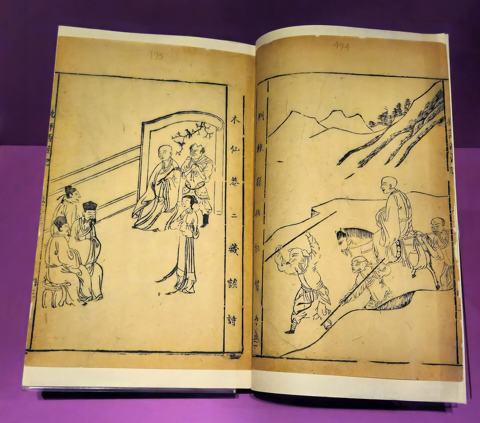
The Ming novel that sent a monk and three monster disciples across demon country for Buddhist scripture — and gave Sun Wukong to the world.
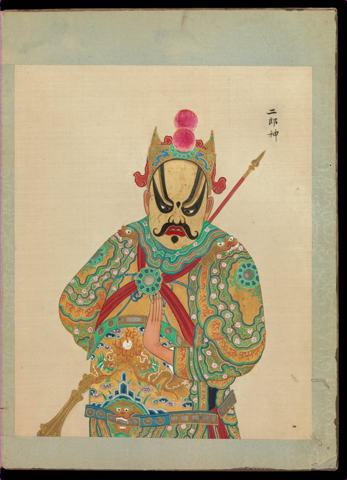
The three-eyed god of Guankou who tamed the floods and was the only celestial general able to beat the Monkey King in a fair fight.
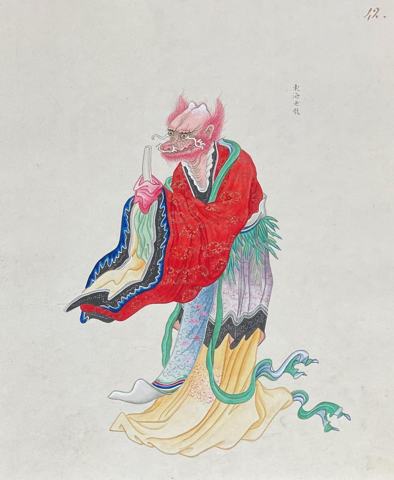
Four bureaucrat-dragons who rule the seas from undersea palaces, command rain and flood, and get bullied by mortal heroes in China's best-loved novels.
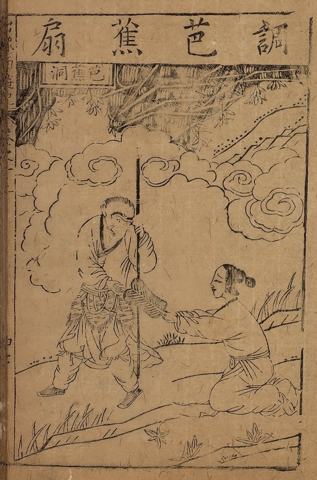
The Monkey King — a stone-born immortal with seventy-two transformations who fought heaven to a standstill, then walked to India as a monk's disciple.
Sovereign of Heaven and head of the celestial bureaucracy — the emperor of the gods, who governs the cosmos the way a dynasty governs a realm.
The Ming novel that restaged the fall of the Shang dynasty as heaven's founding war, promoting 365 of its dead into a brand-new celestial bureaucracy.
Sources & Further Reading
- 1.Xu Zhonglin (attrib.), Fengshen yanyi — The Investiture of the Gods (late 16th century); trans. Gu Zhizhong, Creation of the Gods, New World Press, 1992.
- 2.Wu Cheng'en (attrib.), Xiyouji — Journey to the West (16th century); trans. Anthony C. Yu, The Journey to the West, revised edition, University of Chicago Press, 2012.
- 3.Sanjiao yuanliu soushen daquan — Complete Compendium on the Origins of the Three Teachings and the Search for the Sacred (Ming dynasty).
- 4.Shahar, Meir. Oedipal God: The Chinese Nezha and His Indian Origins. University of Hawai'i Press, 2015.
- 5.Meulenbeld, Mark R. E. Demonic Warfare: Daoism, Territorial Networks, and the History of a Ming Novel. University of Hawai'i Press, 2015.
- 6.Sangren, P. Steven. 'Myths, Gods, and Family Relations.' In Unruly Gods: Divinity and Society in China, ed. Meir Shahar and Robert P. Weller. University of Hawai'i Press, 1996.
Spot an error or have a source to suggest? Write to info@viseterna.com. We cite primary sources and modern scholarship, and we correct fast.