
Puca (Pooka)
An Irish shapeshifting spirit, usually a wild black horse, who claims a share of the harvest at Samhain and is helpful or frightening depending on the teller.
The Pooka and the horse, illustration by Willy Pogany for Padraic Colum's The King of Ireland's Son, 1916 · Public domain · source
A Shape for Every Occasion
The púca (also spelled pooka or phouka) is a shapeshifting spirit of Irish folklore, most often described as a wild black horse with a flowing mane and glowing eyes, though tradition also gives it the form of a goat, a rabbit, an eagle, or a shabby old man 4,5. Unlike more consistently menacing Irish supernatural figures, the púca's character shifts by region and by teller: Yeats, drawing on collectors working across different counties, found it treated as broadly helpful on farms in some districts and as a genuine object of dread in others, sometimes within the same generation 2. It is most active after dark and most associated with the turn of the year at Samhain, when Irish tradition holds that the boundary between the human world and the world of spirits is at its thinnest 4.
The Wild Ride
The púca's best-known trick is the terror-ride: it approaches a lone traveller, often in horse form, invites or forces them onto its back, and gallops off across hedges, bogs, and open country before dropping the rider, shaken but usually unharmed, far from home 1,4. Croker's 1825 collection treats the púca as capable of appearing as an ordinary person as well, striking up conversation with a stranger before revealing its nature and predicting some coming misfortune, a variant that blurs the line between mischievous prankster and genuine omen-bearer 1. Ó hÓgáin notes that this instability — sometimes a domestic helper, sometimes a night terror, sometimes simply an oracle — is one of the clearest signs that "púca" was never a single fixed figure but a regional label applied to a cluster of related local beliefs 4.
The Puca's Share
The most widespread surviving custom associated with the púca concerns the end of the harvest. Irish tradition holds that the last of the crop in a field, or the final sheaf left standing, belongs to the púca and should be left ungathered as its due, a practice recorded across many counties into the twentieth century 4. A related belief warns that blackberries and other wild fruit still on the bramble after Samhain, the first of November, have been spoiled, spat upon, or otherwise fouled by the púca and should not be eaten 4. Both customs tie the creature directly to the agricultural calendar rather than to any single narrative, which is part of why it survived so long in everyday practice even where the more dramatic wild-ride stories had faded 4.
Named on the Land
The púca's name is fixed permanently onto the Irish landscape at Poll an Phúca, "the púca's hole," anglicised as Poulaphouca, in County Wicklow, where a waterfall once dropped through a deep gorge on the River Liffey before the valley was flooded to form a reservoir in the twentieth century 4,5. The gorge was long said to be a favourite haunt of the creature, and the name has outlasted the waterfall itself, which now runs only when the reservoir's floodgates are opened 4.
Kin Across the Irish Sea
The púca has close linguistic relatives elsewhere in the British Isles: the Welsh pwca, described in nineteenth-century Welsh folklore collections as a more domestic, brownie-like household spirit, and the English puck, familiar from Shakespeare's Robin Goodfellow in A Midsummer Night's Dream 3,5. Scholars remain divided on whether these names share a single root or arose independently from similar-sounding words; proposed origins include the Old Irish poc, "male goat," and an Old Norse or Old English word for a mischievous spirit or devil, and no version of the etymology is secure enough to settle the question outright 3,5. The connection is close enough in the public imagination that the annual Puck Fair in Killorglin, County Kerry, at which a wild mountain goat is captured, crowned, and displayed for three days each August, is popularly linked to the púca in local tradition — though the fair's own documented history as an old livestock market is older than any surviving explanation of the goat-crowning custom, and the link to the púca is folk etymology rather than an attested fact 4.
Continue Exploring
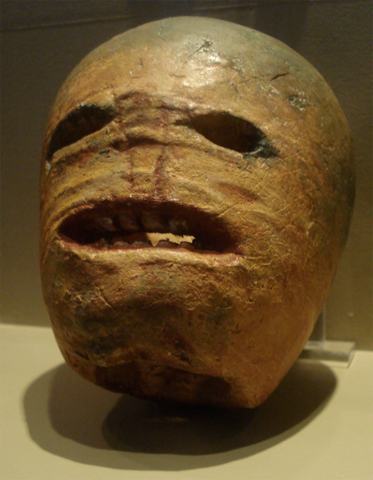
The Gaelic quarter day that opened winter and the Otherworld alike in medieval Irish literature — not, despite a popular myth, the name of a god of the dead.
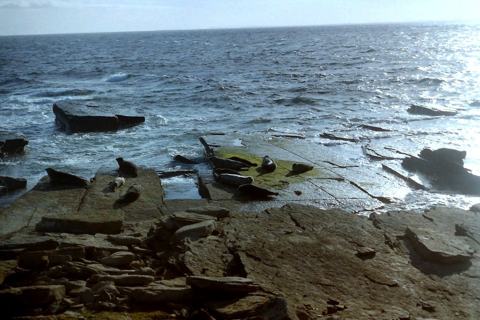
The seal-people of Orkney, Shetland, and the Scottish and Irish coasts, who shed their skins to walk on land — and must find them again to go home.
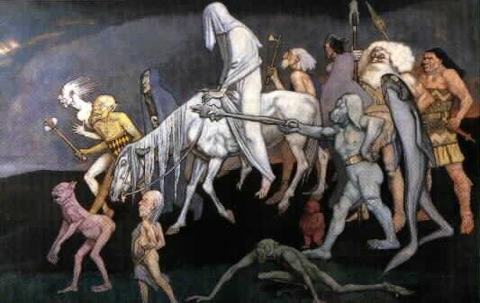
Ireland's monstrous sea-people — raiders, tribute-takers and kin to the gods they fight, led by Balor of the destroying eye.
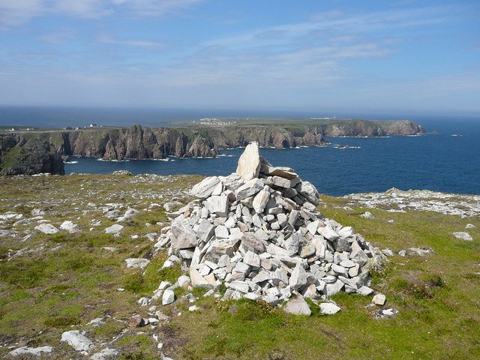
The Fomorian king whose single destroying eye must be lifted open by four men — and who dies exactly as prophesied, by his own grandson's hand.
Herald of death — the "woman of the mound," heard rather than seen, whose keening outside a house announces that someone of the family is about to die.
The learned class of Iron Age Gaul and Britain, known mostly through hostile Roman writers and later Irish legend — and reinvented from scratch in the 1700s.
Sources & Further Reading
- 1.Croker, Thomas Crofton. Fairy Legends and Traditions of the South of Ireland. John Murray, 1825.
- 2.Yeats, W. B. (ed). Fairy and Folk Tales of the Irish Peasantry. Walter Scott, 1888.
- 3.Briggs, Katharine. An Encyclopedia of Fairies. Pantheon Books, 1976.
- 4.O hOgain, Daithi. The Lore of Ireland: An Encyclopaedia of Myth, Legend and Romance. Boydell Press, 2006.
- 5.MacKillop, James. Dictionary of Celtic Mythology. Oxford University Press, 1998.
Spot an error or have a source to suggest? Write to info@viseterna.com. We cite primary sources and modern scholarship, and we correct fast.