
Fengshen Yanyi (Investiture of the Gods)
The Ming novel that restaged the fall of the Shang dynasty as heaven's founding war, promoting 365 of its dead into a brand-new celestial bureaucracy.
Jiang Ziya, woodblock illustration from a compendium of generals' biographies, 1643 · Public domain · source
A Dynasty's Fall, Restaged as Scripture
The Fengshen Yanyi — "Investiture of the Gods," sometimes translated Creation of the Gods — takes a real historical hinge and rebuilds it as myth. The Shiji's account of the Zhou conquest of Shang, traditionally placed in the eleventh century BCE, describes the last Shang king as a tyrant undone by his own cruelty and the rising virtue of the Zhou house 2. The novel keeps that skeleton and fills it with a two-thousand-year-later fantasy: immortals recruit human armies, gods duel with named magic treasures, and the strategist Jiang Ziya — famously discovered fishing with a straight, baitless hook on the Zhou house's own doorstep — directs the whole war for Zhou on Heaven's explicit orders 1. History supplies the plot; the novel supplies everyone in it a magic weapon and a hidden agenda.
An Unsettled Author, a Datable Book
Unlike the war it describes, the novel's printing history is comparatively well documented, even where its author is not. It was composed during the Longqing and Wanli reigns of the Ming, in the second half of the sixteenth century, and the earliest surviving complete printing — a hundred-chapter edition carrying commentary attributed to one Zhong Bojing — dates from early in the seventeenth 1. That edition credits "Xu Zhonglin" on its title page, and popular tradition has followed the attribution ever since 1. It is not secure. Some scholars have proposed instead the Daoist writer Lu Xixing, pointing to the novel's internal-alchemy vocabulary and to a disciple character who reads like a self-portrait of the author; Lu Xun's own history of Chinese fiction, compiled in the twentieth century, already treated the authorship as an open question rather than a settled fact 1,3. This Codex follows the title-page attribution while flagging it as contested 1,3.
Heaven's Civil Service, Freshly Staffed
The novel's central device is the Fengshen Bang, the Investiture List: a roster, drawn up before the war even starts, of 365 spirits who must die in the fighting so that Jiang Ziya can promote them to godhead and staff the newly organised celestial bureaucracy 1. Nearly every major death in the book's back half is really a job offer — a warrior falls, and the narrative pauses to say which star, which ministry, which patch of the cosmos he has just been assigned to run 1. Meulenbeld reads this structure as more than a plot convenience: he argues the novel functions as a written deposit of actual Ming exorcistic religion, cataloguing the marshals and generals that Daoist ritual specialists were already invoking in territorial cults, and giving them a shared origin story after the fact 4.
The Gods It Sends Into the Codex
Two of this Codex's most vivid deities receive their fullest telling here. Nezha's birth as a ball of flesh, his killing of a dragon prince, his suicide to repay his own body to his parents, and his lotus-root resurrection are all Fengshen Yanyi material, later folded into Journey to the West as a coda rather than an origin 1. Erlang Shen appears here under the name Yang Jian, a disciple of the immortal Yuding Zhenren and one of the Zhou side's most capable fighters — a different biography from his Journey to the West appearance, and evidence the two novels were drawing the same demon-quelling marshals from a shared pool of temple legend rather than borrowing directly from one another 1,4.
Nuwa's Insult, and the War's First Cause
The book gives its cosmic war a petty, human trigger. It opens with the Shang king visiting the temple of Nuwa and, struck by her beauty, scrawling a lecherous poem on the temple wall; the insulted goddess dispatches a fox spirit to take human form, seduce him, and hollow the dynasty out from the inside as punishment 1. It is a small, ugly scene on which to found an entire cosmic war, and that is rather the point — the Fengshen Yanyi consistently prefers petty divine grievance to grand design as its engine, heaven's court behaving with all the pettiness of the human one it means to replace 1.
History or Theology, Read Which Way
Popular readers have long treated the novel as something close to a genealogy of the Chinese pantheon, an explanation of where the gods in the temples actually came from. Scholars are more cautious. Yang and An's survey places the Fengshen Yanyi alongside Journey to the West as the two Ming novels most responsible for fixing popular religious imagery, while stressing that neither book invented the cults it describes so much as gave already-worshipped marshals a shared, marketable backstory 5. Meulenbeld goes further, arguing that reading the novel purely as literature misses how closely its geography and its factional structure track real Daoist ritual networks active in the author's own region and era — fiction and religious practice feeding each other, rather than one simply illustrating the other 4.
Continue Exploring
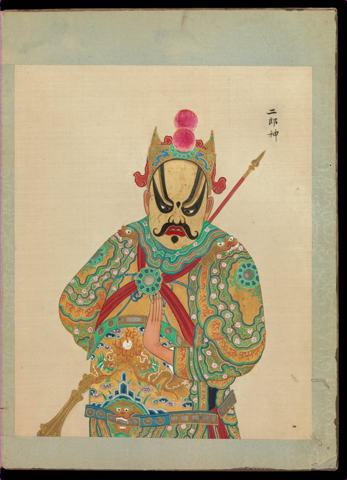
The three-eyed god of Guankou who tamed the floods and was the only celestial general able to beat the Monkey King in a fair fight.
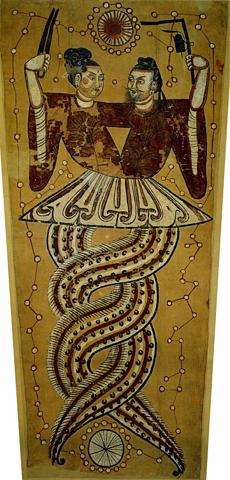
The serpent-bodied creator goddess who shaped the first humans out of yellow earth and patched the broken sky with five-coloured stone.
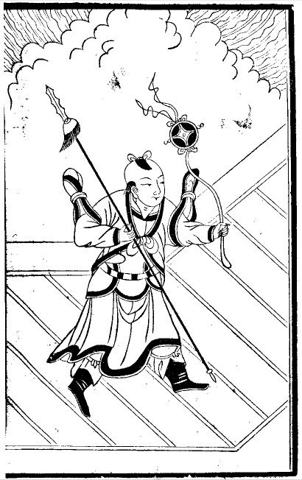
The child god who killed a dragon prince, returned his flesh to his parents, and was rebuilt out of lotus — China's most rebellious divine infant.
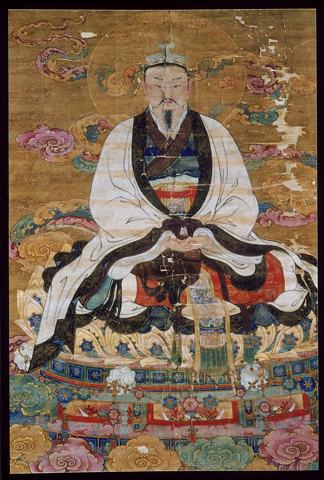
Sovereign of Heaven and head of the celestial bureaucracy — the emperor of the gods, who governs the cosmos the way a dynasty governs a realm.
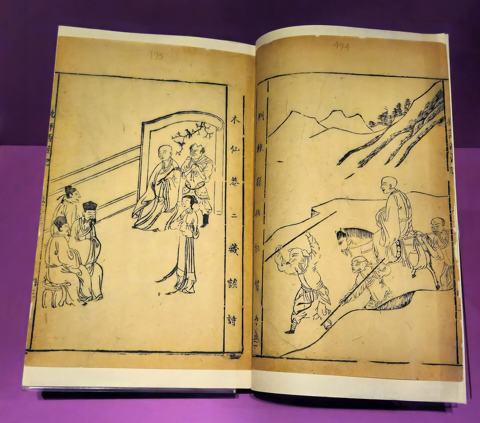
The Ming novel that sent a monk and three monster disciples across demon country for Buddhist scripture — and gave Sun Wukong to the world.
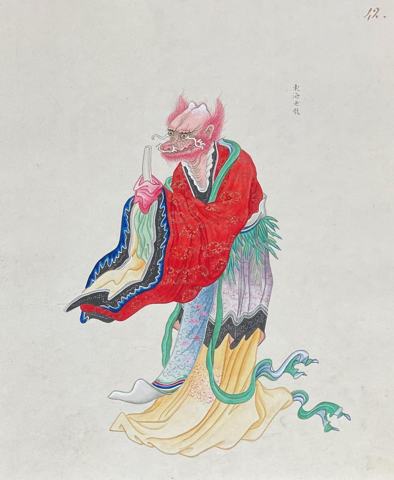
Four bureaucrat-dragons who rule the seas from undersea palaces, command rain and flood, and get bullied by mortal heroes in China's best-loved novels.
Sources & Further Reading
- 1.Xu Zhonglin (attrib.), Fengshen yanyi — The Investiture of the Gods (late 16th century); trans. Gu Zhizhong, Creation of the Gods, New World Press, 1992.
- 2.Sima Qian, Shiji — Records of the Grand Historian (c. 94 BCE), 'Basic Annals of Zhou.'
- 3.Lu Xun. A Brief History of Chinese Fiction. Trans. Yang Xianyi and Gladys Yang. Foreign Languages Press, 1959.
- 4.Meulenbeld, Mark R. E. Demonic Warfare: Daoism, Territorial Networks, and the History of a Ming Novel. University of Hawai'i Press, 2015.
- 5.Yang, Lihui & Deming An. Handbook of Chinese Mythology. ABC-CLIO, 2005.
Spot an error or have a source to suggest? Write to info@viseterna.com. We cite primary sources and modern scholarship, and we correct fast.