
Mount Tai (Taishan)
China's most sacred mountain, climbed by emperors seeking Heaven's mandate and by pilgrims for three millennia — seat of a goddess and an underworld judge.
Pilgrims at the summit shrine, Mount Tai, photograph by Jiang, 2007 · Public domain · source
The Eastern Peak
Mount Tai, or Taishan, rises to 1,545 meters over the North China Plain in Shandong province — not China's tallest mountain by a wide margin, but its most venerated, and among the most continuously worshipped natural sites anywhere in the world 2,5. It is the Eastern Peak of the Wuyue, the Five Great Mountains that anchor the four cardinal directions and the center of the traditional Chinese cosmos; as the eastern peak, Taishan is bound to spring, to the rising sun, and to birth and beginnings, the same set of associations carried by the Azure Dragon among the Four Symbols 5. UNESCO inscribed Taishan as a mixed cultural and natural World Heritage Site in 1987, one of the first sites in China to receive the designation, citing both its landscape and more than two thousand years of continuous cultural use 6.
The Feng and Shan Sacrifices
Taishan's oldest recorded importance is imperial. Sima Qian's Shiji devotes an entire treatise to the feng and shan sacrifices — feng offered to Heaven from Taishan's summit, shan to Earth at a smaller neighboring hill — performed by rulers claiming that Heaven had confirmed their right to reign 1. Sima Qian's account reaches back to legendary sage-kings said to have toured the peak in high antiquity, a tradition he treats with visible skepticism about its earliest layers, before turning to rulers he can document with more confidence: the First Emperor of Qin climbed and sacrificed there in 219 BCE, and Han Wudi performed the ceremony repeatedly in the following century, each ascent framed as proof that his dynasty held Heaven's favor 1,2. Only a handful of later emperors, across the Tang and Song, judged themselves worthy of repeating the rite; a Song-dynasty performance in 1008 was already controversial in its own time as excessive and hollow, and no emperor is recorded attempting it afterward 2.
The Lady of the Mountain
The mountain's presiding figure today is not the male sky-god of the old imperial sacrifices but Bixia Yuanjun, the "Princess of the Azure Clouds," whose temple crowns the summit near the Jade Emperor Peak. Her cult rose to prominence relatively late, becoming the dominant object of popular pilgrimage devotion by the Ming and Qing dynasties, and drew a pilgrim base — especially women seeking children or a safe childbirth — that dwarfed the older, more formal state cult in scale 2,3. Pomeranz reads her rise as a case of a popular goddess absorbing and personalizing a mountain that official religion had always described in more abstract, bureaucratic terms, closing the distance between an aloof cosmic mountain and an approachable protector one ordinary pilgrims could petition directly 3.
Lord of the Dead
Long before Buddhism brought the ten courts of hell and its judge Yanluo into Chinese religion, Taishan already had a second, darker job: administering the register of the dead. Early belief held that the hun soul of the deceased traveled to the mountain to be recorded and judged by Taishan Fujun, the Lord of Mount Tai, a role the mountain's cult never entirely gave up even as the imported bureaucracy of Diyu grew more elaborate around it 2. That older identity survives as a substrate beneath the mountain's later, sunnier reputation as a place of blessing and long life — the same peak that grants fortune to the living was, for centuries, where Chinese belief sent the dead to be counted 2.
Climbing the Mountain
The physical pilgrimage is itself part of the site's religious history. A stone stairway of some 6,600-odd steps climbs the traditional central route from the town of Tai'an to the summit gate known as the Nantian Men, the Southern Gate of Heaven, passing inscriptions, shrines, and steles left by emperors, poets, and pilgrims across two millennia, including a marker at Confucius's traditional ascent point referencing his remark, recorded in the Mencius, that climbing Taishan made the whole world look small 2,4. Dott's study of Ming and Qing pilgrimage records shows the climb functioning simultaneously as elite literary pilgrimage, popular devotional practice, and simple local festival outing, often for the same families in the same season 2.
Present Status
Taishan remains an active pilgrimage site rather than a preserved ruin: incense is still burned and locks of devotion still hung at the summit shrines, a cable car now shortens the climb for those who want it, and sunrise viewed from the Eastern Peak retains its old reputation as an auspicious sight worth the night's ascent 2,6. Naquin and Yu's survey of Chinese pilgrimage places Taishan at the center of the whole tradition it studies, less a single site than a template for what a Chinese sacred mountain is supposed to be 4.
Continue Exploring
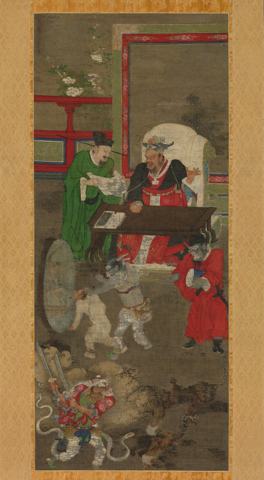
The magistrate-king of the Chinese underworld, who tries every soul against a written record and a mirror that shows what they actually did.
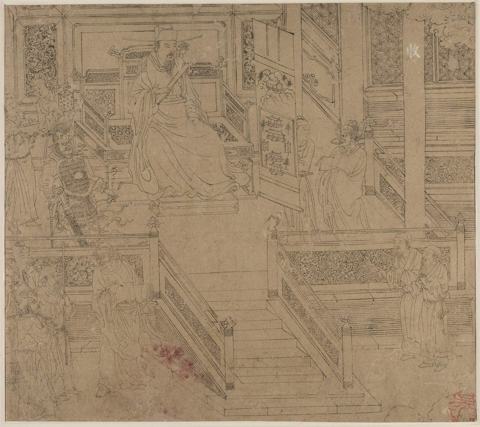
The Chinese underworld — a bureaucracy of ten courts where the dead are tried, serve sentences for what they did, and are then sent back into rebirth.
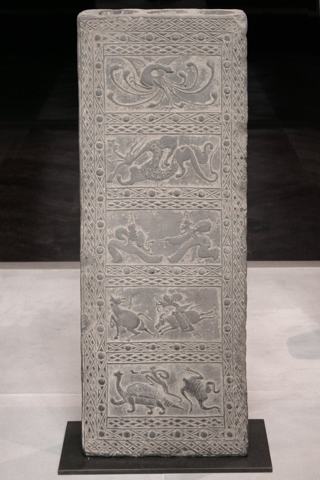
The four beasts of the Chinese sky — dragon, tiger, bird and tortoise-and-snake. A star map first, a mythology second, and both for over two thousand years.
China's reanimated corpse — stiff-limbed, hopping, driven by a soul that failed to leave the body — a Qing folk terror turned horror-comedy icon.
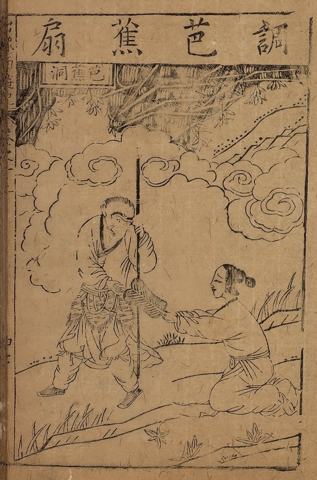
The Monkey King — a stone-born immortal with seventy-two transformations who fought heaven to a standstill, then walked to India as a monk's disciple.
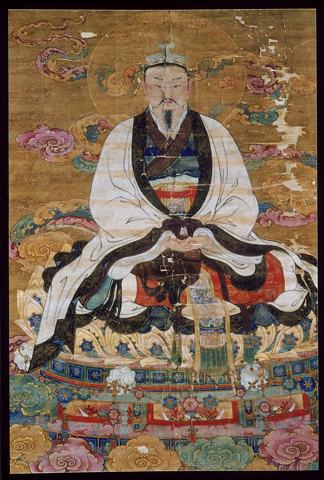
Sovereign of Heaven and head of the celestial bureaucracy — the emperor of the gods, who governs the cosmos the way a dynasty governs a realm.
Sources & Further Reading
- 1.Sima Qian, Shiji — The Treatise on the Feng and Shan Sacrifices (c. 94 BCE); trans. Burton Watson. Columbia University Press.
- 2.Dott, Brian R. Identity Reflections: Pilgrimages to Mount Tai in Late Imperial China. Harvard University Asia Center, 2005.
- 3.Pomeranz, Kenneth. "Power, Gender, and Pluralism in the Cult of the Goddess of Taishan." In Culture and State in Chinese History, edited by Theodore Huters, R. Bin Wong & Pauline Yu. Stanford University Press, 1997.
- 4.Naquin, Susan & Chun-fang Yu, eds. Pilgrims and Sacred Sites in China. University of California Press, 1989.
- 5.Yang, Lihui & Deming An. Handbook of Chinese Mythology. ABC-CLIO, 2005.
- 6.UNESCO World Heritage Centre. "Mount Taishan." World Heritage List, entry 437, inscribed 1987.
Spot an error or have a source to suggest? Write to info@viseterna.com. We cite primary sources and modern scholarship, and we correct fast.