
Jiangshi (Hopping Vampire)
China's reanimated corpse — stiff-limbed, hopping, driven by a soul that failed to leave the body — a Qing folk terror turned horror-comedy icon.
What a Jiangshi Is
A jiangshi (僵屍), "stiff corpse," is a dead body that has failed to properly decay or depart and instead reanimates — rigid-limbed, arms held stiffly forward, moving in the short vertical hops that give the creature its popular English name because rigor mortis has left it unable to bend its knees 3,4. It is usually described as dressed in the burial robes of a Qing-dynasty official, with grey or greenish decaying skin, long nails, and closed or filmed-over eyes, and it is drawn to the breath and life-force, qi, of the living, which it drains by touch or bite 4,5. Sunlight, mirrors, and the blood of a black dog are traditional deterrents; the most effective one, in nearly every telling, is a strip of yellow paper bearing a written talisman, fu, pasted to the corpse's forehead, which freezes it in place 4,5.
A Soul Gone Wrong
The jiangshi's cause, in traditional belief, is a failure in the machinery of the soul. Chinese folk cosmology generally recognizes two soul components in a living person: the hun, an ethereal soul that is meant to ascend and eventually be reborn or venerated as an ancestor, and the po, an earthier soul tied to the body, expected to remain with the corpse and fade as it decomposes 4. Von Glahn situates the jiangshi within a much larger Chinese demonology of improperly settled dead — victims of violent or premature death, suicides, the unburied, and the ritually neglected — whose souls, denied a normal transition, become dangerous instead of at rest 4. A jiangshi is what results when the po soul refuses to disperse and animates the body directly, a corpse acting without the hun that should have made it a person 4. That two-soul accounting is also why the dead needed somewhere correct to go: popular belief held that the hun of the deceased travelled to the underworld register kept at Mount Tai, the mountain that long predated Yanluo and the courts of Diyu as China's administrator of the dead, and a soul that never reached that register was a soul left with nowhere proper to be 3,4.
The Corpse-Walkers of Xiangxi
Adjacent to the horror legend is a distinct, and stranger, body of belief and reported practice: gan shi, "driving the corpse," associated with Xiangxi in western Hunan. Specialists were said to ritually animate the bodies of travelers who had died far from home and walk them, upright and roped in a line, back to their native villages for burial, moving only by night to the sound of a bell that warned locals to stay indoors 3. De Groot's exhaustive nineteenth-century survey of Chinese funerary belief situates this practice within a much broader anxiety about corpses that do not stay properly dead, in which improper burial, an unavenged death, or even an animal — famously a cat — leaping over a body before burial could trigger reanimation 3.
Anecdotes from the Qing
The jiangshi appears repeatedly in the Qing-dynasty genre of anomaly notebooks, biji, short anecdotes presented as reported fact rather than fiction. Yuan Mei's Zi Buyu, "What the Master Would Not Discuss" — its title a wink at Confucius's own refusal to speak of prodigies and spirits — collects numerous stiff-corpse tales among its catalogue of the strange, typically ending with the corpse exposed, burned, or destroyed by a traveling monk or Daoist priest 1. Ji Yun's near-contemporary Yuewei Caotang Biji likewise treats corpse reanimation as a recognized, if rare, hazard of improper burial, discussed with the same dry, investigative tone Ji Yun brings to the collection's ghosts and fox spirits 2. Neither writer presents the jiangshi as a distinct, named monster type in the way later fiction and film would; in the Qing sources it is one variety, among several, of a corpse that has gone wrong 1,2,4.
From Folklore to Film
The jiangshi's familiar modern form — the hopping gait, the Qing official's robes, the paper talisman, the Daoist priest hero — was consolidated and exported by Hong Kong cinema, above all by the 1985 film Mr. Vampire, which launched a wave of jiangshi comedy-horror films through the late 1980s and 1990s 5. Ancuta traces how that genre fixed a single, marketable image of the jiangshi out of a much looser and more varied folk tradition, an image now familiar well beyond China through video games, anime, and horror cinema more broadly 5. The figure has since been exported back into English-language horror scholarship as one of the clearest non-European counterparts to the vampire — related by function, distinct in almost every mechanism 5.
Unlike the vampire's predatory intelligence, the jiangshi in its older tellings is closer to a hazard than a villain: a body that is not where it should be, animated by a soul that did not go where it was supposed to, and dealt with — talisman, fire, or a Daoist priest's blade — as a problem of ritual correction rather than a battle of wills 3,4.
Continue Exploring
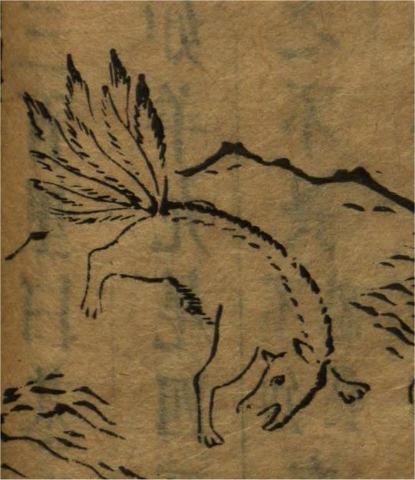
China's shapeshifting fox spirits, who gain power and human form through age — feared as seducers and omens of ruin, and the root of Japan's kitsune.
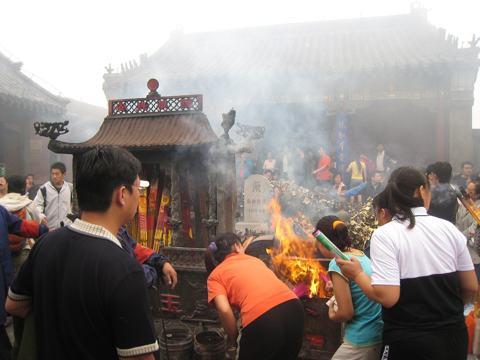
China's most sacred mountain, climbed by emperors seeking Heaven's mandate and by pilgrims for three millennia — seat of a goddess and an underworld judge.
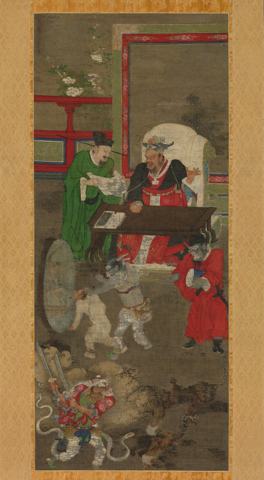
The magistrate-king of the Chinese underworld, who tries every soul against a written record and a mirror that shows what they actually did.
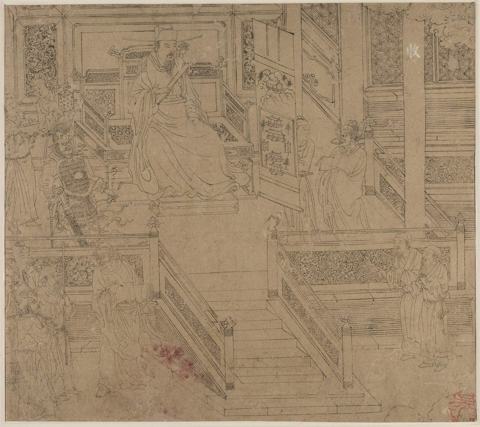
The Chinese underworld — a bureaucracy of ten courts where the dead are tried, serve sentences for what they did, and are then sent back into rebirth.
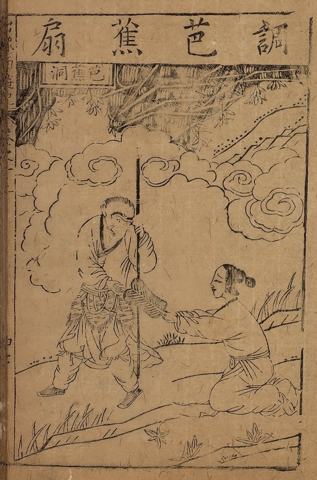
The Monkey King — a stone-born immortal with seventy-two transformations who fought heaven to a standstill, then walked to India as a monk's disciple.
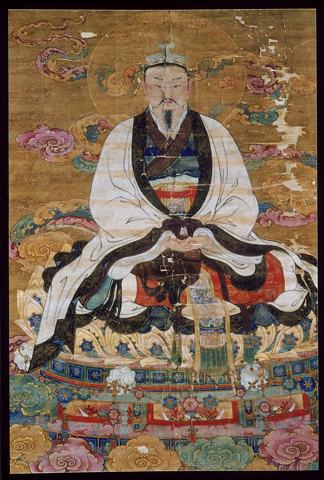
Sovereign of Heaven and head of the celestial bureaucracy — the emperor of the gods, who governs the cosmos the way a dynasty governs a realm.
Sources & Further Reading
- 1.Yuan Mei, Zi Buyu — What the Master Would Not Discuss (c. 1788).
- 2.Ji Yun, Yuewei Caotang Biji — Notes from the Cottage of Close Scrutiny (c. 1800).
- 3.de Groot, J.J.M. The Religious System of China. 6 vols. E.J. Brill, 1892-1910.
- 4.Von Glahn, Richard. The Sinister Way: The Divine and the Demonic in Chinese Religious Culture. University of California Press, 2004.
- 5.Ancuta, Katarzyna. "Scared Stiff: Jiangshi and Chinese Vampires." In The Palgrave Handbook of the Vampire, edited by Simon Bacon. Palgrave Macmillan, 2023.
Spot an error or have a source to suggest? Write to info@viseterna.com. We cite primary sources and modern scholarship, and we correct fast.