
Mithras
The bull-slaying god of a Roman mystery cult that left hundreds of underground temples across the empire and not one line of its own scripture.
Tauroctony of Mithras, Roman marble, 2nd century AD (Musee du Louvre, Paris, Ma 3441); photograph by Jastrow, 2006 · Public domain · source
A Religion Without a Text
Mithras is the best-attested Roman god about whom we know least. Hundreds of his temples have been excavated, thousands of his images and inscriptions catalogued — Vermaseren's Corpus runs to two volumes of them — and yet not a single sentence of Mithraic doctrine survives from a Mithraist 5,6. Everything written about the cult by ancient authors comes either from outsiders such as the Neoplatonist Porphyry, or from Christian polemicists such as Tertullian and Justin Martyr, who mention Mithraic rites mainly to accuse them of imitating Christian ones 2,3,4.
The result is a discipline that reads religion out of pictures. What Mithraists believed has to be reconstructed from the iconography of their sanctuaries, their dedications, and the layout of their rooms — which is why the field is unusually contentious 6,7,8.
Origins and the Iranian Question
The name descends from the Indo-Iranian god Mithra, a deity of contract and oath attested in the Avesta and in Vedic hymns as Mitra. The nineteenth-century scholar Franz Cumont built an enormously influential model on that fact, treating the Roman mysteries as Iranian Mazdaism carried west and lightly Hellenised.
That model is no longer accepted in its original form. There is a long gap in the evidence, the Roman iconography has no clear Iranian antecedent, and the tauroctony — the cult's central image — has no counterpart in Persian religion 6,8. Manfred Clauss treats the Roman cult as essentially a new creation that borrowed a prestigious eastern name and costume; Roger Beck argues for a more specific point of formation, plausibly in the Greek-speaking east, and stresses that the Persian dressing was meaningful to Roman worshippers even if it was not historically continuous 6,7. The debate is live, and honest accounts leave it open.
What is not in doubt is the chronology. Mithraic evidence appears in the Roman world in the later first century AD — Statius's passing reference to a god twisting the horns of a struggling bull in a cave is the earliest literary trace — peaks sharply in the second and third centuries, and fades in the late fourth 1,6,8.
The Tauroctony
Every mithraeum had, at the focal end of the room, an image of the same scene, executed in relief or fresco with remarkable consistency across three thousand kilometres. Mithras, a young man in Phrygian cap and billowing cloak, kneels on a collapsing bull, pulls back its head by the nostrils, and drives a short blade into its shoulder. He looks away, usually over his shoulder 5,6.
Around him a fixed cast: a dog and a snake leaping at the wound, a scorpion gripping the bull's genitals, a raven perched on the cloak, often ears of grain sprouting from the bull's tail or the blood. Two torchbearers in matching dress flank the scene, Cautes with his torch raised and Cautopates with his lowered. Sol and Luna occupy the upper corners, and in many examples Sol and Mithras are shown elsewhere in the sanctuary sharing a banquet on the bull's hide 5,6.
What the killing meant is the central unsolved problem. Some scholars read it as a creation act, the bull's death generating the fertile world; the grain and the vegetal blood support this. Others, following David Ulansey, have read the figures as a star map, with bull, dog, snake, raven, scorpion and lion matching constellations, and the whole scene encoding the precession of the equinoxes — an ingenious argument that most specialists find too specific. Roger Beck's more cautious version treats the mithraeum as a deliberate model of the cosmos and its imagery as "star-talk", a symbolic language about the soul's descent and ascent through the planetary spheres 7. Porphyry, the one ancient writer who tries to explain it, says the cave was made an image of the cosmos, which is at least consistent with that reading 2.
A second scene recurs almost as often: Mithras born from solid rock, emerging as a naked youth already holding torch and dagger, sometimes ringed by the zodiac. The petra genetrix, the generative rock, gives the god a birth with no mother and no myth of childhood 5,6.
The Mithraeum and the Seven Grades
Mithraic sanctuaries are instantly recognisable: long, narrow, low, deliberately dark, dug into the ground or built to feel as if they were, with continuous raised benches down both sides and the tauroctony at the end. They are small. Most could seat between twenty and forty people, which means a Mithraic congregation was the size of a dinner party, and that new communities multiplied rather than growing 6,8. Ostia alone has produced around eighteen of them.
Initiates progressed through seven grades, listed on a mosaic floor at the Mithraeum of Felicissimus at Ostia and in a letter of St Jerome: Corax (raven), Nymphus (bridegroom), Miles (soldier), Leo (lion), Perses (Persian), Heliodromus (sun-runner), and Pater (father). Each is paired with a planetary guardian, and Clauss argues the number seven is inseparable from the seven planets of ancient astronomy 6,7. The senior grades appear to have carried the cult's teaching; the Pater led the community.
Rites are glimpsed rather than described. Tertullian reports an initiation in which a crown was offered on a sword and refused, the initiate declaring that Mithras was his crown, and describes a branding or marking of initiates 3. Justin Martyr claims Mithraists used bread and a cup of water with formulas in their initiations, which he attributes to demonic mimicry of the Eucharist 4. Painted benches at Santa Prisca in Rome preserve fragments of Mithraic verses — the closest thing to a Mithraic text we have, and it amounts to a handful of lines 5,6.
Who Joined, and Why It Ended
The evidence from dedications is unusually clear on membership, and unusually clear on one exclusion: women are essentially absent 6,8. Dedicators are overwhelmingly men of the middling ranks — soldiers and centurions, imperial slaves and freedmen, customs officials, merchants, minor administrators. The distribution follows the army and the trade routes: heavy concentrations along the Rhine and Danube frontiers, at Rome and Ostia, and in Roman Britain, where the Carrawburgh mithraeum on Hadrian's Wall and the Walbrook mithraeum in London are the best-known sites 5,6.
Dedications commonly name the god Deus Sol Invictus Mithras, the unconquered sun-god — a title that has caused persistent confusion with the separate state cult of Sol Invictus promoted by Aurelian in the 270s, which scholars treat as a distinct institution 6,8.
The cult declined through the late fourth century as Christianity became dominant; some mithraea show signs of deliberate destruction, others simply of abandonment. Because Mithraism was a network of small closed cells rather than a public religion with property and clergy, it had little institutional weight to defend, and it left behind exactly what its members put underground: rooms, benches, and one image repeated everywhere.
Continue Exploring
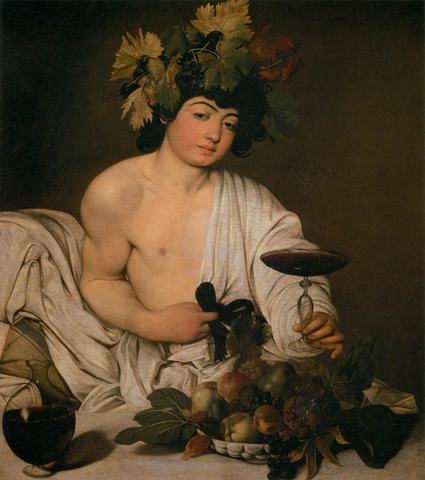
Rome's own wine and fertility god Liber, so thoroughly merged with Greek Bacchus that the Senate outlawed his mystery cult across Italy in 186 BC.
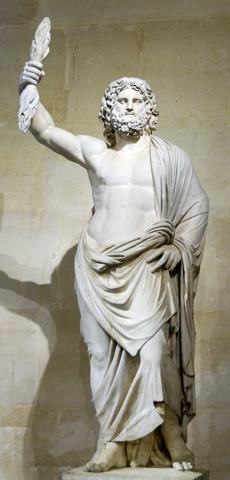
King of the gods and of the Roman state — lord of the bright sky, hurler of the lightning bolt, and the guarantor behind every oath and treaty.
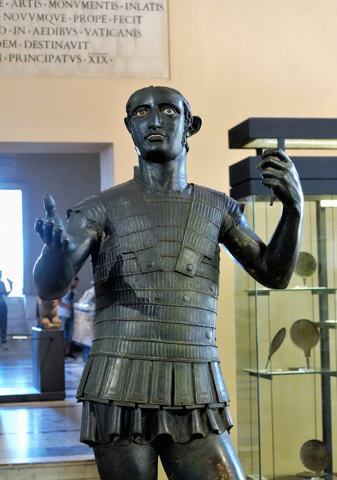
God of war and father of Rome — honoured above almost every other deity, with his own month, his own dancing priests, and the twins he fathered on a Vestal.
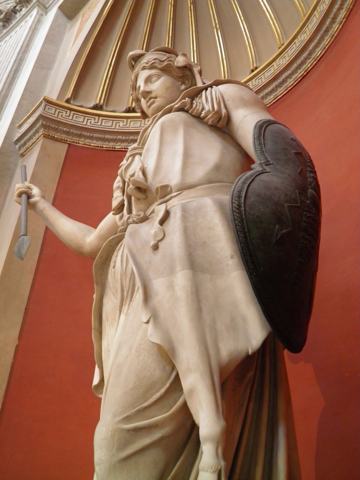
Queen of the gods — Rome's guardian of women, childbirth and the state, whose sacred geese warned the Capitol and whose temple gave us the word money.
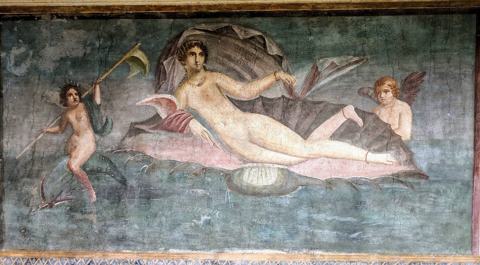
Goddess of love and desire — and the divine ancestress of Rome itself, mother of Aeneas and the claimed forebear of the family of Julius Caesar.
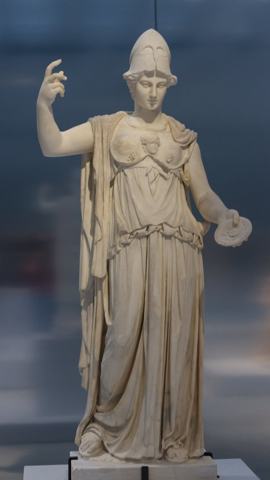
Goddess of wisdom and the crafts — third of the Capitoline Triad, and Rome's patron of every skilled trade from weaving and teaching to medicine.
Sources & Further Reading
- 1.Statius, Thebaid — Book I, lines 717-720 (the earliest Latin literary reference to Mithras, c. AD 92).
- 2.Porphyry, De antro nympharum (On the Cave of the Nymphs), 3rd century AD.
- 3.Tertullian, De praescriptione haereticorum 40 and De corona 15 (c. AD 200).
- 4.Justin Martyr, First Apology 66 (c. AD 155).
- 5.Vermaseren, M.J. Corpus Inscriptionum et Monumentorum Religionis Mithriacae (CIMRM). 2 vols. Martinus Nijhoff, 1956-1960.
- 6.Clauss, Manfred. The Roman Cult of Mithras — The God and His Mysteries. Trans. Richard Gordon. Edinburgh University Press, 2000.
- 7.Beck, Roger. The Religion of the Mithras Cult in the Roman Empire. Oxford University Press, 2006.
- 8.Beard, Mary, John North and Simon Price. Religions of Rome. 2 vols. Cambridge University Press, 1998.
Spot an error or have a source to suggest? Write to info@viseterna.com. We cite primary sources and modern scholarship, and we correct fast.