
Lupercalia
Rome's February fertility rite at the wolf's cave, where near-naked priests struck bystanders with goat-hide thongs — its link to Valentine's Day is unproven.
Lupercalia, Andrea Camassei, 17th century (Museo del Prado, Madrid) · Public domain · source
The Cave Under the Palatine
The Lupercalia took its name and ritual centre from the Lupercal, a grotto at the foot of the Palatine Hill that Roman tradition identified as the place where the she-wolf Lupa suckled the infant twins Romulus and Remus 1,5. Ancient writers describe the site as still shown to visitors in the historical period, associated with a sacred fig tree, the ficus Ruminalis, said to mark where the twins' basket had washed ashore on the Tiber 1,4. The Lupercal gave its name to a rite that, by every ancient account, was already old by the time of the earliest surviving descriptions of it 4.
15 February at the Grotto
On the Ides of February, priests called the Luperci gathered at the cave to sacrifice goats and a dog 3. Two young men of patrician family, drawn from two ancient colleges of Luperci, had their foreheads touched with a knife still wet with the goats' blood; the blood was then wiped away with wool dipped in milk, and the youths were required to laugh, a step ancient writers themselves found strange enough to record without fully explaining it 1,4. The goat hides were then cut into strips called februa, a word ancient etymologists connected to februare, "to purify," and, by extension, to the month's own name 3.
Running the Bounds
Stripped to a loincloth and smeared with the sacrificial blood, the Luperci then ran a course around the base of the Palatine, striking out at anyone in their path with the februa 1,3. Women in particular were said to come forward and offer their hands or bodies to the blow, in the belief that it aided fertility and eased childbirth; Ovid records the custom as still current in his own day and treats it matter-of-factly, without embarrassment, as a normal piece of the Roman ritual calendar 3.
Two Colleges and a Third
Roman tradition made the rite's founding heroes the sons of Mars and Rhea Silvia, a Vesta priestess forced from her vows by a usurping uncle — the same parentage story that gave Rome its wolf-suckled twins in the first place, and one the Luperci re-enacted every year simply by running the course the twins were said to have run 1,4. By the historical period the Luperci were organized into two hereditary colleges, the Luperci Fabiani and Luperci Quinctiales, whose names Romans themselves connected to old patrician families said to have run the course since the earliest days of the city 1,4. Julius Caesar added a third college, the Luperci Iulii, in the 40s BC, an act plainly aimed at attaching his own name to one of Rome's oldest rites 2. It was at the Lupercalia of 44 BC, only weeks before Caesar's assassination, that Mark Antony — running with the Luperci himself, stripped and anointed like the rest — offered him a diadem in front of the crowd; Caesar's public refusal, staged or not, became one of the most closely read political gestures of the late Republic, and Plutarch gives it in enough circumstantial detail to suggest he drew on eyewitness or near-eyewitness testimony 2.
Did a Pope Really Ban It?
A durable claim holds that Pope Gelasius I abolished the Lupercalia around AD 495-496 and replaced it with the feast of Saint Valentine. The evidence for the first half of that claim is real: a letter of Gelasius does argue against continuing the festival, which Roman aristocrats were apparently still keeping up in an officially Christian city generations after the empire's western half had collapsed 6. The evidence for the second half is essentially absent — nothing in Gelasius's own writing connects his objection to any Valentine feast, and the pairing of the two events looks like a much later inference rather than anything a fifth-century source actually states 6,7.
Not the Origin of Valentine's Day
The popular shorthand — that Lupercalia became Valentine's Day — compounds an uncertain suppression with a second, separate claim that is weaker still. Saint Valentine himself, as he appears in the third-century martyrology, has no attested connection to romantic love at all. The case that the day acquired its romantic association only in the late fourteenth century, through Geoffrey Chaucer's poem The Parliament of Fowls and the courtly literary tradition around it, has been influential among specialists since Jack Oruch's detailed study of the medieval evidence, and no ancient or early medieval source ties 15 February to 14 February in any way 8. The line sometimes drawn from goat-hide runners in the Roman Forum to modern greeting cards is, on the evidence available, an invention of much later popular history rather than a real chain of transmission 7,8.
Continue Exploring
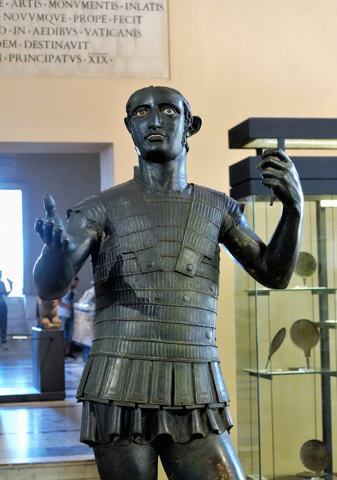
God of war and father of Rome — honoured above almost every other deity, with his own month, his own dancing priests, and the twins he fathered on a Vestal.
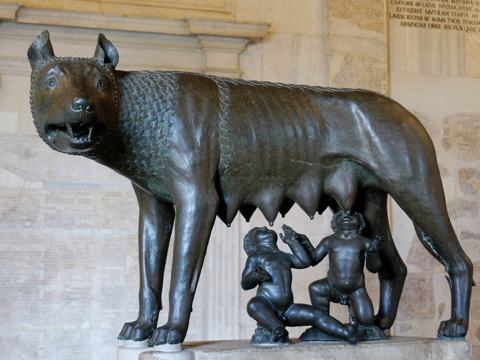
The she-wolf of Rome — the beast that suckled the abandoned twins Romulus and Remus, and the most durable emblem the city ever gave itself.
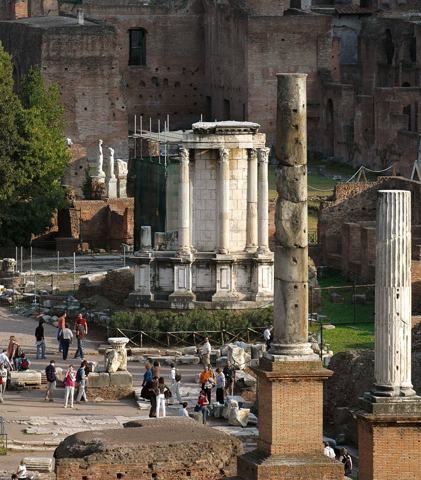
Rome's hearth goddess, worshipped as a living fire rather than a statue, tended in the Forum by six priestesses for over a thousand years.
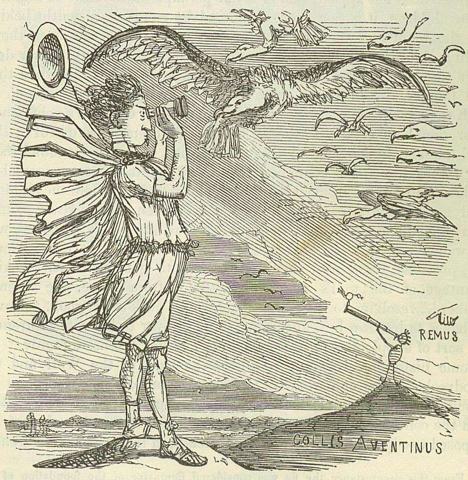
How Roman magistrates read the will of the gods from bird-flight and lightning before every public act — the state's oldest form of applied religion.
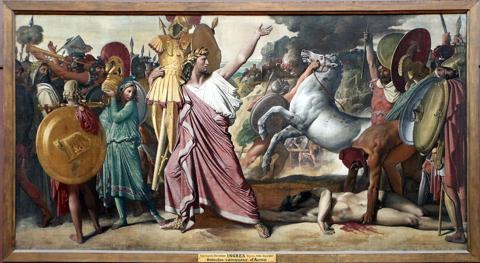
Twin sons of Mars, saved by a she-wolf and raised by shepherds, who quarreled over where to found Rome — a quarrel that ended with only one of them ruling it.
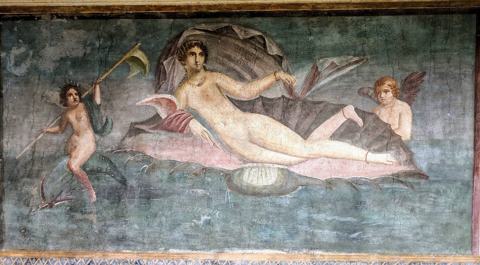
Goddess of love and desire — and the divine ancestress of Rome itself, mother of Aeneas and the claimed forebear of the family of Julius Caesar.
Sources & Further Reading
- 1.Plutarch, Life of Romulus — chapters 21, 25 (c. AD 100).
- 2.Plutarch, Life of Caesar — chapter 61 (c. AD 100).
- 3.Ovid, Fasti — Book II, lines 267-452 (c. AD 8).
- 4.Dionysius of Halicarnassus, Roman Antiquities — Book I.79-80 (late 1st century BC).
- 5.Livy, Ab Urbe Condita — Book I.5.
- 6.Wiseman, T.P. Remus — A Roman Myth. Cambridge University Press, 1995.
- 7.Beard, Mary, John North and Simon Price. Religions of Rome. 2 vols. Cambridge University Press, 1998.
- 8.Oruch, Jack B. "St. Valentine, Chaucer, and Spring in February." Speculum, vol. 56, no. 3, 1981.
Spot an error or have a source to suggest? Write to info@viseterna.com. We cite primary sources and modern scholarship, and we correct fast.