
K'awiil (God K)
God K of the Maya codices, a deity of lightning and dynastic power whose serpent-legged, axe-browed image was the scepter every legitimate king had to hold.
Flanged censer depicting the god K'awiil, Late Classic Maya, Tabasco, Mexico, 600-850 CE, earthenware and pigment (De Young Museum, San Francisco) · CC0 · source
God K
Nineteenth- and early twentieth-century scholars working through the Dresden and Madrid codices labeled each recurring deity image with a letter rather than a name, since the codices' captions could not yet be read; the figure they called God K is the one modern epigraphers read as K'awiil, a Classic Maya name recorded directly in royal hieroglyphic titles 4,6. Schellhas's original 1904 catalogue of the codex gods remains the reason the letter-names are still used as shorthand alongside the deciphered ones 4.
A Body Built From Lightning
K'awiil's image is one of the most immediately recognizable in Maya art. One leg dissolves into the body of a serpent, often rendered smoking or flaming at the point of transformation; the forehead is pierced by a long, smoking celt or torch, sometimes rendered as a small axe or mirror embedded in the skull 1,2. Taube reads this composite body as lightning itself, made a person: the serpent leg is the bolt striking the earth, and the smoking brow is the fire it leaves behind 1. Maize foliage sometimes sprouts from the same wound, tying the god to agricultural abundance as well as to storm 1,2.
Scepter of Kings
K'awiil was not only worshipped but held. Classic Maya rulers are shown on stelae and painted vessels gripping a "manikin scepter," a miniature effigy of the god with one leg formed into a handle, in the same gesture of authority used elsewhere for a spear or staff 2,3. Royal names throughout the Classic period incorporate K'awiil directly, from Yax Nuun Ahiin's Tikal successors to the Copan and Palenque dynasties, and inscriptions that record accessions to the throne treat contact with the god's image as part of what made a ruler legitimate rather than merely decorative 2,3. To be shown holding K'awiil was to claim the same channel to divine power that the bloodletting rite was meant to open 1,2.
The scepter itself was a real object, not only a picture. Effigy heads of K'awiil in jade, shell, and carved bone have been recovered from royal tombs and dedicatory caches going back to the Late Preclassic, showing that the image long predates its clearest Classic-period inscriptions and that rulers were buried with the same regalia they were carved holding in life 1,2.
In the Codices
By the Postclassic period represented in the Dresden and Madrid codices, K'awiil appears repeatedly in almanacs concerned with rain, planting, and the New Year ceremonies, often paired with the rain god Chaac, with whom he shares both a serpentine leg and a role in bringing storms 1,6. Diego de Landa's sixteenth-century account of the Yucatec New Year rites describes a carried deity image consistent with these scenes, and many specialists connect that figure to a name Landa records, Bolon Tz'akab, "Nine/Many Generations" — though the equation rests on comparing Landa's description with codex imagery rather than on a direct gloss, and should be held loosely 5,6.
Not to Be Confused
K'awiil is routinely conflated in popular sources with two things he is not: the Vision Serpent that rears up during bloodletting rituals, and the general figure of "the feathered serpent." He is neither. The Vision Serpent is a conjured apparition rather than a discrete named god, and the feathered serpent belongs to a separate deity complex entirely 1,2. K'awiil's own serpent element is a single leg, not a full body, and his domain is lightning and dynastic legitimacy specifically, not the sky-and-wind complex associated with feathered-serpent imagery elsewhere in Mesoamerica 1,2.
K'awiil's presence across a thousand years of Maya art, from Preclassic jade celts to Postclassic codex pages, marks him as one of the oldest continuously depicted deities in the tradition, even though his name was only recovered by epigraphers within the last several decades 1,3.
Continue Exploring
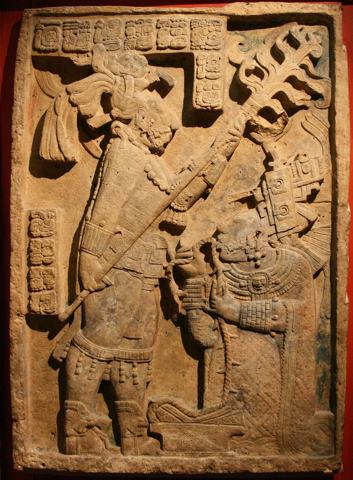
Royal self-sacrifice of blood, through tongue or penis, the central Classic Maya rite for feeding the gods and summoning ancestors, best recorded at Yaxchilan.
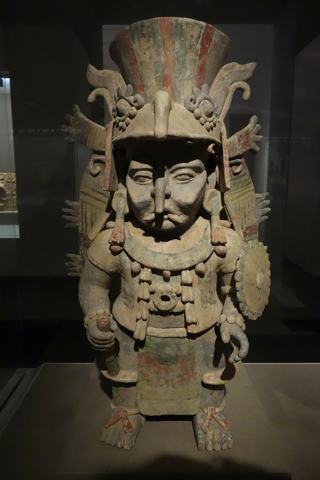
The rain god who splits the clouds with a lightning axe — one god and four, the most frequently depicted deity in the surviving Maya books.
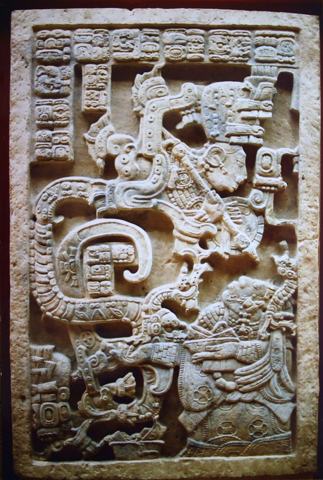
The great serpent conjured through royal bloodletting, its jaws opening to release the ancestors and gods a Classic Maya ruler needed the living to see.
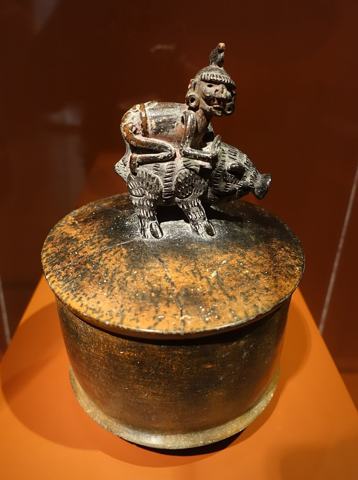
The aged creator — supreme sky god of the Maya, patron of writing, healing and divination, and the old man scholars know as God D.
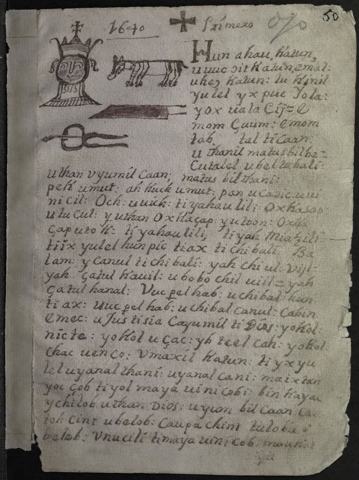
"The one god" of Yucatec Maya colonial texts — a name most scholars now read as a missionary translation for the Christian God, not an ancient Maya deity.
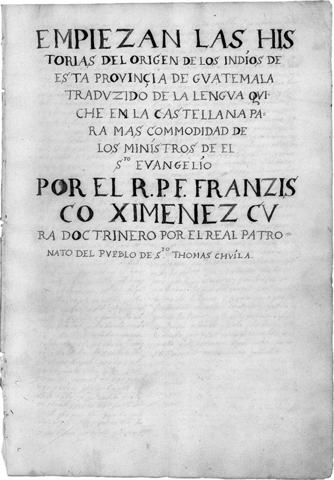
The K'iche' Maya storm god who speaks the world into being in the Popol Vuh — and the contested claim that he gave the hurricane its name.
Sources & Further Reading
- 1.Taube, Karl. The Major Gods of Ancient Yucatan. Dumbarton Oaks Research Library and Collection, 1992.
- 2.Miller, Mary & Karl Taube. The Gods and Symbols of Ancient Mexico and the Maya. Thames & Hudson, 1993.
- 3.Martin, Simon & Nikolai Grube. Chronicle of the Maya Kings and Queens. Thames & Hudson, 2nd ed., 2008.
- 4.Schellhas, Paul. Representation of Deities of the Maya Manuscripts. Peabody Museum, Harvard University, 1904.
- 5.Diego de Landa, Relacion de las cosas de Yucatan (c. 1566).
- 6.The Dresden Codex and the Madrid Codex (Postclassic Maya screenfolds).
Spot an error or have a source to suggest? Write to info@viseterna.com. We cite primary sources and modern scholarship, and we correct fast.