
Ixtab (Maya Goddess)
The "suicide goddess" of a single Landa passage and one Dresden Codex image — an identification recent scholarship seriously disputes.
Hanging figure, Dresden Codex p. 53a, facsimile reproduction (Postclassic Maya) · Public domain · source
Rope Woman
Diego de Landa's Relacion de las cosas de Yucatan, the single richest colonial account of Yucatec Maya religion, names a goddess called Ixtab — "Ix Tab," Rope Woman — in a brief passage on the fates of the dead. According to Landa, those killed in war, women who died in childbirth, priests, and those who hanged themselves were believed to go directly to a paradise of rest beneath a shade tree, and it was Ixtab who came for those who died by the rope, in the office of a psychopomp who received them 1. That is the entire textual basis for "Ixtab, Maya goddess of suicide": one short passage, among dozens of deities and customs Landa catalogues without elaboration 1.
The Codex Picture
The image now used to illustrate her is a small figure on page 53 of the Dresden Codex: a body suspended by a rope tied to a horizontal sky-band, eyes shut, hanging head-down beside a column of glyphs 2. The identification of this figure as Ixtab is not ancient. It originates with Alfred Tozzer, Landa's most important twentieth-century editor and translator, who proposed the connection in a footnote to his 1941 annotated edition of the Relacion — a plausible guess linking Landa's one written sentence to an unexplained codex image, which then hardened into a caption repeated as settled fact in textbook after textbook 1. Karl Taube's standard survey of the codices' deities treats the picture as an isolated case: it has no companion scenes, no repeated appearances elsewhere in the manuscripts, and none of the narrative redundancy that lets specialists identify other codical gods with real confidence 4.
Unraveling the Identification
A 2016 study by Beatriz Reyes-Foster and Rachael Kangas, published in Ethnohistory, tested that caption directly. Surveying several thousand pages of published Maya iconography for any independent evidence of a suicide deity or a suicide-by-hanging motif, they found almost nothing: two images of a person hanging by the neck across the whole corpus they reviewed, neither clearly depicting suicide rather than sacrifice, execution, or some other fate 3. They argue the Dresden figure more plausibly belongs to its actual context — an almanac concerned with eclipses — where a hanging or falling body is a standard way of picturing disaster and dire omen, particularly for pregnant women, rather than a portrait of a named goddess of self-killing 3.
A Modern Story About an Old Passage
Reyes-Foster and Kangas go further, connecting the durability of "Ixtab the suicide goddess" to a modern pattern: Yucatan has a well-documented, high rate of suicide by hanging today, and journalism and even some scholarship have periodically reached for an "ancient Maya suicide goddess" to frame that contemporary public-health problem as a cultural inheritance rather than a present-day crisis with present-day causes 3. Read that way, the popular Ixtab is less a survival of pre-Columbian religion than a twentieth-century story built to explain something else, borrowing one thin colonial sentence and one reassigned codex picture for authority 1,3.
What the Evidence Actually Supports
None of this means Landa invented the name. A goddess called Ixtab, associated in some way with hanging and with a good death, is a genuine part of his text, and dismissing the passage entirely would overcorrect as much as the popular version overclaims 1. What is not supported is the fuller modern picture: a developed cult, a securely identified codex portrait, and a specifically suicide-themed goddess with her own iconographic tradition across Maya art 2,3,5. The gap between the one sentence Landa wrote and the confident goddess of modern books is, on present evidence, mostly the work of the centuries in between 1,3.
The pattern is not unique to her. It runs close to the story told about Hunab Ku, another name that began as a thin colonial-period reference and was built up by later writers into something the surviving sources do not actually show 1. Both cases argue for the same discipline applied to better-attested figures like Ix Chel and Ah Puch: naming plainly what a source says, and what it does not 1,3,5.
Continue Exploring
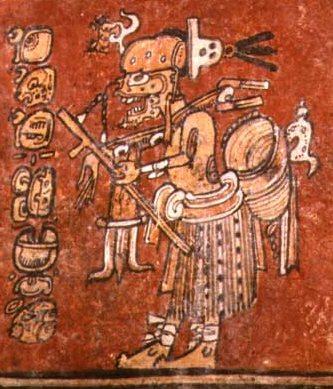
Schellhas's God A, the skeletal Maya death deity behind the name Ah Puch — a label colonial and modern sources actually apply in different ways.
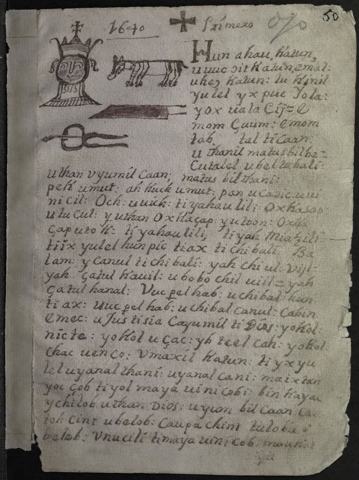
"The one god" of Yucatec Maya colonial texts — a name most scholars now read as a missionary translation for the Christian God, not an ancient Maya deity.
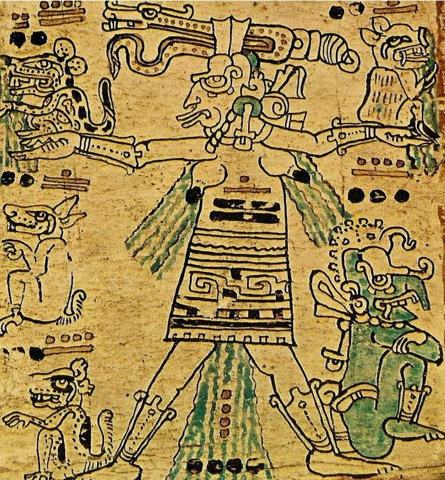
"Rainbow Lady" — the Maya goddess of childbirth, weaving, medicine and divination, and the two distinct goddesses tangled together behind her name.
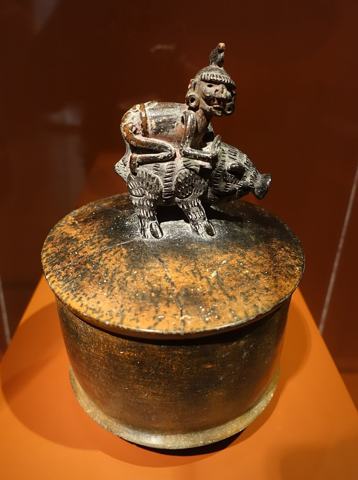
The aged creator — supreme sky god of the Maya, patron of writing, healing and divination, and the old man scholars know as God D.
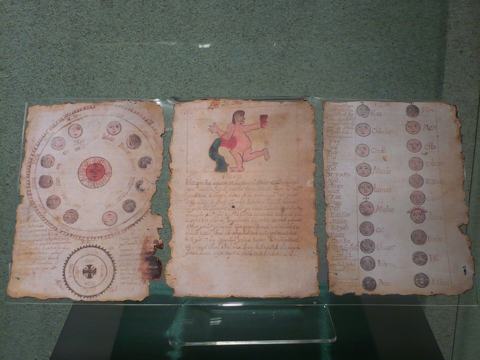
Colonial Yucatec Maya town books mixing prophecy, history, medicine and Christian material — named for a jaguar-priest said to have foreseen the Spanish.
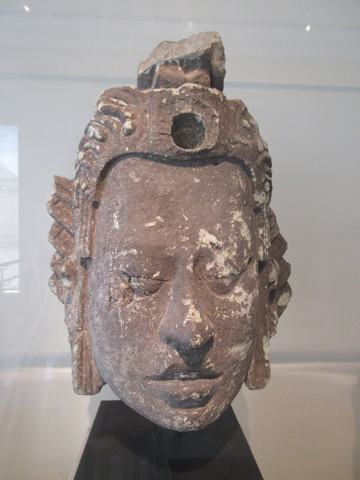
The youthful Classic Maya god of maize, God E of the codices, whose death and rebirth many scholars connect to the Popol Vuh's Hun Hunahpu.
Sources & Further Reading
- 1.Diego de Landa, Relacion de las cosas de Yucatan (c. 1566); trans. Alfred M. Tozzer as Landa's Relacion de las cosas de Yucatan: A Translation, Papers of the Peabody Museum of American Archaeology and Ethnology, vol. 18. Peabody Museum, Harvard University, 1941.
- 2.The Dresden Codex (Postclassic Maya screenfold), page 53.
- 3.Reyes-Foster, Beatriz M., and Rachael Kangas. 'Unraveling Ix Tab: Revisiting the "Suicide Goddess" in Maya Archaeology.' Ethnohistory 63, no. 1 (2016): 1-27.
- 4.Taube, Karl. The Major Gods of Ancient Yucatan. Dumbarton Oaks, 1992.
- 5.Miller, Mary & Karl Taube. The Gods and Symbols of Ancient Mexico and the Maya. Thames & Hudson, 1993.
Spot an error or have a source to suggest? Write to info@viseterna.com. We cite primary sources and modern scholarship, and we correct fast.