
Elysium
The blessed fields — an afterlife of light and ease that began as a plain at the world's edge and ended as a district of Virgil's underworld.
Aeneas and the Sibyl at the entrance to the Elysian Fields, Vergilius Vaticanus, 4th c. AD (Biblioteca Apostolica Vaticana, Vat. lat. 3225) · Public domain · source
A Word Without an Etymology
Elysium is the Latin form of Greek Elysion, usually found in the phrase Elysion pedion, "the Elysian plain." Where the word came from is genuinely unknown: proposals range from a pre-Greek borrowing to a derivation from enelysios, a term for someone struck by lightning and therefore touched by the gods 7. No explanation has won, and the obscurity is a fair warning that Elysium was an inherited idea rather than a Greek invention 7.
Its content shifted repeatedly over a thousand years, and the version most people picture — a sunlit meadow for the virtuous dead — is the last one, assembled at Rome 7.
Homer's Plain at the End of the Earth
The oldest surviving mention is a single passage in the Odyssey. The sea god Proteus tells Menelaus that he will not die at all: he is to be sent to the Elysian plain at the ends of the earth, where there is no snow, no storm and no rain, only the west wind blowing in off the ocean 1.
Two things about it are worth noticing. First, Elysium is a place on the map, not below the ground — the ordinary Homeric dead go to a dim, joyless Hades, and Menelaus is being spared that rather than promoted within it 1,7. Second, he qualifies for a reason that has nothing to do with merit: he is married to Helen and therefore son-in-law to Zeus 1. Early Elysium is about kinship with gods, not about conduct 7.
Isles of the Blessed
Hesiod describes something similar without the name. In his sequence of the races of humanity, the heroes who fought at Thebes and Troy are not all destroyed; some are settled by Zeus at the edge of the world on the Isles of the Blessed, beside the deep-swirling Ocean, where the earth bears honey-sweet fruit three times a year 2.
By the fifth century the idea has acquired a moral entry test. Pindar's second Olympian ode describes a road for those who have kept their souls free of injustice through three lives in each world, ending on the Isle of the Blessed where ocean breezes blow and the shades of Peleus, Cadmus and Achilles walk 3. Judgment, reincarnation and reward have entered the picture, which points to the influence of mystery cult and Orphic-Pythagorean teaching on what had been a straightforward geographical exemption 3,7.
Virgil Moves It Underground
The decisive rewriting is Roman. In Book 6 of the Aeneid, Aeneas descends into the underworld at Cumae with the Sibyl as guide, and the road forks: Tartarus on the left behind its iron walls, and on the right the way to Elysium and the palace of Pluto where the golden bough is set 4.
Virgil's Elysium is inside the realm of the dead rather than out beyond the ocean, and it has its own light — "a fuller air clothes the fields in purple, and they know their own sun and their own stars" 4. Its inhabitants wrestle on grass courts, dance, and sing; Orpheus plays among them; the Eridanus runs through a wood above 4. It is, deliberately, an idealised Italy rather than a paradise of clouds.
Who Gets In
Virgil lists the qualifying categories, and the list is revealing: those who suffered wounds fighting for their homeland, priests who kept themselves pure, poets who sang worthily of the god, those who improved life by their discoveries, and those who earned remembrance by their service to others 4. It is a civic register, not a record of personal holiness — Rome's own values sorted into an afterlife 4,8.
Deeper in, Anchises explains the mechanism to his son: souls are purged of the stains of the body over long ages, most are then summoned to the river Lethe to drink forgetfulness and return to bodies again, and Anchises uses the occasion to parade the future heroes of Rome waiting to be born 4. Elysium is thereby fused with a doctrine of rebirth and turned into the staging ground for Roman history itself, which is a use no Greek poet had found for it 4,7.
Cicero's Alternative Heaven
Not every Roman put the blessed dead underground. A generation before the Aeneid, Cicero closed his Republic with the Dream of Scipio, in which the younger Scipio is shown the cosmos from above and told by his dead grandfather that statesmen who have preserved their country have a place assured in the sky, in the shining band of the Milky Way 5. From up there the Roman empire looks like a speck, and the pursuit of earthly fame looks small.
This astral afterlife, borrowed from Greek philosophy, competed directly with the poetic underworld and won a wide following among educated Romans and later in imperial ideology, where emperors ascended rather than descended 5,7. Ovid, characteristically, has it both ways, sending souls to the underworld in one poem and Caesar to the stars in another 6.
What Romans Actually Expected
It would be wrong to read any of this as the belief of ordinary Romans. Roman funerary inscriptions are strikingly various: some invoke the blessed places, many simply commend the deceased to the Manes, and a well-known formula states in so many words that the dead person did not exist, then existed, then did not, and does not care 7,8.
Bremmer's survey of the whole tradition emphasises how mobile these ideas were — Elysium migrated from the world's western edge to the underworld to the sky, gaining a moral entrance requirement along the way 7. What survived is the image rather than the doctrine. The Champs-Élysées in Paris is named for it, and "Elysian" still means exactly what Homer meant by it: weather that never turns 4,7.
Continue Exploring
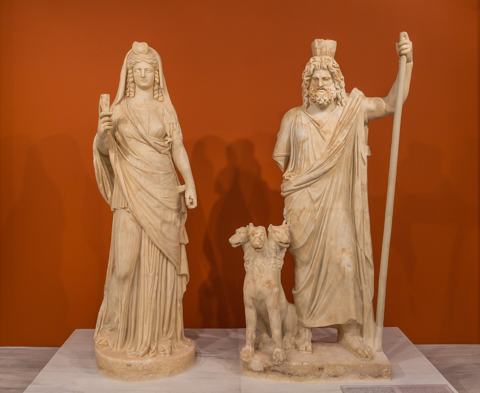
Lord of the underworld — the Roman god of the dead whose older name, Dis Pater, means "the rich father": wealth is what lies buried in the ground.
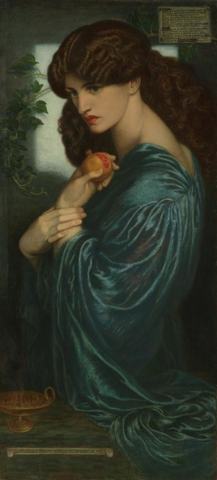
The girl carried off in a chariot and the dread queen of the dead. Persephone divides her year between the grain above and the throne below.
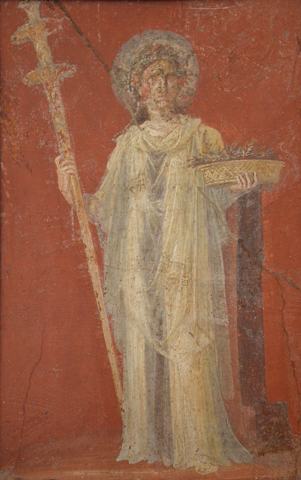
Rome's grain goddess, patron of the plebeian order, whose search for her stolen daughter gave the city its most solemn public festival.
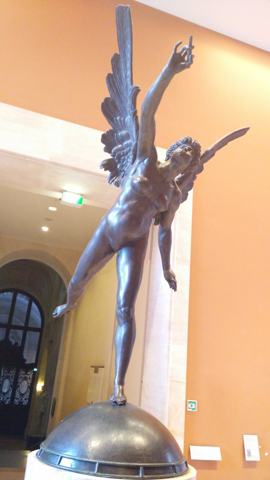
Rome's god of trade, profit and messages, later fused so completely with Greek Hermes that the two are barely distinguishable.
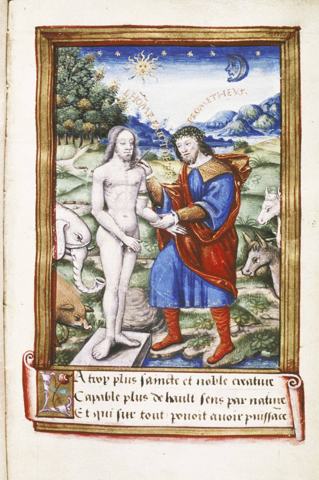
Ovid's 15-book Latin epic of transformation myths — the single work that shaped how the post-classical West came to know Greek and Roman mythology.
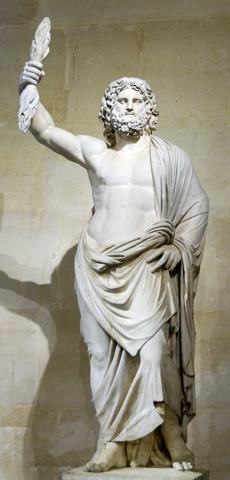
King of the gods and of the Roman state — lord of the bright sky, hurler of the lightning bolt, and the guarantor behind every oath and treaty.
Sources & Further Reading
- 1.Homer, Odyssey, Book 4 (c. 8th–7th century BCE).
- 2.Hesiod, Works and Days (c. 700 BCE).
- 3.Pindar, Olympian 2 (476 BCE).
- 4.Virgil, Aeneid (29–19 BCE), Book 6.
- 5.Cicero, De Re Publica — the Dream of Scipio (54–51 BCE).
- 6.Ovid, Metamorphoses (8 CE).
- 7.Bremmer, Jan N. The Rise and Fall of the Afterlife. Routledge, 2002.
- 8.Beard, Mary, John North & Simon Price. Religions of Rome, Volume 1: A History. Cambridge University Press, 1998.
Spot an error or have a source to suggest? Write to info@viseterna.com. We cite primary sources and modern scholarship, and we correct fast.