
Ceres (Roman Goddess of Grain)
Rome's grain goddess, patron of the plebeian order, whose search for her stolen daughter gave the city its most solemn public festival.
Ceres with torch and grain-basket, Roman fresco, House of the Dioscuri, Pompeii (Naples National Archaeological Museum) · CC BY-SA 2.0 · source
Grain, Growth, and the Old Gods of Latium
Ceres belongs to the oldest layer of Roman religion, one of the di indigetes — native gods worshipped in Italy before Rome absorbed any Greek myth wholesale. Her name comes from an Indo-European root meaning "to grow" or "to create," the same root that gives English create and, through the plural of her own name, cereal 6,7. She was not at first a personality with a developed mythology so much as a force invoked at the edges of farm work: the old priestly lists of narrowly defined functional deities include gods for the moment seed is sown, for weeding, and for the ripening ear, each presiding over one stage of the grain's life, with Ceres standing behind the whole sequence 7.
The Aventine Triad and the Grain of the Plebs
Ceres's cult took its distinctive Roman shape during a food crisis. Tradition held that in 496 BCE, facing famine and the threat of war, the dictator Aulus Postumius vowed a temple on the Aventine Hill to Ceres, Liber, and Libera — a triad soon read as the Roman match for Demeter, Dionysus, and Kore — dedicated a few years later by the consul Spurius Cassius 4,5. The Aventine sat outside the pomerium, on the hill associated with the common people rather than the patrician elite, and the temple became the headquarters of the plebeian aediles, who managed the grain supply, kept the plebs' own archive of decrees, and staged Ceres's games 4,5,6. Barbette Spaeth's study of the cult argues that Ceres became, in effect, the plebeian order's own state goddess, standing opposite Jupiter's temple on the Capitoline much as the plebeian assembly stood opposite the Senate 5.
Coriolanus and the Politics of Bread
Livy preserves the story that shows what was at stake. During a grain shortage after the plebeians had won their own tribunes, a large shipment of grain reached Rome, partly bought from Sicily; the patrician Gnaeus Marcius Coriolanus argued in the Senate that none of it should be distributed to the common people unless they surrendered the tribunate they had just won 2. The proposal was never carried out — Coriolanus was driven into exile for it — but Livy tells the episode as proof that grain and political rights had become the same argument at Rome, and that Ceres's temple, not by accident, was where that argument was administered 2,6.
Torches for a Stolen Daughter
Ceres's central myth is her search for her daughter, whom Latin poets increasingly called Proserpina to match the Greek Persephone: seized by Pluto and carried to the underworld, mourned by a mother who roams the earth with a lit torch until Jupiter brokers the girl's partial return each spring 3. Ovid tells the Roman version in the Fasti and ties it directly to ritual practice: because Ceres searched with fire, Roman matrons at her festival carried torches, and in some towns farmers tied blazing torches to the tails of foxes and let them loose across the fields, a custom Ovid explains with a folktale about a farmer's boy who punished a chicken-thieving fox by setting its straw-wrapped tail alight, only for the animal to run and burn the standing grain instead 3.
The Cerealia and a Borrowed Rite
The Cerealia ran for a week in mid-April, opened by the plebeian aediles with chariot races in the Circus Maximus and closed with the fox-hunt described above; Cicero calls the accompanying stage games "most holy," a rare compliment from a man usually skeptical of public entertainment 1,6. Unusually for a Roman state cult, Ceres's priestesses at Rome performed her rites Graeco ritu, "by the Greek rite" — women summoned, Cicero says, from Greek cities of southern Italy such as Naples, trained to sing the old Greek hymns to Demeter that no Latin substitute was thought to equal 1. Cicero draws this out while prosecuting the corrupt governor Verres for looting the older and more famous shrine of Ceres at Henna in Sicily, a sanctuary he treats as the closest thing the Mediterranean had to the goddess's original home 1,5.
Ceres After Rome
The plebeian grain goddess outlasted the political struggle that shaped her cult; by the late Republic the state's grain dole, the cura annonae, sat under her patronage even as her temple functions were folded into the wider machinery of the food supply run by magistrates and, later, emperors 6,7. Ceres never became the subject of great cult drama the way Vesta or Bacchus did, and modern scholarship reads that as consistent with her character throughout: a goddess defined less by spectacular myth than by the unglamorous, essential fact of bread reaching the city, one harvest at a time 5,6,7.
Continue Exploring
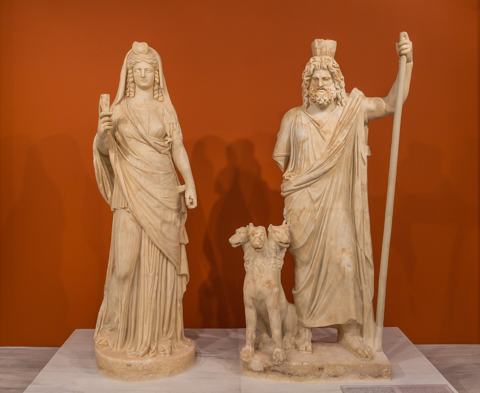
Lord of the underworld — the Roman god of the dead whose older name, Dis Pater, means "the rich father": wealth is what lies buried in the ground.
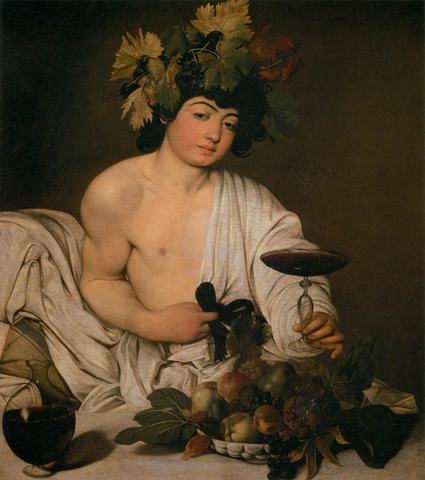
Rome's own wine and fertility god Liber, so thoroughly merged with Greek Bacchus that the Senate outlawed his mystery cult across Italy in 186 BC.
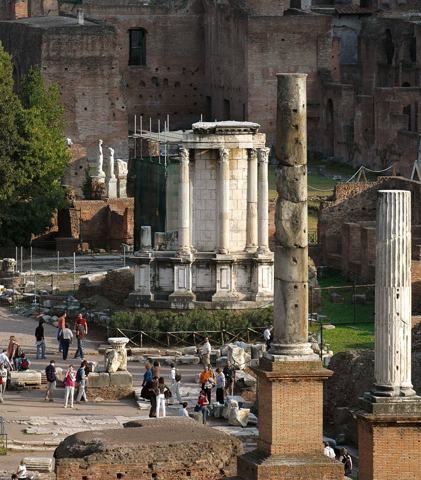
Rome's hearth goddess, worshipped as a living fire rather than a statue, tended in the Forum by six priestesses for over a thousand years.
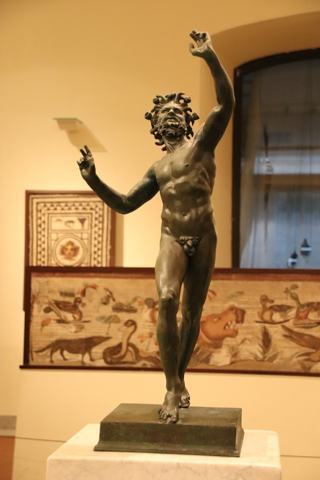
Rome's rustic god of forest and flock, an oracle who spoke through dreams and whose name the Romans linked to the Lupercalia and to Greek Pan and the satyrs.
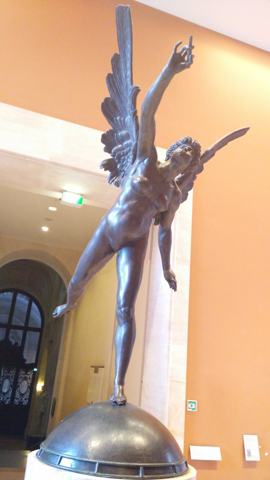
Rome's god of trade, profit and messages, later fused so completely with Greek Hermes that the two are barely distinguishable.
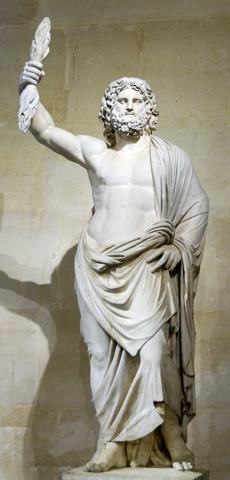
King of the gods and of the Roman state — lord of the bright sky, hurler of the lightning bolt, and the guarantor behind every oath and treaty.
Sources & Further Reading
- 1.Cicero, In Verrem — Second Actio, Book 4 (70 BCE).
- 2.Livy, Ab Urbe Condita — Book II (5th-century-BCE events).
- 3.Ovid, Fasti — Book IV (c. AD 8).
- 4.Dionysius of Halicarnassus, Roman Antiquities — Book VI (late 1st century BCE).
- 5.Spaeth, Barbette Stanley. The Roman Goddess Ceres. University of Texas Press, 1996.
- 6.Beard, Mary, John North & Simon Price. Religions of Rome, Volume 1: A History. Cambridge University Press, 1998.
- 7.Scheid, John. An Introduction to Roman Religion. Edinburgh University Press, 2003.
Spot an error or have a source to suggest? Write to info@viseterna.com. We cite primary sources and modern scholarship, and we correct fast.