
Brigid (Brigit, Brighid)
Goddess of poetry, smithcraft and healing — a triple Brigit in the glossaries, a saint at Kildare, and the figure Imbolc still belongs to.
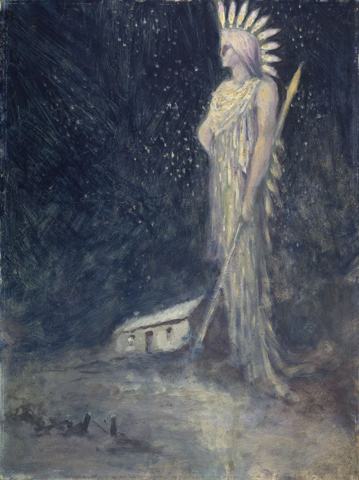
Saint Bride, John Duncan, 1913 (National Galleries Scotland) · Public domain · source
The Name and the Three Brigits
Brigid — Old Irish Brigit, modern Irish Brighid or Brid, anglicised Bridget and Bride — is the best attested of the Irish goddesses and, confusingly, also one of Ireland's three national saints. Her name is generally derived from a Celtic root meaning "the exalted one" or "the high one," related to Sanskrit brhati, and cognate with the British goddess-name Brigantia, borne by the tutelary deity of the Brigantes in northern England 6,7.
The single most important early witness is Sanas Cormaic, Cormac's Glossary, compiled around the turn of the tenth century. Its entry describes Brigit as a poetess and daughter of the Dagda, "the goddess whom poets worshipped," and adds that she had two sisters of the same name — one associated with healing and one with smithcraft — so that among the Irish the word brigit came to mean simply "goddess" 2,6. Whether this is a genuine triple deity or a glossator tidying up several local cults under one name is debated; what the entry does establish is that a learned Irishman around 900 understood Brigit as divine, plural, and above all the patron of the poetic art 2,7,8.
Daughter of the Dagda
In the pseudo-historical scheme of Lebor Gabala Erenn and the sagas, Brigit belongs to the Tuatha De Danann and is a daughter of The Dagda 1,5. Cath Maige Tuired gives her the tradition's most human moment: married to Bres, the half-Fomorian king, she bears a son, Ruadan, who is sent to spy on the smith Goibniu and is killed. Brigit comes to keen over him, and the text says that this was the first time crying and keening were heard in Ireland — the origin of the caoineadh, the Irish lament 1.
The same passage is sometimes read alongside her craft-associations: the son she mourns dies at the forge, and the mother who invents lamentation is also the patroness of the poets who perform it 1,8. Elsewhere she is credited with inventing the whistle used for night-signalling. Her associations across the corpus are consistently with production and skill — verse, metal, medicine, livestock — rather than with battle, which distinguishes her sharply from The Morrigan 1,6,7.
Saint Brigit of Kildare
The saint is a separate problem. Brigit of Kildare is presented as a historical abbess of the fifth to sixth century, and her cult was enormous: Cogitosus's Life, written around the middle of the seventh century, describes a great double monastery at Kildare with the shrines of Brigit and Conleth flanking the altar, and makes an explicit claim for Kildare's authority over other Irish churches 3. The Old Irish Bethu Brigte adds a mass of miracle material — inexhaustible food and drink, cattle that yield three times over, a cloak that spreads to cover the plain of Kildare 4.
How the saint relates to the goddess is genuinely contested and has been for a century. The older view, that the saint is simply the goddess baptised, is now treated as too simple; more recent scholarship stresses that some hagiographical motifs plainly borrow from the divine Brigit's dossier (fire, dairy abundance, patronage of craft) while the historical existence of an early abbess is neither proved nor disproved by that borrowing 6,7. Gerald of Wales, writing in the 1180s, reports a perpetual fire tended at Kildare by nineteen nuns within a hedge no man might cross — a detail often cited as pre-Christian survival, but it is a late and outsider account and should be handled with care 6,7.
Imbolc and the Fire Festival
Brigid owns the first of the four Irish quarter-days. Imbolc, 1 February — St Brigid's Day, La Fheile Bride — marks the start of spring and the beginning of lactation in ewes, and the folk practice attached to it is unusually well recorded: the Brideog doll carried house to house, the rush or straw Cros Bride woven and hung in the rafters, and the brat Bride, a cloth left out overnight to take the saint's blessing and afterwards used for healing 6,7.
The customs are documented in detail only from the early modern period onward, so their antiquity is a matter of inference rather than record. What can be said is that the festival, the goddess of the glossaries, and the saint of Kildare were long since a single complex in Irish practice, and that the Republic of Ireland made St Brigid's Day a public holiday in 2023 — the first Irish national holiday named for a woman 6,7.
Beyond Ireland
Brigid's reach is wider than Ireland. In Scotland she is Bride, and the Gaelic charm-collections of the Hebrides invoke her constantly as midwife and protector of cattle; John Duncan's 1913 painting Saint Bride, which shows angels carrying her across the sea to Bethlehem, illustrates a Hebridean legend that made her the foster-mother of Christ 6,7. In Britain, the goddess Brigantia is attested in Roman-period inscriptions and reliefs from the north of England, and while the name-correspondence is secure, whether the two were the same deity or parallel developments of a shared title is exactly the kind of question that Celtic scholarship treats as open 6,7.
Her survival is the point worth ending on. Where Lugh and the Dagda passed into literature and antiquarianism, Brigid kept a living calendar date, a living saint's cult, and a name still given to Irish girls — which is a different kind of afterlife from the one the Tuatha De Danann were given by the monastic historians who wrote them into the Otherworld 5,6,7.
Continue Exploring
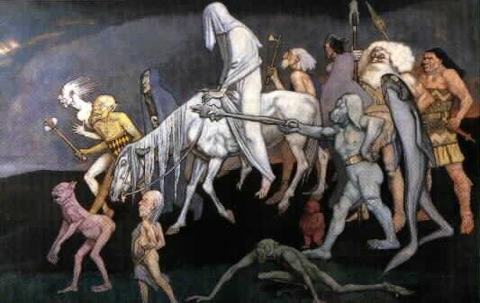
Ireland's monstrous sea-people — raiders, tribute-takers and kin to the gods they fight, led by Balor of the destroying eye.
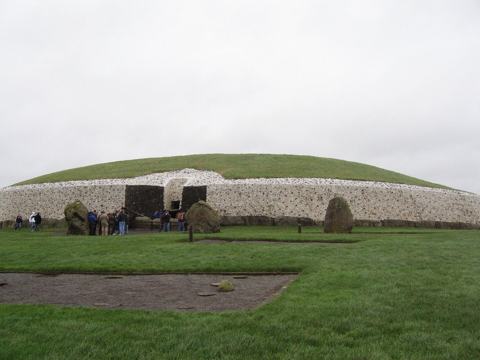
The good god — not morally good but good at everything: the club-bearing, cauldron-owning father figure of the Tuatha De Danann, and their crudest comedian.
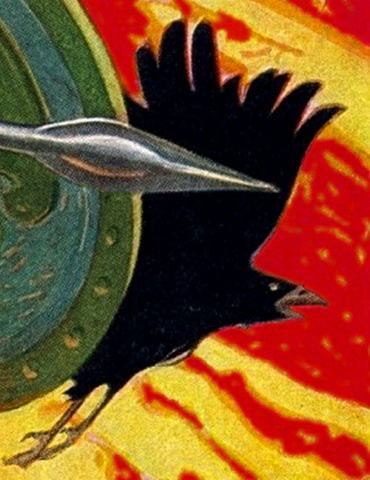
The great queen of war and fate — a shape-shifting Irish goddess who takes crow form above the battlefield and decides its outcome before it is fought.
Master of every skill — the young god admitted to Tara because he alone could do all the crafts at once, and who killed his own grandfather Balor.
Not an afterlife but a parallel country — the sid mounds, the islands west of the sea, and the aos si who kept Ireland after they lost it.
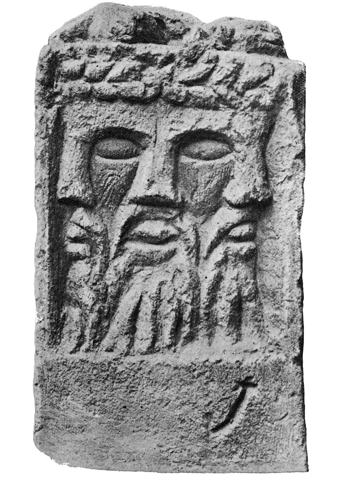
The Gaulish horse goddess whose cult rode with Rome's cavalry — the only Celtic deity ever given a day on the Roman religious calendar.
Sources & Further Reading
- 1.Cath Maige Tuired: The Second Battle of Mag Tuired, ed. and trans. Elizabeth A. Gray. Irish Texts Society vol. 52, 1982 (CELT edition).
- 2.Sanas Cormaic (Cormac's Glossary), attributed to Cormac mac Cuilennain, 9th-10th century; ed. Kuno Meyer, Anecdota from Irish Manuscripts IV, 1912.
- 3.Cogitosus, Vita Sanctae Brigitae (Life of St Brigit), c. 650-700.
- 4.Bethu Brigte (Old Irish Life of Brigit), ed. Donncha O hAodha. Dublin Institute for Advanced Studies, 1978.
- 5.Lebor Gabala Erenn (The Book of the Taking of Ireland), ed. R. A. S. Macalister. Irish Texts Society, 1938-1956.
- 6.MacKillop, James. Dictionary of Celtic Mythology. Oxford University Press, 1998.
- 7.Koch, John T. (ed.). Celtic Culture: A Historical Encyclopedia. ABC-CLIO, 2006.
- 8.O Cathasaigh, Tomas. Coire Sois: The Cauldron of Knowledge. University of Notre Dame Press, 2014.
Spot an error or have a source to suggest? Write to info@viseterna.com. We cite primary sources and modern scholarship, and we correct fast.