
Alatyr (the Sacred Stone)
The "father of all stones" at the center of the world in Russian folk charms and the apocryphal Book of the Dove - a formula more than a place.
Golubinaya kniga (The Dove Book), Nicholas Roerich, 1922 · Public domain · source
The Stone at the Center of Everything
Alatyr is not a place a person could travel to and touch. It is a formula - the recurring "father of all stones," bel-goryuch kamen, the "white, burning stone," that opens a huge number of East Slavic folk charms and appears again in the archaic spiritual verse known as the Golubinaya kniga, the "Book of the Dove" 1,5,6. In both contexts the stone sits in the same impossible location: at the center of the world, in the middle of the ocean-sea, on the island of Buyan - the same island where, in an entirely different genre of story, wonder-tales say Koschei hid his death 1,2,5.
A Name Nobody Can Agree On
Where the word itself comes from has never been settled, and the disagreement is old and technical rather than folkloric. Some philologists derive alatyr from the same root as yantar, amber, making the stone etymologically an amber stone even where the texts describe it as white 1,3. Others prefer an Iranic origin meaning roughly "white-burning," which would fit the recurring bel-goryuch epithet directly 1. A third proposal runs through a Baltic word for the Latgallian region, effectively making Alatyr a "Latvian stone" and tying the whole tradition to Baltic amber trade along the same routes the Rus' used for silver and slaves 3,4. Vasmer's standard etymological dictionary records the debate without resolving it, which is itself the honest state of the evidence: a word this old, moving between oral charm and written verse for centuries, has simply worn its origin smooth 3.
Opening Line of a Charm
Zagovory, the traditional healing and protective charms recorded across Russian villages into the twentieth century, use Alatyr as a fixed point rather than a character. A typical charm against illness sends the sickness away to "the sea-ocean, to the island of Buyan, to the white-hot stone Alatyr," where it is to remain, bound, forever 5. Others use the stone as a throne from which a saint or spirit issues instructions, or as the place a raven is sent to deposit a disease it has been asked to carry off 5. Ryan's survey of Russian magical practice treats this formula as one of the most stable opening gambits in the entire corpus of recorded charms - a ritual coordinate that barely varies between charms otherwise aimed at wildly different ends, from toothache to a runaway husband 5,7.
The Dove Book's Cosmology
The fullest picture comes from the Golubinaya kniga, a dukhovnyi stikh - a "spiritual verse," the genre of semi-apocryphal religious song carried by wandering pilgrim-singers - composed sometime around the late fifteenth or early sixteenth century, with manuscript copies attested from the seventeenth century onward and a distinct version preserved in the mid-eighteenth-century collection assembled for Kirsha Danilov, the same manuscript that preserves some of the earliest written byliny 2,6. In it, a giant book falls from heaven, too vast and holy for anyone but a chosen king to read, and answers a string of riddling questions about the origin of the world by mapping the cosmos onto God's own body: the sun from his face, the stars from his robe, the winds from the breath of the Holy Spirit 2. Within that scheme, Alatyr is named the stone from which the Christian faith itself spread across the earth, set beneath an altar and a great tree at the center of Buyan, with rivers of healing running out from underneath it and two guardians - the serpent Garafena and the bird Gagana - keeping watch 2,6. Petrukhin reads the whole passage as a late, Christianized reworking of older cosmological material rather than a transparent window onto pre-Christian belief, since every surviving copy of the verse is a churchman's or pilgrim-singer's text, already saturated with biblical imagery 1. The cosmology is worth setting beside Vyraj, the folk paradise where migratory birds winter: Vyraj is a warm garden reached by flight, while Alatyr's world sits inside a Christianized spiritual verse and is reached only through the fixed grammar of the charm 2,5.
Not a Relic, a Formula
No museum holds an Alatyr stone, and no medieval source places a cult around one, which sets it apart from the genuinely excavated sacred stones of other Slavic contexts 6. Korinfsky's turn-of-the-century compendium of Russian folk custom already treats Alatyr as a matter of formula and belief rather than of geography, a fixed point in the imagination that every charm-reciter could reach without anyone needing to say where it actually was 7. That is arguably the more interesting fact: a stone that never needed a location to be sacred, because the words naming it did the sacred work themselves 1,7.
Continue Exploring
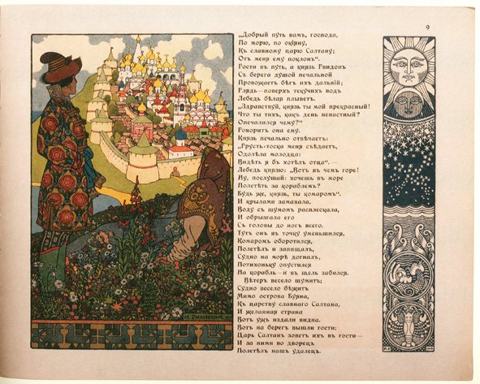
The magical island of Russian folk charm and fairy tale, home to the sacred stone Alatyr and, in wonder-tales, the hidden death of Koschei.
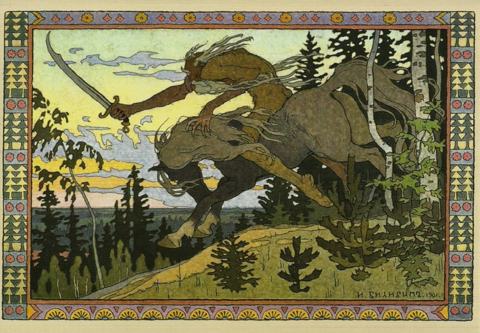
The undying sorcerer of Russian folktale who hid his death in a needle, inside an egg, inside a duck, inside a hare, inside a chest, beneath an oak.
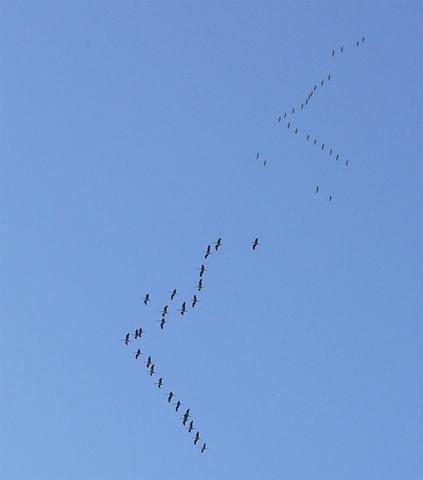
A warm otherworld at the earth's edge where migratory birds winter and, per some folklore, the dead go too - modern ethnography only, no medieval attestation.
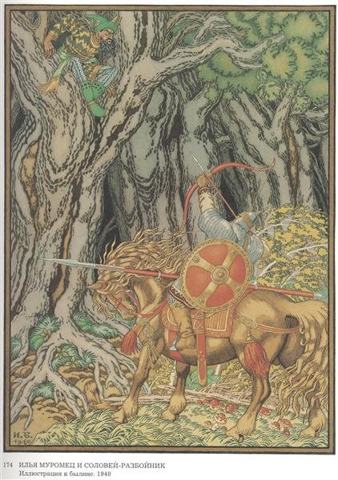
The paralysed peasant's son of Murom who rose from the stove to become Russia's greatest epic hero, and shot down the monstrous Nightingale the Robber.
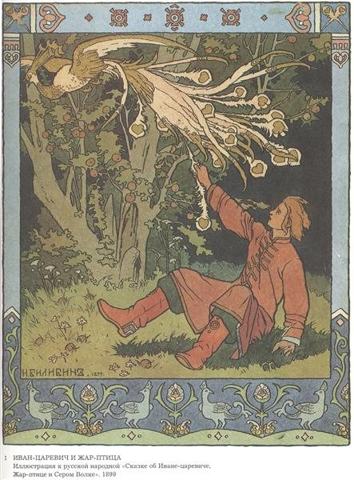
The glowing bird of Russian wonder tale whose single stolen feather starts a fatal quest — first collected by Afanasyev, later Stravinsky's ballet subject.
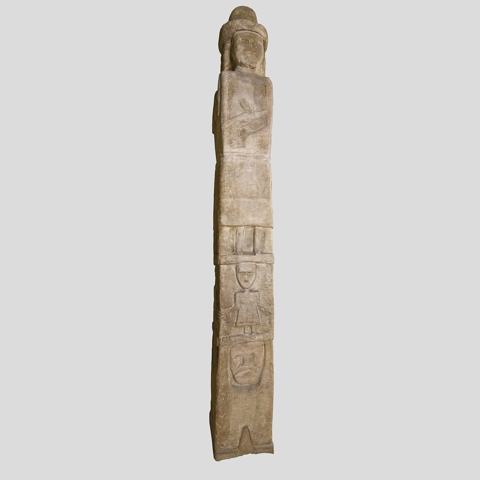
A carved limestone pillar recovered from the Zbruch river in 1848, popularly called Svetovid - though some scholars now argue it may be a 19th-century fake.
Sources & Further Reading
- 1.Petrukhin, Vladimir. "Alatyr," in Slavianskaia mifologiia: Entsiklopedicheskii slovar. Ellis Lak, 1995.
- 2.Meletinsky, E. M., ed. Mifologicheskii slovar (Mythological Dictionary). Sovetskaya Entsiklopediya, 1990.
- 3.Vasmer, Max. Etimologicheskii slovar russkogo yazyka (Etymological Dictionary of the Russian Language). 1986.
- 4.Bartminski, Jerzy. Slownik stereotypow i symboli ludowych, vol. 1: Kosmos. Wydawnictwo UMCS, 1996.
- 5.Ryan, W. F. "The Bathhouse at Midnight: An Historical Survey of Magic and Divination in Russia." Sutton, 1999.
- 6.Bane, Theresa. Encyclopedia of Mythological Objects. McFarland, 2020.
- 7.Korinfsky, Apollon. Narodnaya Rus (Folk Russia). M. V. Klyukin, 1901.
Spot an error or have a source to suggest? Write to info@viseterna.com. We cite primary sources and modern scholarship, and we correct fast.