
A Good Brief and a Great Artist: Commissioning 3D Game Art as a Solo Dev
Serhii Prytula's custom Mjolnir just landed in the game. Here is how the two of us work together, the handoff details that let a model drop straight into Unreal, and the brief template I now start every commission with.
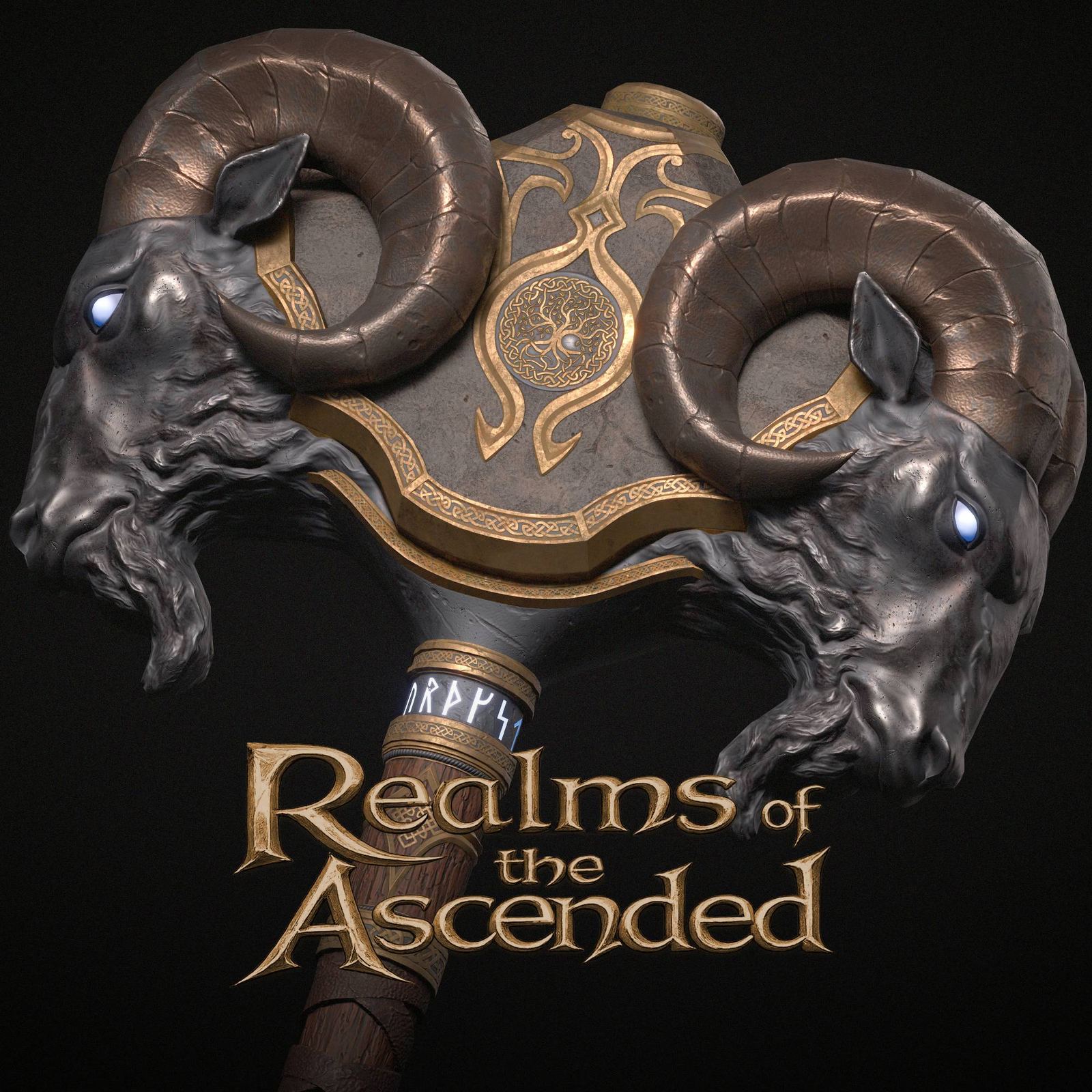
Mjolnir landed
Serhii Prytula finished the custom Mjolnir I commissioned for Thor, and it is in the game now. Thor holds it, throws it, and it flies the way it should. The renders are up on Mjolnir's compendium entry.
I missed a couple of weeks of this blog getting here. When you run a studio alone, the writing is the first thing to slip. This is a post I have owed since the Opening Chronicle, where I promised to write about working with contractors after a hard lesson last year. This is the good half of that story.
Serhii has now modeled Thor, Odin and his spear Gungnir, and Mjolnir for this game. Every one of those projects has gone well, and the reason is not complicated. We communicate clearly, we agree on what we are building before either of us starts, and we look at the work together at every stage. Here is what that looks like in practice, in case it helps anyone commissioning art for the first time.
Start with a shared picture
Every commission starts the same way: I send concept art and a short written brief, so we are both looking at the same target from the first day.
For Odin, the brief looked like this:
- Front and back concept art as the reference.
- A triangle budget of thirty to forty five thousand for the in-game model.
- An A-pose, compatible with Unreal's mannequin skeleton, so the animation we already had could drive him.
- His weapon as its own separate file.
- A continuous cloak mesh ready for cloth simulation, with a bone chain like Thor's cape.
- Three material types: cloth, leather, and metal.
- A base body mesh we could reuse for future gods.
Alongside the specifications, I write a few acceptance criteria as simple checkboxes. The most useful one is always about the game itself: the silhouette reads clearly at isometric distance. A good checklist gives both of us something concrete to point at, so every conversation is about the goal we agreed on rather than anyone's taste on the day.
Look at the work together, early
Serhii shares the work at each stage, and those check-ins are where the collaboration really happens. Mjolnir came in the two stages you can see below: the sculpt first, then the finished, textured model.
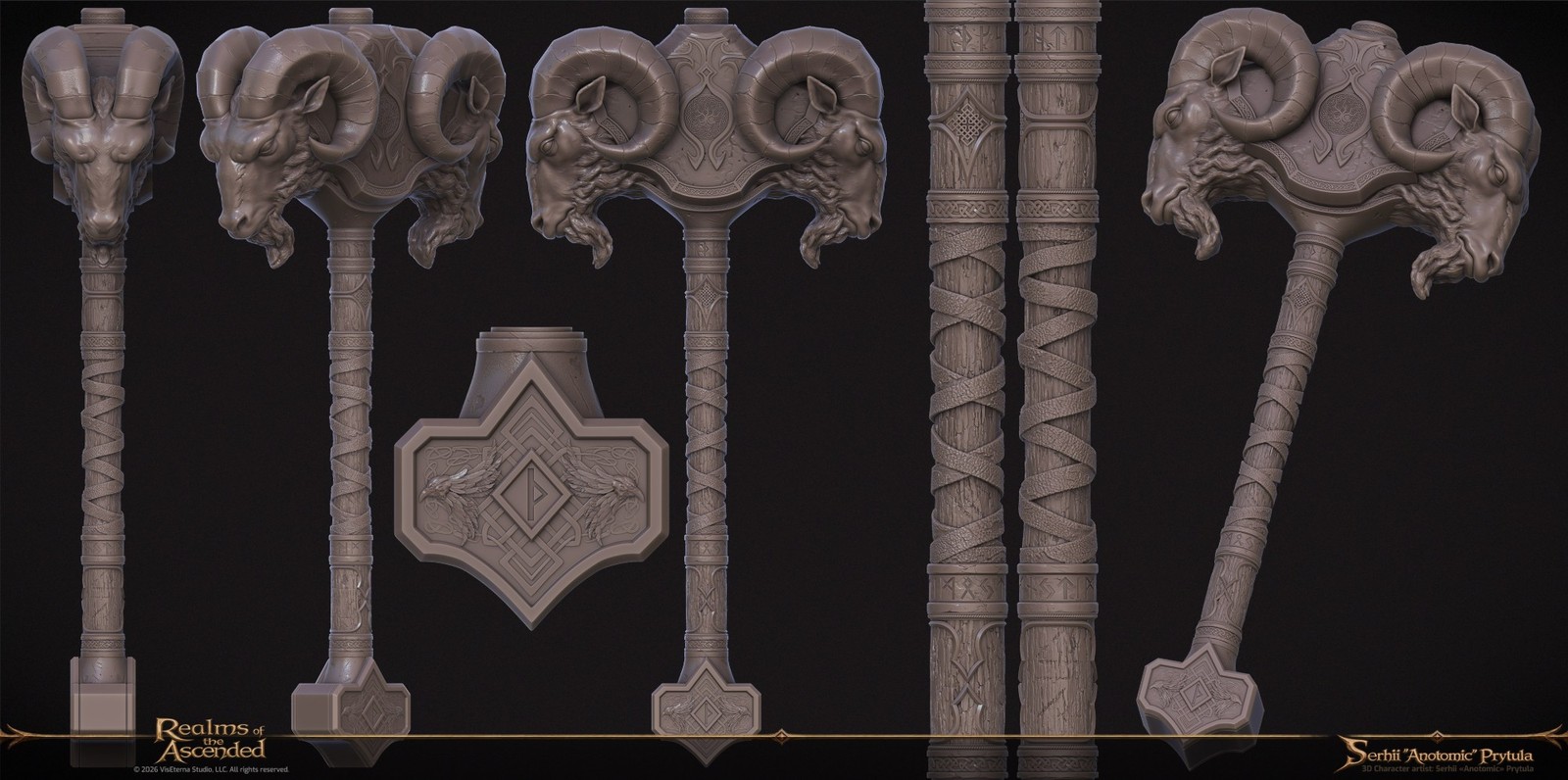
The sculpt stage. Model by Serhii Prytula.
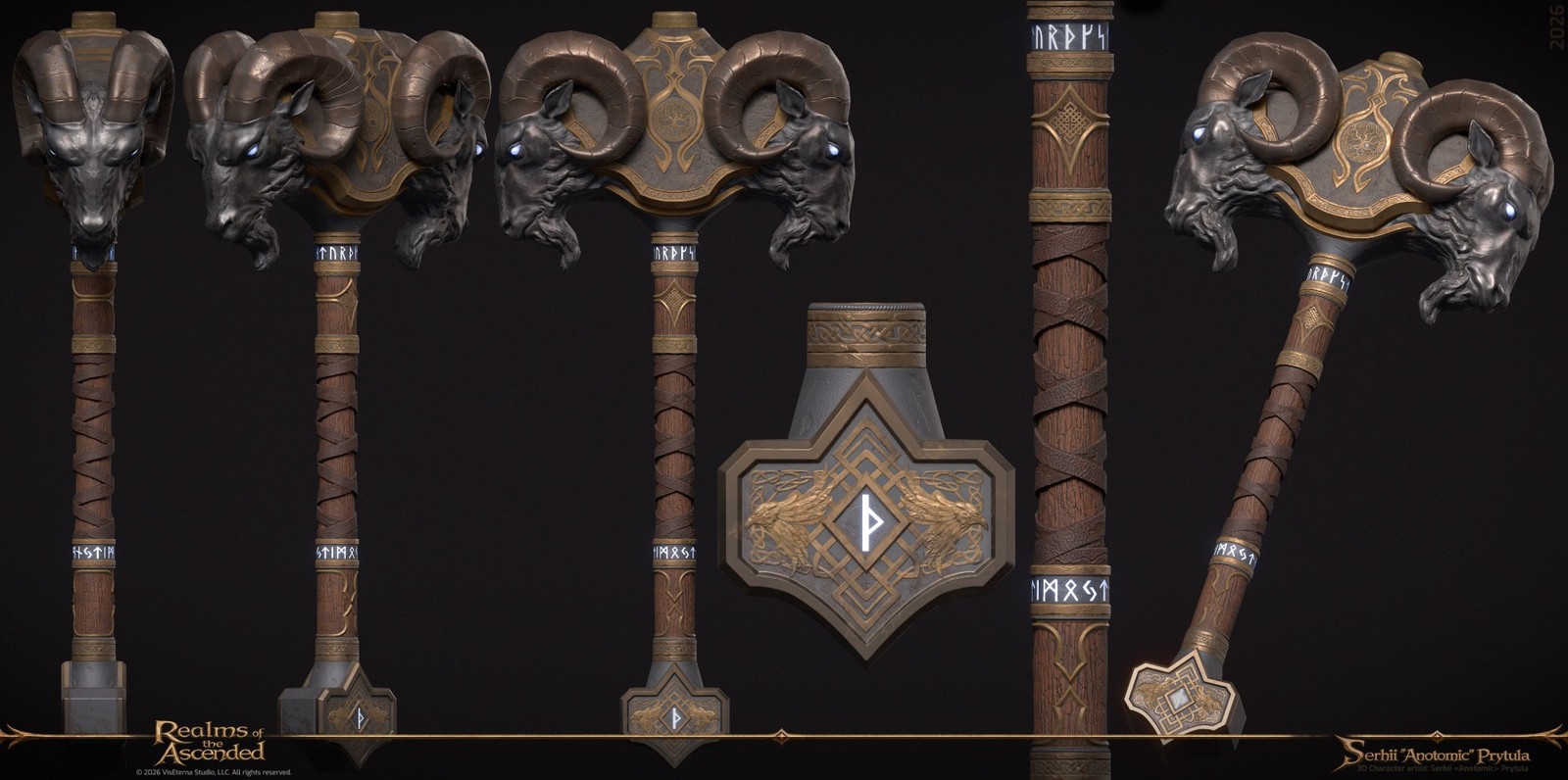
The finished, textured model. Model by Serhii Prytula.
The sculpt is the best moment in the whole job to talk about shape, because changing it is still easy for the artist. Once texturing starts, the shape is effectively settled. Regular check-ins mean we steer together while steering is cheap, and there are no surprises at the end for either of us.
What to take from it: agree on the target in writing, then look at the work together at every stage. It is respectful of the artist's time and it protects yours.
Communication is the whole job
I know it sounds cliché, but communication is the key to a successful outcome.
Don't be afraid to raise a flag if something is not landing the way you pictured it. Say so early and plainly, then work the problem together and ideate. That is not a knock on the artist. It is how two people end up looking at the same picture.
Some of the best parts of these models came out of exactly that. Many times, my original concept art and Serhii's own research met in the middle, and together they molded the final piece into what it is. The brief gives you a starting point. The conversation is what gets you to the finish.
The handoff details that make a model drop straight in
A beautiful model still has to travel from the artist's software into your engine. Over these projects we have landed on a few handoff details that make that trip smooth. They are the kind of thing nobody thinks to mention until the first time, so they are worth writing into the brief from the start.
Where the pivot goes
Every model has an origin, the point the engine holds it by and rotates it around. For a weapon, you want that point at the center of the grip, so the character's hand and the weapon line up naturally. For Mjolnir, I set the hold point inside the engine in both places the hammer lives, in Thor's hand and in flight when he throws it, and it now sits exactly right. The pivot now goes into the brief up front, so every future weapon arrives ready to hold.
For your brief: weapons and props have their pivot at the center of the grip, at real-world scale.
Which file, and which version
Unreal imports FBX files rather than native Blender files, and a Blender file is tied to the version of Blender it was saved in. Asking for an engine-ready FBX alongside the source file, with a note of the software version, removes a step between the artist's hands and the game.
For your brief: deliver an FBX ready for Unreal, plus the source file, and note which version of the software the source was saved in.
Which bones
This one is worth knowing if you work in Unreal. Artists rig characters with rich control setups built for animating comfortably, often hundreds of bones. Unreal's mannequin skeleton only wants the bones that actually deform the mesh, under its own specific names.
If a character is rigged with Auto-Rig Pro, the add-on has its own FBX export with an Unreal preset built for exactly this: it exports only the deforming bones, renamed to match the mannequin. It lives in the add-on's panel rather than in the regular File menu, which makes it easy to overlook, and it is the step we are using as we bring the latest version of Thor into the game.
For your brief: characters delivered as a skinned FBX with deform bones only, using Unreal mannequin bone names.
Judge it in your camera
An artist's renders are lit beautifully and shot up close, as they should be. Your players will see the model from wherever your game camera sits. Ours looks down from an isometric angle at a distance, where silhouette and proportion carry most of the weight.
So every new model goes onto a test stage in the game first, standing beside the one it would replace, with the original untouched. When I asked for fuller legs on Thor, Serhii delivered the update, and the new Thor is standing on that stage right now beside the current one, so I can judge them from the angle players will actually see.
It is the same idea as the engine upgrade from an earlier post: let a copy take the risk, and decide with both options in front of you.
The brief, as a template
Here is the brief I start every commission with now. Take it and make it yours.
- Reference: front and back concept art, plus the silhouette you want from the game camera.
- Budget: a triangle range for the in-game model.
- Pose and skeleton: A-pose, skinned to your engine's standard skeleton, deform bones only, using that skeleton's bone names.
- Separate files: weapons and props as their own FBX.
- Pivots: weapons and props pivot at the center of the grip, at real-world scale.
- Materials: the material types you need, and texture maps named for your engine.
- Delivery: an engine-ready FBX, the source file, and the software version it was saved in.
- Acceptance criteria: five to seven checkboxes, the first one about how it reads from your game camera.
- Checkpoints: a look at the blockout, another at the sculpt, and a final one after texturing.
The goal of a good brief is simple: give the artist everything they need to do their best work without having to guess, so every conversation after that is about making the model better.
Credit where it belongs
Thor, Odin, Gungnir, and Mjolnir are Serhii's work, and they are the best-looking things in this game. The models are excellent, and he is a pleasure to collaborate with. You can find him on ArtStation and Fiverr. If you are a solo developer looking for a character artist, I recommend him without hesitation.
The goals board has the rest of what is in flight. If you have commissioned art for a game and have a line I should add to that template, I would genuinely like to hear it: info@viseterna.com reaches me.